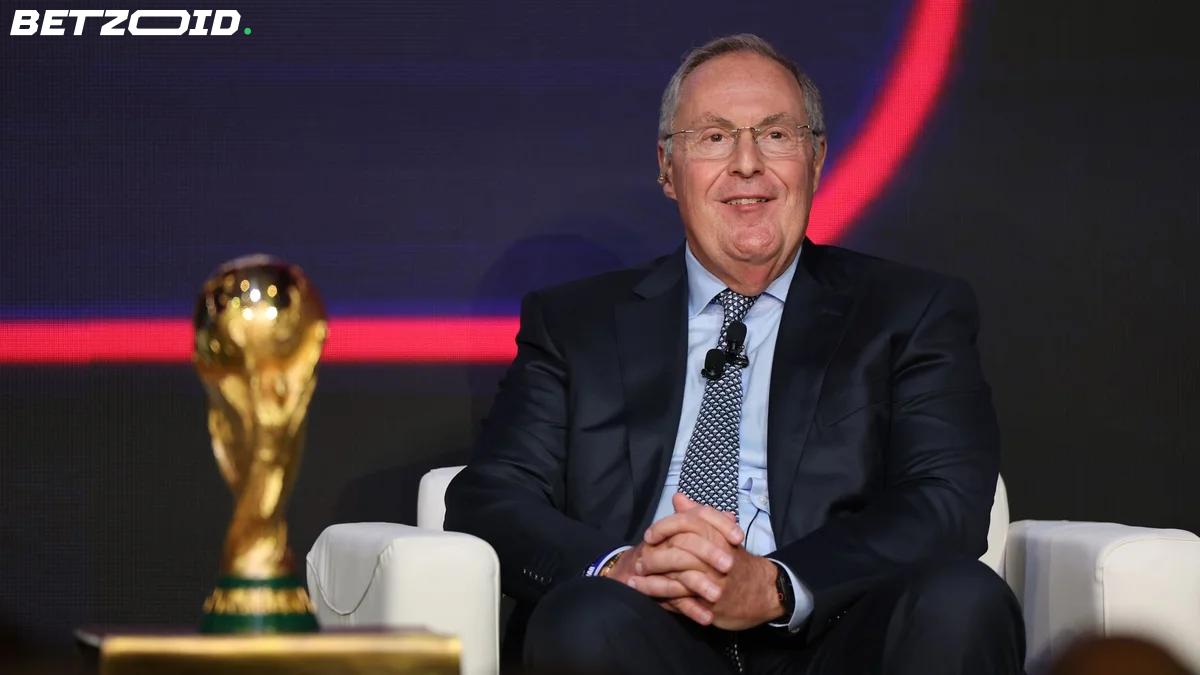
"Definitely when I ditched school in 1974 to go to the cafe in the corner of my school in Argentina to watch the games in black-and-white television. That was my first experience of living such a big tournament like this from afar." That's Andrés Cantor — the man behind the most recognizable goal call in American soccer history — tracing it all back to a classroom he refused to sit in.
The Telemundo broadcaster recently reflected on the childhood obsession that built a career. Growing up in Buenos Aires, World Cup matches weren't optional viewing. They were obligations. Argentina on the pitch meant school could wait. The cafe on the corner was the only classroom that mattered.
From the cafe to the commentary booth
What started as a kid bending the rules evolved into something far bigger. Cantor was in the stands when Argentina lifted the trophy in 1978. By 1990, he had a microphone and a seat at every World Cup since. "I've been fortunate enough to be in the best seat of the house at every World Cup since 1990, and I got to call the most epic moments of each tournament," he said.
His one real regret? Missing Maradona's second goal against England in 1986 on the call. He was there in person — writing for an Argentine magazine at the time — but didn't get to put his voice to what many consider the greatest individual goal in football history. "If there is something that I would have wanted to do that I didn't — because I was writing at the time, not calling games — it would be to call Maradona's second goal against England on television." Some things you can't get back.
His family's move from Argentina to the United States during his teenage years never dulled that connection. If anything, it sharpened it. He became the conduit between the raw emotion of Latin American football culture and a generation of American viewers who had no frame of reference for it.
The 2022 penalty that broke him
Cantor has called hundreds of matches across World Cups, Women's World Cups, and Olympics. But nothing compared to Gonzalo Montiel's decisive penalty in the 2022 final against France. The footage of Cantor fighting through tears as Argentina ended 36 years of World Cup pain went viral worldwide — not because it was unprofessional, but because it was completely, unmistakably real.
Decades of hope and heartbreak, audible in a single call.
With the 2026 World Cup building toward its final, Cantor will be there again — as he has been every four years since 1990. The kid who skipped school to watch grainy black-and-white footage in a Buenos Aires cafe never really left that corner cafe. He just found a way to bring millions of people inside it with him.