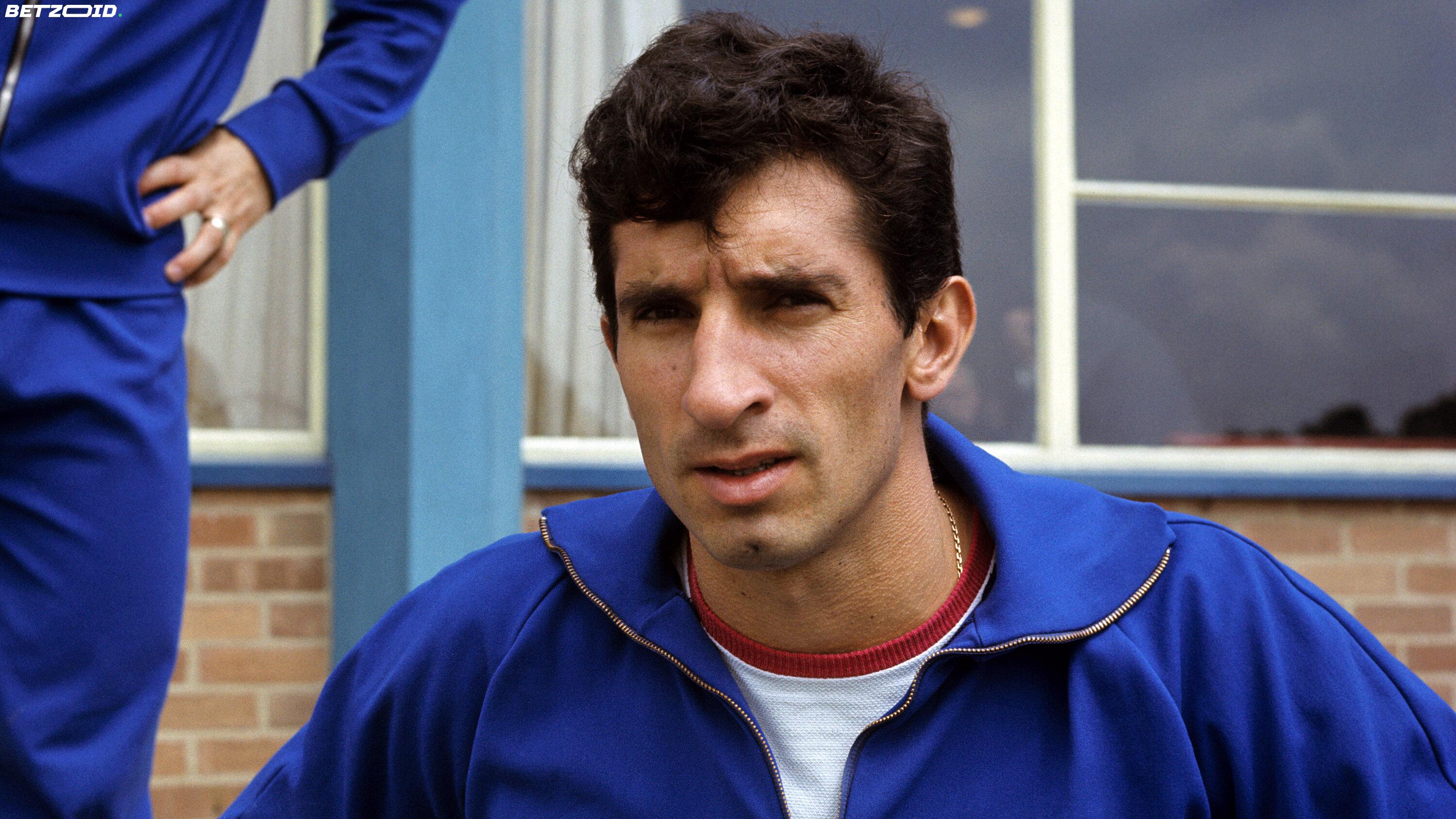
"I was only trying to show him my captain's emblem," Antonio Rattín told the Los Angeles Times in 1967. That misunderstanding — between a Spanish-speaking Argentine captain and a German referee who didn't speak a word of it — gave football yellow and red cards. Rattín died on July 11 in Vicente López, a suburb of Buenos Aires. He was 89.
The Argentine Football Association confirmed his death. Argentina wore black armbands in his honour during their 3-1 quarterfinal win over Switzerland on Saturday — a match that sets up a semifinal against England on Wednesday, the latest chapter in a rivalry that Rattín himself helped ignite.
The sending-off that broke football's rules — then rewrote them
The 1966 World Cup quarterfinal at Wembley was already ugly when German referee Rudolf Kreitlein ejected Rattín at the 35-minute mark for what he called "violence of the tongue." Neither man spoke the other's language. When asked afterwards how he knew Rattín was insulting him, Kreitlein was unapologetic: "I believed seeing in his face," he said.
Rattín refused to leave. He walked to the sidelines and sat on the red carpet reserved for the Queen's viewing area. Two police officers eventually escorted him off under a shower of chocolates from English fans — he caught one, ate it, and threw back the wrapper. On the way out, he grabbed a Union Jack pennant and rubbed it between his fingers. A Shetland pony blocked his path.
It was chaos. And that chaos was the point.
Head referee Ken Aston watched it all and concluded the game needed a universal language. Inspired by traffic lights, he designed the yellow and red card system now used at every level of football on earth. One dismissal that nobody could properly communicate spawned a mechanism that hundreds of millions of people instantly understand.
More than a footnote in a 1966 rulebook
Outside Argentina, Rattín is remembered almost entirely for that afternoon at Wembley. Inside it, he's something else — five national titles with Boca Juniors, two World Cups, and a playing career that ran from the late 1950s until 1970. He spent every professional year at Boca. That kind of loyalty is its own credential.
After football, he worked in insurance, served in the National Assembly from 2001 to 2005, and sat on the Vicente López council until 2009. He lived long enough to see the Argentina-England fixture become one of the sport's most loaded matchups — a rivalry that starts, in no small part, with him.
By 2000, visiting Britain, he'd made his peace with it. "I always did stand out," he told The Evening Standard. "Well, that was my way. I'd always been a passionate figure, never afraid to say what I thought."
Wednesday's semifinal kicks off with his country and England meeting again at the World Cup. Antonio Rattín will not be watching — but every card shown in the game will be his.