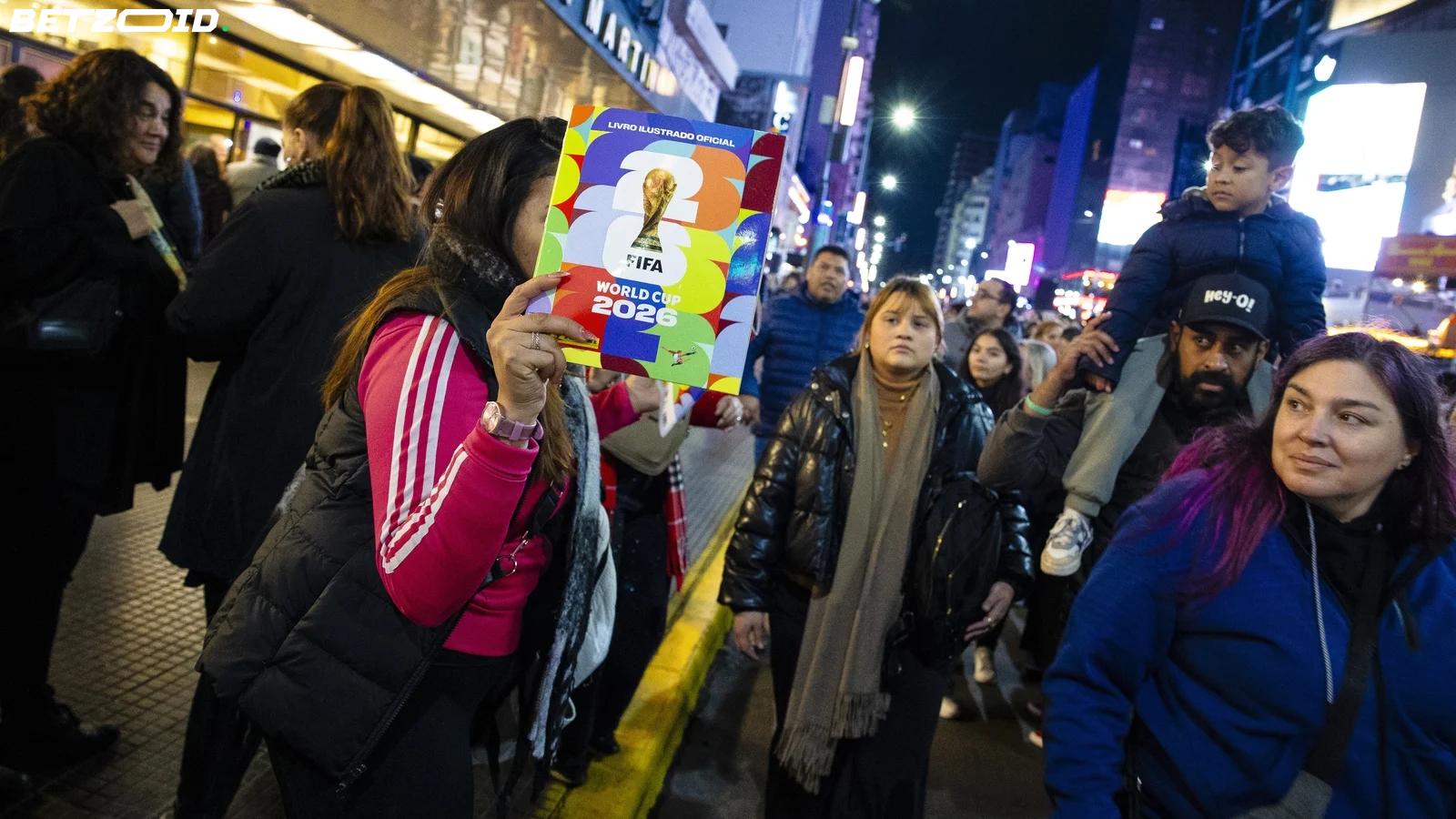
"An excuse for real-life interactions where the barriers between the generations melt away." That's how Argentine journalist Hernán Panessi describes the country's relationship with Panini World Cup stickers — and it's not an exaggeration.
In Argentina, the release of a new Panini album isn't a commercial event. It's closer to a national ritual. Queues form at sweet shops and street vendors. WhatsApp groups mobilize thousands. Parks fill up with collectors — kids, parents, grandparents — trading duplicate figuritas with strangers. The Parque Rivadavia in Buenos Aires' Caballito district, long a home for book and record collectors, has become the spiritual centre of it all.
980 stickers and counting
The 2026 album is the most demanding yet. With the tournament expanding to 48 teams, Panini has produced 980 individual stickers. Completing it through buying packets alone is statistically close to impossible, which makes the swap culture not just fun — it's functionally necessary.
That scale matters for the betting market too. Sticker scarcity drove genuine political intervention ahead of Qatar 2022, when shortages became so acute that the Argentine government stepped in to mediate between wholesalers and vendors. Demand that heavy signals just how embedded the World Cup is in Argentine daily life — and by extension, how emotionally invested the country is in the tournament itself. Argentina's odds as favourites tend to carry a home-crowd weight even on foreign soil, and this kind of cultural saturation only reinforces it.
Beyond sport, Argentine artist Ariel Cuadra recently used the format to create 'Madres y Abuelas' — an unofficial Panini-style album honouring the Mothers and Grandmothers of the Plaza de Mayo, the human rights organisations formed during Argentina's 1976–83 military dictatorship. The mock-Panini logo reads 'Nunca Más' — Never Again. It's a striking reminder that in Argentina, the sticker album carries cultural weight far beyond football.
The Tim Payne effect
Then there's the stranger side of the story. New Zealand defender Tim Payne went from fewer than 5,000 Instagram followers to over five million in a week after Argentine influencer Valen Scarsini pointed out he had the lowest follower count of any player at the World Cup and rallied his audience behind him. Payne, by all accounts, had no idea what hit him.
The sticker mania isn't uniquely Argentine either — Mexico, Chile and Peru have all seen versions of it take hold — but Argentina's version has a particular intensity. It makes sense. This is the country that gave the world Maradona in 1986 and Messi lifting the trophy in 2022. The World Cup isn't something Argentines watch. It's something they live.
Panini's FIFA contract runs through the 2030 tournament, which will be jointly hosted by Morocco, Portugal and Spain. After that, rival company Fanatics takes over the licence. So the 2030 album will be the last under the Panini name — which will make the 2026 edition, already the biggest ever, feel like the calm before a very sentimental storm.