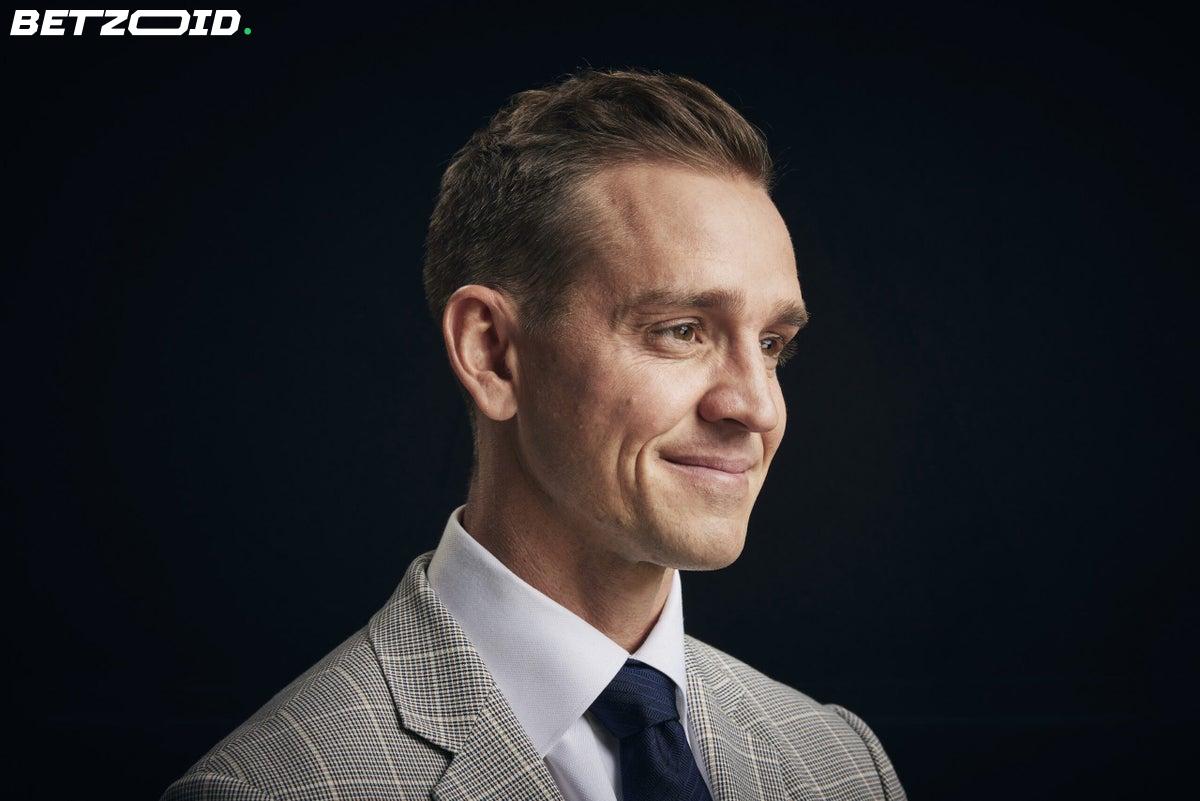
"What I would give to be out there." Stu Holden has said it more than once during this World Cup, and every time, it lands. Not as self-pity — as truth from someone who knows exactly what was taken from him.
Fox Sports' lead World Cup analyst had the career trajectory of a genuine USMNT icon before two brutal knee injuries — a tackle from Nigel De Jong in 2010, another from Manchester United's Johnny Adams in 2011 — dismantled it. He was in his mid-20s. His playing days were effectively over before most footballers even hit their peak.
21 games, 29,173 miles, one tournament
What Holden has built in the booth since then is remarkable by any measure. He and play-by-play partner John Strong have called 21 games across this five-week tournament — more than 20 percent of all 104 matches. Fox Sports president Brad Zager puts that in context: it's the equivalent workload of a No. 1 NFL broadcast team across an entire regular season. The pair took 20 flights covering 29,173 miles to make it happen.
Zager never once felt they'd been pushed too far. "There was never a time when I was watching a broadcast where I felt, 'Man, we pushed these guys too far' and they weren't totally prepared," he said.
Sunday's final — Argentina vs. Spain — will be their third World Cup final together.
Honest when it hurt most
Holden's best moment this tournament may have been his hardest. The US vs. Belgium group stage match was, by his own admission, "the hardest game I've called in my career." Largest soccer audience in American television history. His national team laying an egg from the first whistle. He called it straight anyway, zeroing in on Christian Pulisic looking tentative, losing the ball, refusing to track back.
"I have to be honest to the viewer," he said. And he was.
That willingness to take a position — without making it about himself — is exactly what separates him from most analysts working major tournaments. During the Argentina-England semifinal, he flagged in the 63rd minute, with England still leading, that Thomas Tuchel needed to push wider and consider bringing on Saka or Rashford to avoid a defensive collapse. Tuchel waited until England trailed. History recorded the rest.
Holden is also working without a net in a way NFL analysts never do. Fox has no control over the world feed — no coordination with producers, no ability to cue replays. He reacts in real time and has to make it make sense. At 40, after years of refining the craft, he does it better than almost anyone in the sport.
He didn't officially retire from playing until 2016 — a year after he'd already joined Fox full-time. The pitch had that kind of pull on him. Broadcasting eventually matched it. "The first time I stood in front of that red light and got to speak on camera, it was a rush and type of adrenaline and pressure similar to when I played," he said.
His contract ends after Sunday's final. FIFA hasn't begun negotiations for 2030 or 2034 rights, and there's no guarantee Fox holds them. Which means the best analyst Fox has — the one Zager uses to set the tone for newcomers like Ibrahimović, Thierry Henry, and Javier Hernandez — might be calling his last World Cup game this weekend without knowing it.