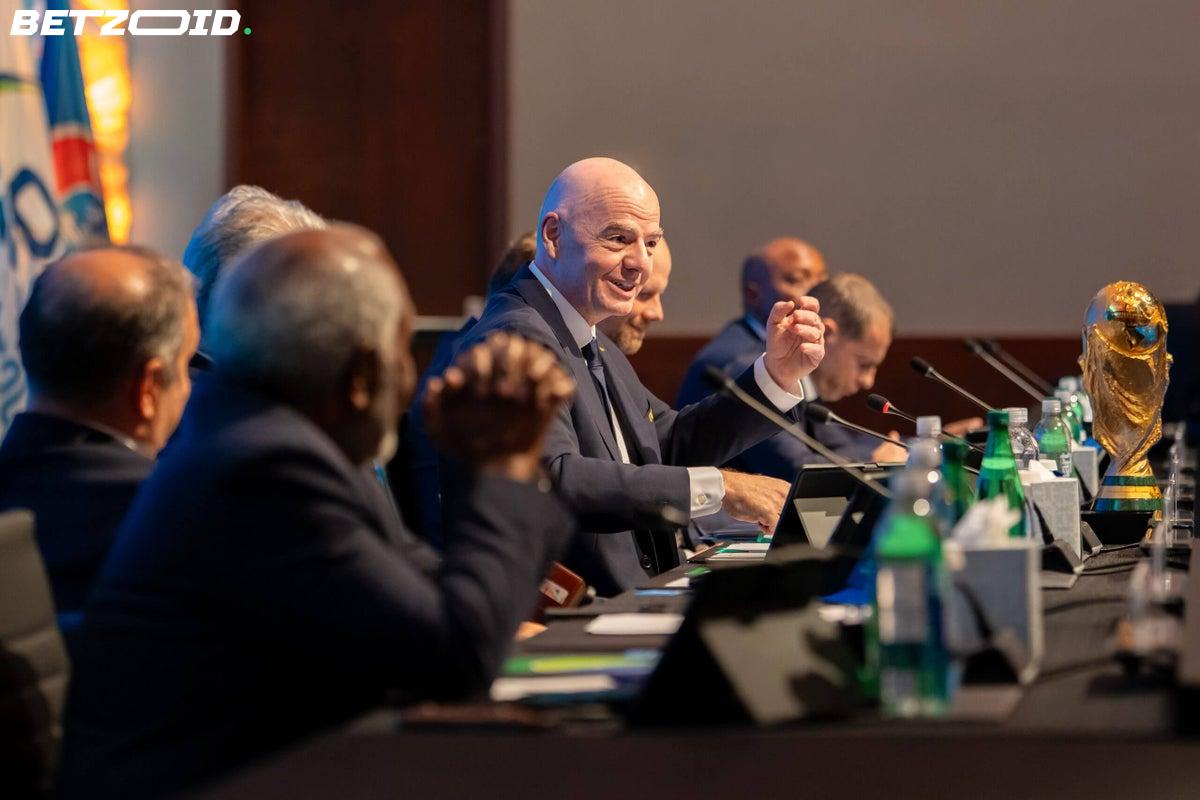
FIFA has increased the 2026 World Cup prize pool by over $100 million, bringing total team distributions to $871 million — up from $755 million as recently as December. Each of the 48 competing federations gets a flat $2 million extra: $1 million in preparation money, $1 million as a qualifying baseline. The rest comes from expanded subsidies for delegation costs and ticketing allocations.
The context matters. Several federations — particularly in Europe — had quietly raised the alarm that participation costs for a tournament spanning three countries and 104 games were threatening to eat into, or outright eliminate, their ability to turn a profit. UEFA lobbied on their behalf. FIFA, predictably, insists the increase has nothing to do with that pressure. Sure.
What the numbers actually look like
The baseline payout per team rises from $10.5 million to $12.5 million. Round-by-round prize money — the stuff that rewards teams for actually winning — stays the same as previously announced. So this isn't about rewarding performance. It's about keeping 48 federations from showing up to the party and going home in the red.
The costs are real. FIFA covers board, lodging, and business-class flights for 50 people per delegation from five days before the opener through one night after elimination. Every person beyond that 50-person cap — and major nations routinely travel with staffs approaching that number on top of a 26-man squad — comes out of the federation's own pocket. Insurance too. Training facilities that fall outside FIFA's approved brochure? Also on the federation.
Operating in the United States alone is expensive by any measure, and state tax rates vary enough to create genuine financial headaches for accounting departments who've never dealt with American tax law before.
FIFA's $11 billion problem
Here's what makes the optics awkward: FIFA projects $11 billion in total revenue from this tournament — a record — including over $3 billion from tickets and hospitality in the US alone, compared to under $1 billion in Qatar. Giving the teams an extra $112 million while pocketing the rest isn't generosity. It's cost management dressed up as goodwill.
For anyone tracking the outright or group-stage markets, this doesn't shift competitive dynamics — the prize structure for progression is unchanged, so there's no new incentive distortion. But smaller federations who might have been forced to travel lean now have slightly more room to prepare properly. That's a marginal edge, but in a 48-team tournament with several group-stage matches between modest footballing nations, margins matter.
FIFA will redistribute remaining revenues, it says, "back into global football for the benefit of all 211 member associations." The governing body expected to make $11 billion thought $755 million was enough. Apparently, it took a coordinated complaint from European football's power bloc to move that number.