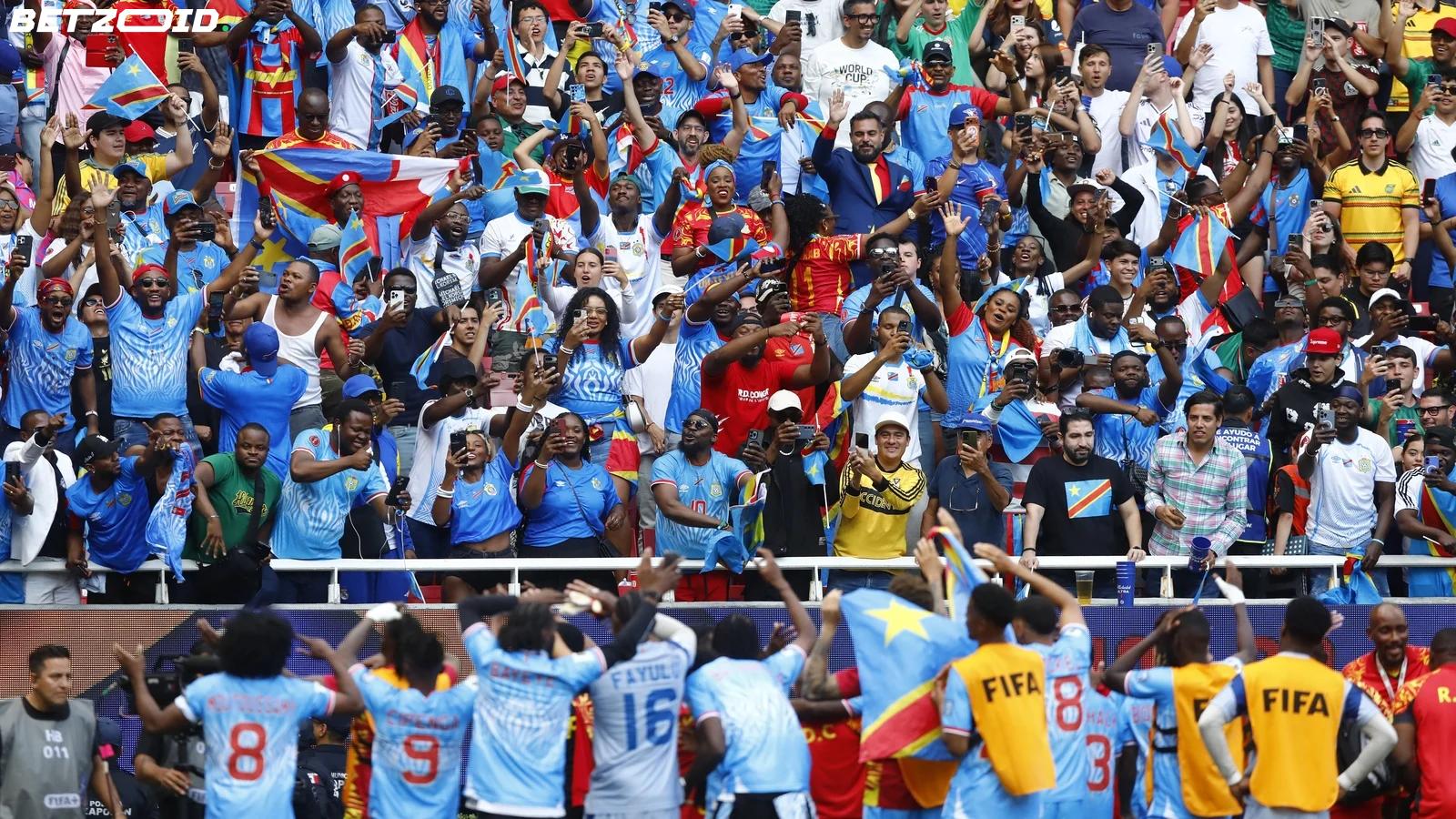
"We cannot be any clearer." That's Andrew Giuliani, Executive Director of the White House Task Force for the World Cup, delivering the message to DR Congo: maintain your bubble in Belgium for 21 days, or you don't get on the plane to Houston.
The Democratic Republic of Congo is dealing with an Ebola outbreak serious enough that the World Health Organization has declared a public health emergency of international concern. The strain — Bundibugyo — has no approved vaccine or therapeutics. At least 177 people are suspected dead and nearly 750 cases have been recorded in the east of the country. This is not a minor story that gets filed away once the tournament begins.
What the rules actually mean for DR Congo
The CDC has imposed travel restrictions barring non-US passport holders who've been in DR Congo, South Sudan, or Uganda in the previous 21 days from entering the country. Those restrictions, issued on 18 May, are due to lift on 17 June — the exact date DR Congo are scheduled to face Portugal at Houston Stadium.
The Congolese squad, along with French head coach Sébastien Desabre, are already based outside the country. DR Congo cancelled their planned training camp in Kinshasa and relocated to Belgium. They have a friendly against Denmark in Liege on 3 June and another against Chile in southern Spain on 9 June — which means the 21-day isolation clock needs to start ticking now if they want to land in Houston on 11 June.
The margin for error here is razor-thin. Any breach of that bubble doesn't just risk individual health — it risks the entire delegation being turned back at the border.
On the pitch, there's actually a lot at stake
This is DR Congo's first World Cup since 1974, when they appeared as Zaire. Half a century. The squad has genuine quality — West Ham's Aaron Wan-Bissaka, Newcastle's Yoane Wissa, and Axel Tuanzebe, whose goal from a corner in the play-off against Jamaica sent them here. They're in Group K alongside Portugal, Colombia, and Uzbekistan, which is not an easy draw, but it's one where progression is possible.
DR Congo finishing out of the group stages isn't the likeliest outcome, but if you're pricing their matches, the logistical disruption is a real variable. A squad that's been confined to a strict bubble in Belgium for three weeks, unable to freely prepare or acclimatize, faces Portugal — Ronaldo and company — as their first game. That's a tough ask even under normal conditions.
- DR Congo vs Portugal — Houston Stadium, 17 June
- DR Congo vs Colombia — Guadalajara, Mexico, 24 June
- DR Congo vs Uzbekistan — Atlanta, 27 June
Professor Anne Moore from University College Cork put it plainly: "My gut feeling is that it won't have any impact." Her reasoning is sensible — professional footballers in a training camp environment are unlikely to have been near the outbreak zones in eastern Congo. But she also flagged the issue of supporters travelling over and whether they can be tracked and verified.
FIFA says it's "monitoring the situation." The Houston Host Committee says it's "being briefed." Both statements say everything and nothing at the same time. Whatever contingency plans exist, they haven't been made public — and the Sports Authority in Houston isn't talking yet either.
"I have to imagine that if worst comes to worst, that game will maybe at most just get delayed, pushed back or moved around," said local journalist Ethan Bratton. That's probably the realistic ceiling of disruption here — not cancellation, but compression and chaos in an already packed schedule.
The WHO's Tedros Adhanom Ghebreyesus said he was "deeply concerned about the scale and speed of the epidemic." That concern doesn't disappear because a football tournament is happening nearby. The primary crisis is the one unfolding in eastern Congo — not the fixture list in Houston.