First, they drank Boston dry. Now they're redecorating it.
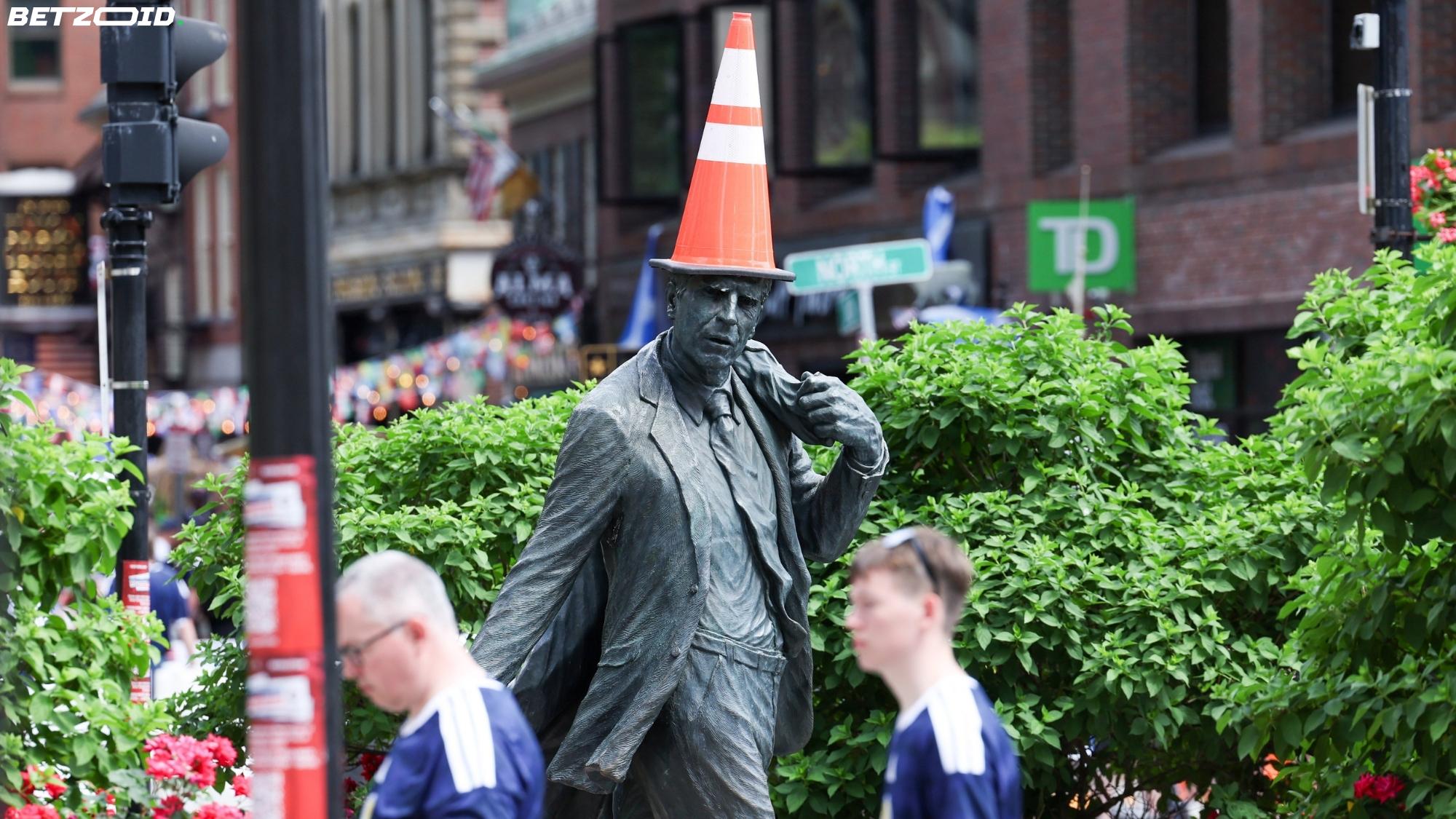
Scottish football supporters descending on Boston for the World Cup have taken to placing bright orange traffic cones on the heads of the city's public statues — monuments to figures like former mayor Kevin White and basketball icon Bill Russell. Bostonians may be confused. They shouldn't be. This is just what Scots do.
Glasgow exported this one decades ago
The tradition traces back to Glasgow, sometime in the 1980s, when an anonymous — and by most accounts heavily intoxicated — local decided to place a traffic cone atop the statue of the Duke of Wellington outside the city's Gallery of Modern Art. Nobody planned it. Nobody organized it. It just happened, and then it kept happening.
Forty-odd years later, the cone is still there. It's been swapped out for a soccer-ball-shaped hat when Glasgow hosted the 2002 UEFA Champions League Final. In 2024, someone slapped a cone on it reading "yes" in support of the Scottish independence referendum. The cone has become so woven into Glasgow's identity that it shows up on souvenirs and in tourism campaigns. There's even a loose — if poorly sourced — claim that it was an inspiration for Banksy.
That's the weight of the thing Scottish fans brought with them to Boston. Not just a cone. A 40-year cultural institution.
Boston is taking it well
There's no real harm here, and most Bostonians seem to understand that. When a nation's football supporters travel en masse to a host city, they bring their habits with them — the songs, the scarves, the drinking, and apparently, the traffic cones.
It's chaotic. It's endearing. And it's exactly the kind of unscripted, fan-driven energy that makes major tournament football worth watching in the first place. Scotland may or may not go deep in this World Cup, but their supporters are already leaving a mark — one orange cone at a time.