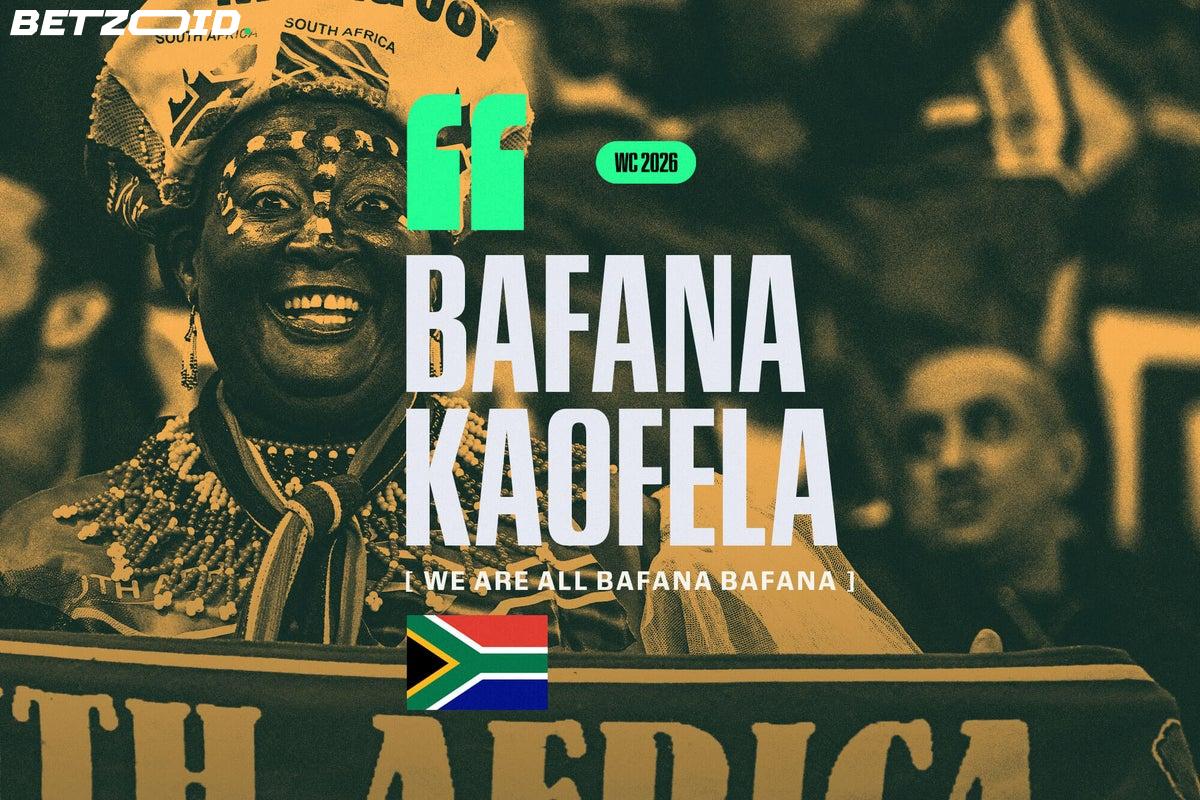
Not long ago, a Bafana Bafana friendly in Durban drew a few hundred people — and it was raining, but the weather wasn't the problem. That was South Africa's relationship with its national football team in a single, grim image.
Fast forward to 2025, and 55,000 fans packed into Cape Town to watch a warm-up match against Panama. South Africa lost 2-1, but when defender Mbekezeli Mbokazi lashed a 30-yarder into the top corner, the stadium erupted like it actually mattered. It does again. That's the shift.
From apathy to obsession — what changed
The 2023 AFCON in the Ivory Coast is the turning point most supporters cite. Bafana Bafana went in as an afterthought and came out third. Most South Africans expected a group-stage exit. Instead, they got a team that played with structure, spirit, and an emotional investment that finally matched what fans were bringing to the stands.
"The narrative before that tournament was about the team being underachievers," says supporter Norika Naidoo. "As the tournament progressed and we kept winning, people became more interested. The 2023 AFCON was a lever for change."
Belgian coach Hugo Broos, appointed in 2021 after winning AFCON with Cameroon, has built something coherent. Twenty-four of the 26 players who travelled to the Ivory Coast were South Africa-based — a deliberate philosophy that has given the squad a club-like cohesion that previous generations, often packed with overseas-based players who barely knew each other, lacked.
Compare that to 1998, when 14 of 23 players were abroad and one, Pierre Issa, only joined the squad a month before the World Cup. The team that went to France felt assembled. This one feels built.
The weight of 2010 — and what 2026 means
South Africa's World Cup history is short and largely painful. Three appearances, no knockout stage. Hosting 2010 was electric — supporters have suggested crime rates dropped during the tournament, which tells you everything about the social power of football in that country — but it was also the last time they qualified. Fifteen years of absence leaves a mark.
"For a whole generation of people in South Africa, their World Cup memory is 2010, not only because we were hosts but also because we haven't qualified since," says supporter Emilio Hartogh. "Now the air feels different."
The domestic game has also risen around the national team. The Soweto derby between Kaizer Chiefs and Orlando Pirates — two clubs with genuinely national followings — drew more South African TV viewers in 2022 than the World Cup final between Argentina and France. That statistic says more about the state of South African football than any league table could.
All of this shapes the picture heading into 2026. A side with genuine tactical identity, home-based players who know each other, a coach with a proven track record at this level, and a country that's remembered what it feels like to care. South Africa have never made it past the group stage. That's the next wall to break. "Bafana kaofela" — we are all Bafana Bafana. Right now, they mean it.