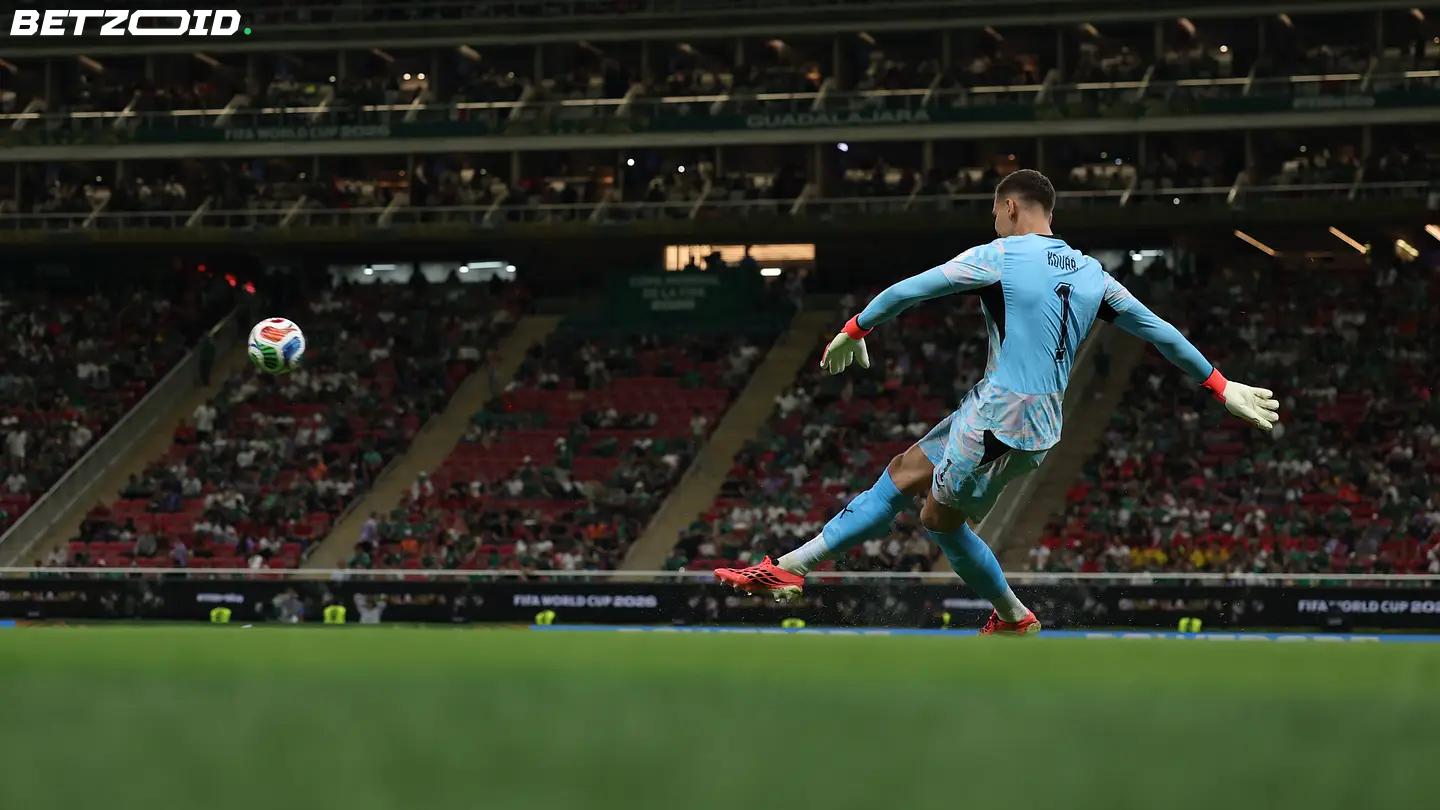
"Every World Cup match is sold out," says Gianni Infantino. The red plastic seats sitting empty throughout the Estadio Akron on day one said otherwise.
South Korea's 2-1 win over Czechia drew an official attendance of 44,985 at the 45,664-capacity venue in Guadalajara — numbers that look fine on paper. On television, and in the stadium, it looked like a mid-table Europa League fixture. Large gaps were visible across the east stand and around the pitchside VIP areas throughout the match.
The reason isn't hard to find. Tickets in the worst-affected sections were priced between $400 and $5,000 under FIFA's dynamic pricing model, where demand dictates cost. When demand for South Korea vs. Czechia doesn't match demand for, say, the hosts, those prices don't adjust downward — they just sit there, and the seats stay empty.
Infantino's defence doesn't hold up
At his pre-tournament press conference, Infantino had a ready answer for the criticism. Sell tickets cheap and scalpers win, he argued. "If you sell it at a lower price point, in this particular market it would have gone in secondary markets at much, much, much higher prices — and where would the money go then?"
It's a coherent argument in theory. In practice, a stadium with visible empty blocks at a World Cup group game is a PR disaster that no press conference talking point can fully offset. The attorneys general of New York and New Jersey have accused FIFA of "artificially inflating prices" — claims FIFA denies — and scenes like those in Guadalajara will keep that conversation alive for the duration of the tournament.
For context on the financial stakes: attending one game in each of the eight rounds would cost a single supporter roughly $5,225. That's not a ticket price. That's a holiday budget.
What comes next
The contrast with the opening match was stark. Mexico vs. South Africa at the 87,000-seat Estadio Azteca was packed. A local derby atmosphere, a co-host nation, a full house. That's the World Cup most people imagine. What happened in Guadalajara is the version FIFA would rather not discuss.
Eyes will be on Saturday's fixtures — Switzerland vs. Qatar, Haiti vs. Norway, Australia vs. Türkiye — to see whether the empty-seat problem is a one-off or a pattern. If the less glamorous group-stage matches consistently draw half-empty arenas, FIFA's insistence that everything is sold out starts to look less like confidence and more like spin.
Infantino's closing defence was that every dollar generated goes back into football development. "We have one competition every four years," he said. "The 47 other months out of the 48, we are investing this revenue in growth." Whether that justifies a $5,000 seat at a group game is a question the empty stands in Guadalajara just answered.