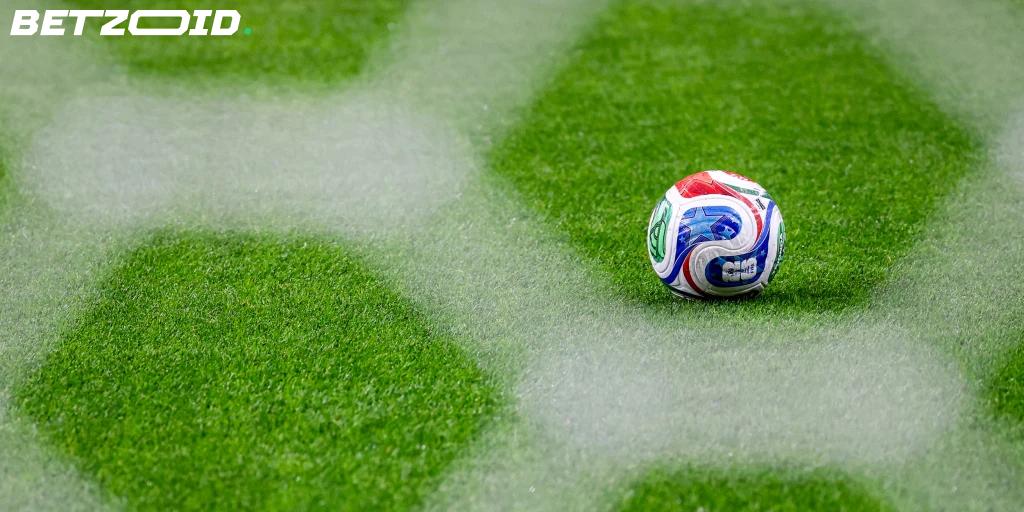
"It's an easy target to blame the ball," says John Eric Goff, a professor at Purdue University who has tested World Cup balls since 2010. And he's right — it's the obvious narrative, and it's probably wrong.
Goals are up at this World Cup, and the Trionda — Adidas's latest tournament ball — is getting the side-eye. It's a four-panel design with an embedded microchip that transmits live data. Sounds radical. But Goff has tested it, and his conclusion is straightforward: the Trionda travels similarly to the Premier League ball and nothing like the 2010 Jabulani, the one that actually did move in genuinely strange ways and had goalkeepers complaining throughout South Africa.
Nobody is really complaining about this one. That tells you something.
The pitch matters more than people think
Andy Harland, a sports technology professor at Loughborough University and a consultant to professional ball manufacturers, points to factors that rarely get a headline. Pitch quality has transformed dramatically since the 1970s — players today aren't slipping through mud in the way their predecessors were. More consistent surfaces mean more controlled, faster football. More chances. More goals.
Cleats have evolved too. So has athletic conditioning, sports science, and the tactical data teams now absorb before every match. These aren't glamorous storylines, but they're the ones that actually explain a high-scoring tournament.
Weather and altitude add wrinkles. Several North American host cities are dealing with heat that dries out pitches, while humid venues make quick direction changes harder to execute — something visible in the U.S. vs. Turkey match in Los Angeles, where players were sliding around. Higher-altitude cities like Mexico City have lower air density, which can make the ball appear to move faster. But there's no clear evidence that elevation is inflating goal tallies compared to sea-level venues like Seattle or Miami.
What this means heading into the knockouts
The group stage has historically produced the bulk of World Cup goals, but scoring rates in knockout rounds have also run above average in recent tournaments. If you're weighing over/under markets as the competition enters its decisive phase, the structural factors — quality surfaces, fit athletes, evolved tactics — don't disappear just because the stakes go up.
The ball is the most visible thing on the pitch. It will always get blamed first. But as Harland puts it: "People haven't necessarily factored in the quality of the pitch that's changed as well and the quality of the ." The Trionda is just doing its job. Everything around it has quietly gotten better.