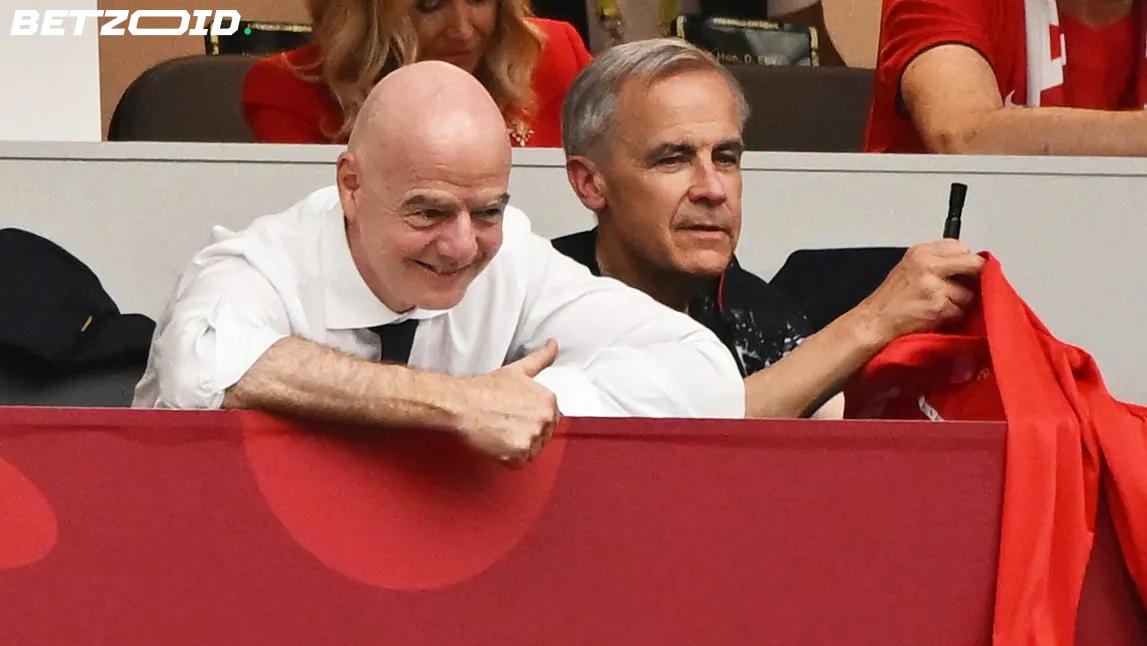
"This ban has achieved nothing; it has only created more frustration and hatred." That's FIFA president Gianni Infantino, and he's now acting on it. Russia will be invited to participate in FIFA's new U-15 World Cup & Festival, set for Azerbaijan in October 2026 — the first official FIFA competition Russian teams will have been eligible for since the ban imposed following the invasion of Ukraine in 2022.
The tournament operates differently from standard FIFA youth competitions. There's no regional qualification, no UEFA bottleneck. All 211 FIFA member associations are simply invited to express interest and send teams. That structure is exactly what makes Russia's inclusion possible — and exactly what FIFA needed to sidestep the political minefield a formal qualification process would have created.
What the ban actually covers — and what it doesn't
Russia's suspension still stands. Senior teams, U-17 and above — all frozen out. The U-15 level sits below that threshold, and FIFA has moved deliberately to position this age group as a separate category, both legally and politically.
UEFA tried something similar in 2023, floating plans to reintegrate Russia at U-17 level. Over a dozen member associations said they'd refuse to play. The plan collapsed. FIFA has learned from that: go younger, go optional, go outside of UEFA's jurisdiction. Azerbaijan hosting it matters too — it's not a UEFA heartland venue where political pressure would be maximum.
Russia's Minister of Sport, Mikhail Degtyarev, was predictably enthusiastic. "Just like in other Olympic sports, the process of reinstating the rights of Russian athletes starts with our youth," he wrote on Telegram, framing the U-15 invite as a runway toward full reinstatement for clubs and senior national teams.
Whether that runway actually leads anywhere depends entirely on how the war in Ukraine develops. FIFA isn't lifting the main ban — it's creating a technical carve-out for the youngest age group, and even that will likely face pushback from Ukraine's allies within the federation.
The bigger picture
This move fits a broader pattern. The IOC this week also amended the Olympic Charter in ways that could ease Russian athletes back into the Games. The language — that the body should remain "free from governmental, cultural, societal or economic pressure" — reads almost like a prewritten justification for future reinstatement decisions.
For now, Russian football returns to exactly one competition: a festival-format U-15 tournament that doesn't even have a qualification stage. It's a foot in the door, deliberately chosen to be as small as possible while still being a door. Infantino has been consistent all year that he wants Russia back. This is the first concrete move that proves he means it.
After their 3-0 win over Trinidad and Tobago in June — played in Kaliningrad while a crowd sang a Soviet-era song and World Cup highlights rolled on the screens — the Russian FA isn't exactly downplaying the symbolism either.