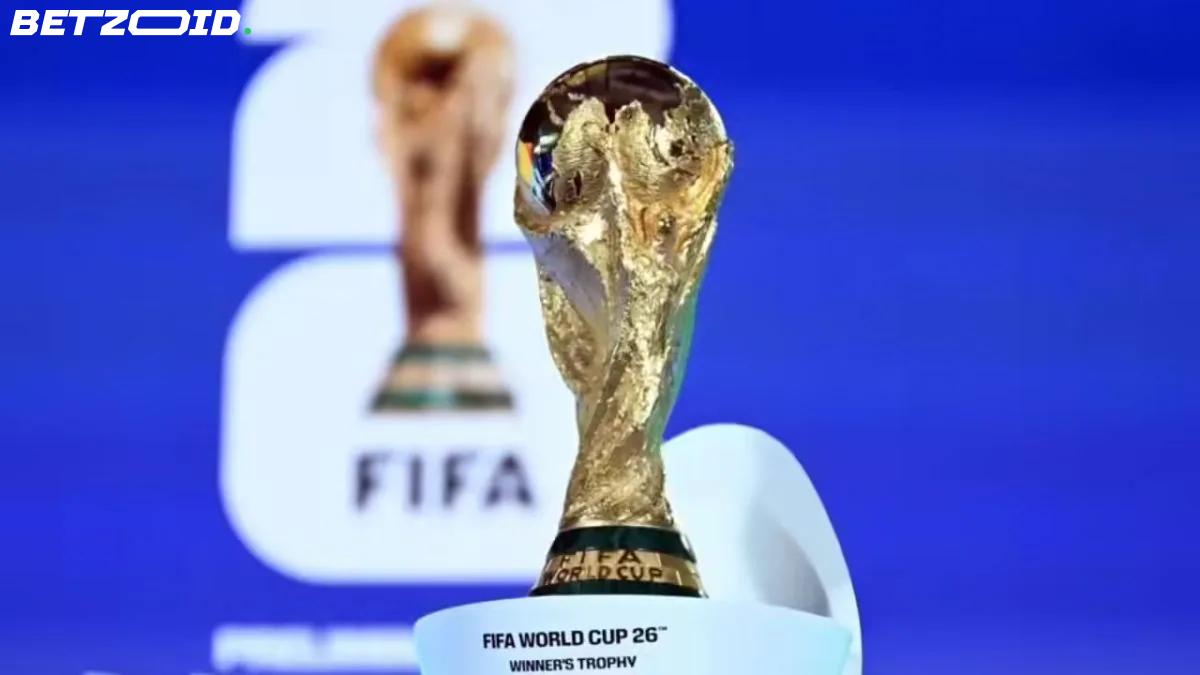
FIFA has approved $871 million in financial distributions for the 2026 World Cup — nearly double the $440 million handed out in Qatar. That jump isn't just inflation or generosity. It reflects a tournament that has grown from 32 to 48 teams, 64 to 104 matches, and from one host nation to three.
The money flows in more directions than most people realise. And how much your country's players actually see depends entirely on which federation is cashing the cheque.
Where the $871 million actually goes
The headline figure breaks down into a few distinct pools. The largest is a $655 million performance-based prize pot, distributed according to how far each team progresses. Before a ball is kicked, every one of the 48 qualified federations collects $10 million in qualification funding plus $2.5 million in preparation grants — a guaranteed floor of $12.5 million per nation just for showing up.
FIFA has also budgeted separately for travel, accommodation, delegation support and ticketing across all three host countries. With matches split between the US, Canada and Mexico, the logistical costs alone dwarf anything from previous tournaments. That's partly why the approved budget was revised upward from an earlier $727 million estimate.
One thing FIFA does not do: pay players directly. Prize money goes to national federations, who then decide what reaches the dressing room — and on what terms. Some offer appearance fees per match. Others pay performance bonuses. Many don't publish the figures at all. During the 2018 World Cup, France's players reportedly earned around £17,000 per match (Mbappé donated his to charity), while England's squad received approximately £2,000 per game, also donated to the England Footballers Foundation. The gap between those numbers tells you everything about how differently federations operate.
The US model is worth highlighting. Since a 2022 equal-pay agreement, US Soccer pools 80 percent of FIFA World Cup earnings across both the men's and women's national teams — one of the more structurally progressive arrangements in international football.
Clubs are taking home more than ever
Separate from the federation prize money, FIFA has allocated a record $355 million to clubs through its Club Benefits Programme. That figure covers:
- $250 million for the World Cup finals period
- $100 million for qualifying matches — a new addition to the programme
- $5 million for administration and club support
Clubs receive at least $5,000 per player per day from the moment a player joins their national squad until the day after their country is eliminated. A squad player who exits in the group stage generates roughly $160,000 for his club. A player who reaches the final is worth close to $285,000. Clubs also pick up $2,362 per qualifying appearance in the matchday squad.
The clubs with the most international players stand to collect the most. Manchester City leads with 19 players represented, ahead of Bayern Munich (18), Arsenal (16), PSG (16) and Barcelona (14). City and Bayern's expected returns from this programme alone will run well into the millions.
Add the federation payments and the club compensation together, and FIFA's total World Cup-related financial commitment clears $1.2 billion. The 2026 tournament is already the largest in football history by format. On pure financial scale, it's now in a different category from anything that came before it.