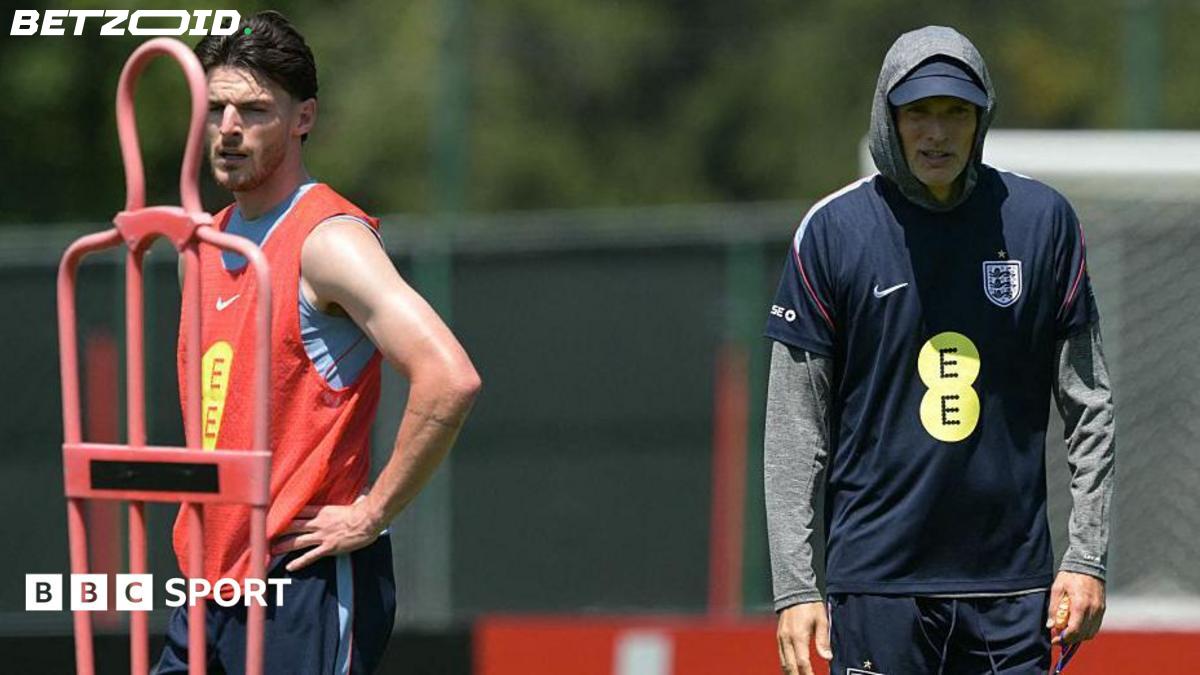
While Declan Rice and the rest of the England squad trained in vest tops under the Kansas City sun on Saturday, Thomas Tuchel stood on the touchline in a cap and a hoodie. That's not a fashion choice — it's a calculated one.
The FA has kitted out Tuchel and his coaching staff with specialist UV-filtering sun protection tops, the kind that block harsh rays while keeping skin cool and dry. Anthony Barry, Nicolas Mayer, and Justin Cochrane were all wearing them too. This wasn't accidental. England have done serious preparation work around the climate conditions they'd face in the USA, with Tuchel himself part of a delegation that attended the Club World Cup last summer specifically to scout the environment ahead of this tournament.
More than just a hoodie
The sun protection gear is one piece of a broader heat management strategy. Players are using high-tech palm-cooling devices on the sidelines, and some are also wearing cooling vests — all part of England's response to data showing at least a third of World Cup matches will be played in temperatures exceeding 26°C. In Missouri. In June. That's not a minor logistical footnote — it's a genuine performance variable, and the teams that manage it best will have a real edge in the later stages when the schedule compresses.
England's next test is Ghana on Tuesday at 21:00 BST in a Group L fixture, and then Panama in New Jersey on Saturday 27 June. By then, the heat issue could be just as significant as tactics on the page.
Saka's Achilles concern adds a sharper edge
The less playful subplot from Saturday's session: Bukayo Saka was absent from the outdoor pitch, working through an individual programme indoors as he manages an Achilles issue. Tuchel has already indicated Saka is unlikely to start until the Panama game — meaning England are navigating two group matches without one of their most dangerous attacking outlets.
That shifts the picture for anyone watching England's attacking output closely. Without Saka creating from the right, the team's ability to unlock deeper defences looks less fluid. Ghana and Panama will both know it.