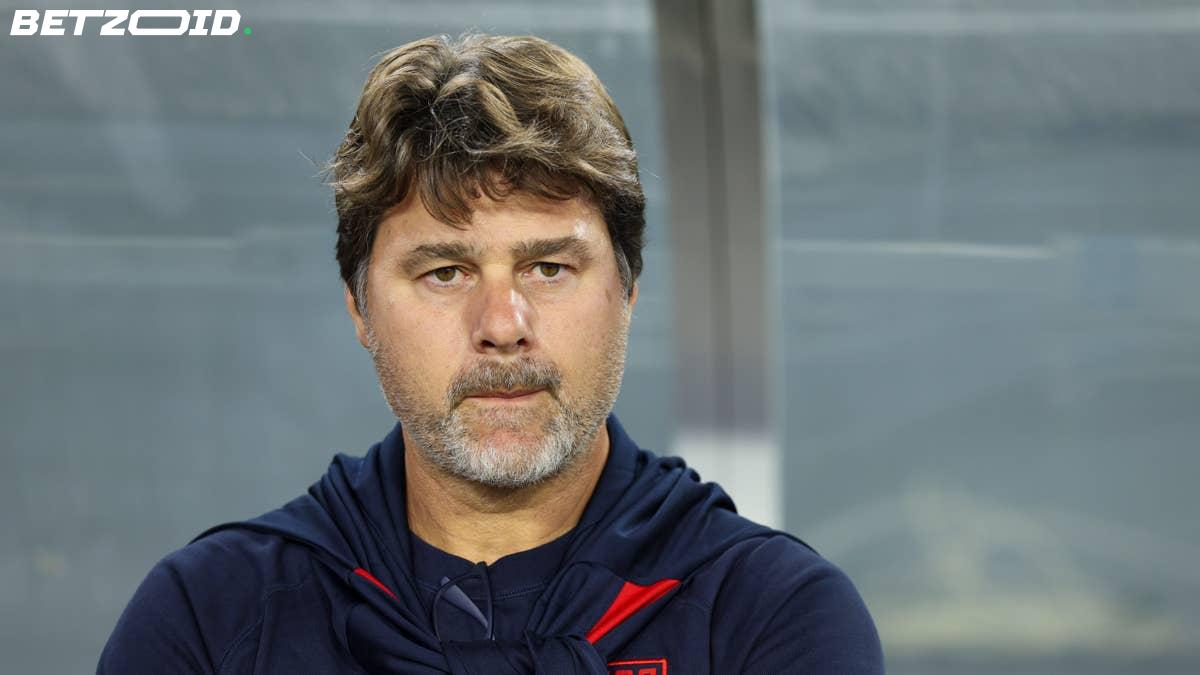
"Can you win the World Cup?" That's what the US president asked Mauricio Pochettino at the World Cup draw in Washington DC. The Argentine didn't hesitate: "Of course. Because it's the USA."
Twelve months ago, that answer would have been laughable. After home losses to Panama and Canada in March 2025 — listless, shapeless, embarrassing — the USMNT looked like a team heading into a home World Cup with nothing but shirt numbers and hope. Now, after a 5-1 dismantling of Uruguay in November and five wins from six in autumn 2025, the script has genuinely flipped.
The low point that changed everything
The Panama defeat was the moment of reckoning. A 1-0 loss on home soil, against a team the US should handle, with a squad that had — as Pochettino put it — "no fight, few ideas." He told his players they "cannot win with your shirt" and that they must "suffer and win the duels." Captain Tyler Adams said everyone needed to buy in. Pulisic admitted things needed to change. None of them had the answers yet.
What followed was six months of quiet reconstruction. Pochettino — who'd previously managed Chelsea, PSG, and Tottenham — experimented relentlessly with personnel, broadened the pool, and absorbed the reality that managing a national team operates nothing like a club. "We are discovering things that we need to pay attention to in a different way," he said at the time.
Results stayed inconsistent. Turkey outclassed them. Switzerland dismantled them. They lost the 2025 Gold Cup final to Mexico. But players were emerging — goalkeeper Matt Freese nailed down the No. 1 spot with a penalty shootout performance against Costa Rica, center back Chris Richards cemented himself as a first-choice starter, and a cluster of younger players (Freeman, Arfsten, Tillman, Berhalter, Luna) started looking like regulars rather than experiments.
The tactical shift that unlocked everything
The real turning point came at halftime of a 2-0 friendly loss to South Korea in September 2025. Pochettino shifted from his preferred 4-2-3-1 to a three-center-back shape — wingbacks wide, a midfield box, one striker — and the team looked transformed. Tim Ream called it "a stroke of genius." The formation gave them width, defensive structure, and the attacking movement they'd been missing.
Two windows later, that November 5-1 over Uruguay confirmed it wasn't a fluke. A rotated lineup averaging just 14 caps per player tore apart a side that had knocked the US out of the Copa América the previous summer. The identity Pochettino had been searching for — aggressive, fluid, built on grit and technical quality — finally had a shape to live inside.
The squad helps. Christian Pulisic at AC Milan and Weston McKennie at Juventus are legitimate difference-makers at club level, not passengers collecting caps. This is, by any honest measure, the most talented group the US has ever assembled, with World Cup experience spread across the pitch and — perhaps more importantly — a shared memory of how bad things got.
- Matt Freese (NYCFC) has established himself as the clear first-choice goalkeeper
- Chris Richards (Crystal Palace) is playing the best football of his career
- Pulisic and McKennie bring European pedigree and big-game experience
- The three-center-back system has given the squad defensive solidity and attacking width
- Five wins from six in autumn 2025 qualifiers, culminating in the Uruguay result
History isn't encouraging — the US has won two or more games at a World Cup exactly twice in twelve attempts, in 1930 and 2002. But Pochettino isn't interested in framing success as reaching the last 16. His stated target is winning the tournament.
Whether that's belief or salesmanship, it has changed the atmosphere around a program that spent most of 2024 in open crisis. The US opens the 2026 tournament against Paraguay on June 12. Their odds of going deep will depend on staying healthy, maintaining the tactical cohesion that only just clicked into place, and whether Pochettino can keep that belief intact when the pressure of a home World Cup becomes real.
"Belief in soccer is everything," Pochettino said. "Without belief, you can have talent, you can have very good strategy, but in the end, you'll fail if you don't have the spirit to fight."
He's not wrong. He's also not at the World Cup yet.