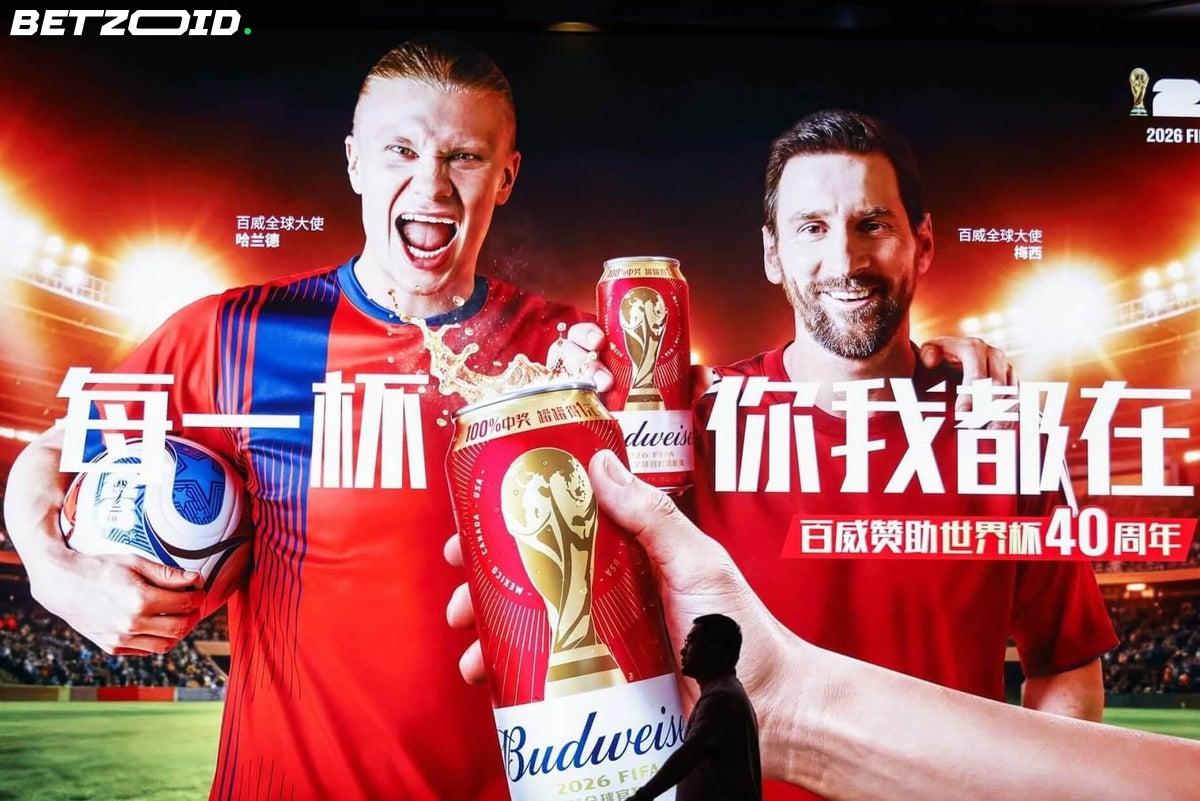
"He is the one that can genuinely transcend the game, almost more than anyone." That's not a Norwegian football federation press release — that's Steve Martin, founder of MSQ Sport & Entertainment, talking about what Erling Haaland just did to his own brand at the 2026 World Cup.
The numbers are absurd. Haaland arrived in the United States with 40 million Instagram followers. He left with 68 million. Nearly 13 million of those came during the knockout stages alone — a growth rate that branding experts say has no precedent in the speed at which it happened. Seven goals, a quarter-final run, and one stuffed whiskey-drinking raccoon from a Dallas western store that has now sold out worldwide.
Yes, really. Haaland bought the raccoon — and a cowboy hat, boots, and a 'Y'all can kiss my Dallas' T-shirt — from Wild Bill's Western Store the day after Norway beat Ivory Coast 2-1 in the round of 32. The store has since introduced international shipping to handle demand. The raccoon remains unavailable.
The platform he never had before
This was Norway's first World Cup in 28 years. That matters more than it sounds. Messi and Ronaldo — 512 million and 676 million Instagram followers respectively — built their global profiles through two decades of World Cup cycles, Champions League finals, and Ballon d'Or ceremonies. Haaland had none of that stage until June. He didn't waste a second of it.
Where most elite athletes hand their social media to management teams during major tournaments, Haaland went the opposite direction. He vlogged. He updated Snapchat. He posted a locker-room selfie after Norway knocked out Brazil in the round of 16 that generated a 52.91% engagement rate. His overall Instagram engagement rate rose 174% across Norway's tournament run.
For a large chunk of the American audience, this was an introduction. "His content, memes, and quotes consistently flooded social media and dominated online conversation, and U.S. fans adopted Norway's fan chant for him organically," says Andrea Nirsimloo, managing partner at MSQ Sport & Entertainment. The raccoon story landing in People magazine — an entertainment platform with zero obligation to cover football — signals something beyond a good tournament.
What Brand Haaland is actually worth now
Commercial value for elite athletes works in two dimensions: how much they can command, and from whom. Before this summer, Haaland was a known quantity in European football and sports-adjacent brands — apparel, energy drinks, the usual category. That ceiling just moved.
"When you start becoming a global cultural icon, it broadens the type of companies interested," says sports marketing expert Misha Sher. A Dolce & Gabbana event in Sicily this week — where Haaland showed up with his partner — hints at where the brand is already heading.
America is where the real money sits. Sher calls it "the biggest commercial consumer market in the world" for sports sponsorship. Haaland didn't have a foothold there before the tournament. He does now.
The Real Madrid question will keep resurfacing. Haaland is contracted to Manchester City until 2034, and City moved swiftly to deny any release clause after a Madrid presidential candidate waved a 'Haaland 9' shirt on Spanish television. But the pull of Madrid on ambitious players is real — Jude Bellingham turned down more money from Premier League clubs to wear white. If Haaland wants to reach the commercial altitude of Ronaldo, who spent his peak years at the Bernabeu, the calculus matters.
Martin thinks Haaland can elevate his profile without leaving City, pointing to 68 million Instagram followers as already entering serious territory. Sher is less dismissive of Madrid's unique power, but acknowledges the Premier League's global viewership is its own argument.
- 28 million new Instagram followers gained during the tournament
- Seven goals scored across Norway's World Cup campaign
- 174% increase in Instagram engagement rate during the run
- Norway's best World Cup performance in 28 years
Martin's parting image for Haaland's future — "you could genuinely see him being a James Bond villain" — is half-joke, half-genuine commercial roadmap. The physicality, the deadpan humour, the comfort under a global spotlight. It doesn't feel like a stretch.
"He has an opportunity to do what we haven't seen much of in football, but we're starting to see a lot of in U.S. sports," says Sher. The raccoon is sold out. The brand is just getting started.