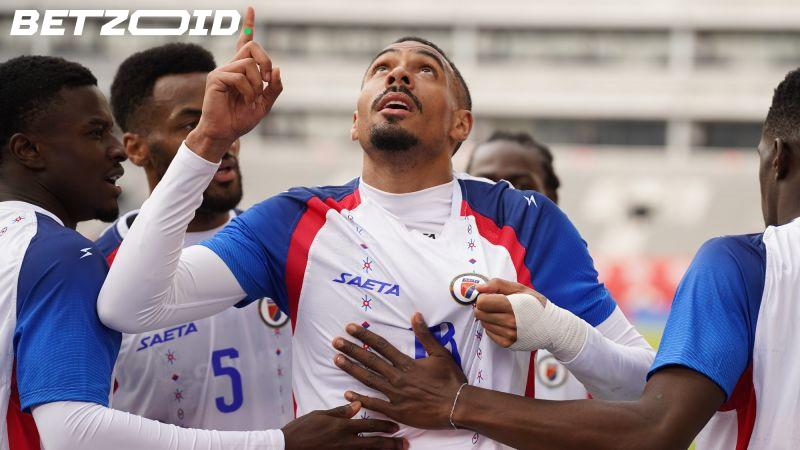
"It's been a long time since you see Haitian people united like this." Louicius Deedson said that after scoring one of the two goals that sent Haiti to the 2026 World Cup — their first appearance in over 50 years. In a country where gangs control an estimated 80 to 90% of the capital, that qualifier win in Curaçao over Nicaragua wasn't just a football result. It was the closest thing to a national exhale Haiti has had in years.
The streets of Port-au-Prince erupted. Briefly, euphorically, and against every backdrop imaginable.
A team that can't even train at home
This qualification story has layers most World Cup narratives don't. Haiti's national team trained in Florida and New Jersey for the qualifiers. Their French coach couldn't travel to the country. They played zero home games throughout the campaign. The stadiums they once used — including Sylvio Cator in downtown Port-au-Prince, where the team prepared for their only previous World Cup stint in the 1970s — are now occupied by people seeking shelter from gang violence, not footballers preparing for fixtures.
Earlier this year, gangs burned down the FIFA Goal Center in the capital. The facility was the backbone of Haitian youth sports development. Gone.
Most of the squad was born and raised abroad, playing in European leagues — primarily France. Deedson himself plays for FC Dallas in MLS, having moved to the United States as a young teenager from Port-au-Prince's Tabarre district. His childhood home in the Port-au-Prince area was partially burned in a gang attack last year. His family has had to flee.
"I know there's a lot of Haitian kids that are very good and they just want the chance to show themselves," he said. "There's a lot of talent there that's wasting right now."
The one player still on the ground in Haiti
Woodensky Pierre is the exception in this squad — not just a player who grew up in Haiti, but one who still lives and plays there. A midfielder for Violette Athletic Club in the Haitian league, Pierre is from Cite Soleil, one of Port-au-Prince's most dangerous neighborhoods. His mother was a street vendor. His father worked side jobs. A soccer scholarship got him through school.
On May 10, while Doctors Without Borders was suspending operations in Cite Soleil due to armed clashes, Pierre's club won the national championship final at Parc Sainte-Therese in Petionville — one of the few parts of the capital not fully overrun.
"There was a moment where I felt like I would never make it to this point because things were very difficult, I had no support, nothing," Pierre told CNN. "Football was all I had."
His former agent, Jerome Salbert, couldn't even watch Pierre play in person because of security-related travel restrictions around Port-au-Prince's international airport. That's not an isolated problem — it's a structural barrier that keeps Haitian players invisible to the international market. Young talent surrounded by violence, with no reliable way for scouts to reach them.
About half of Haiti's gangs are made up of minors, according to the UN. The country's Ministry of Youth, Sports and Civic Action wants to build more sports facilities, but the unrest makes that close to impossible in most areas. "It's killing us, whenever we see a kid with a gun," the ministry's communications director Louis Alex Francois said.
Haiti will arrive at the 2026 World Cup without a home stadium, without domestic training infrastructure, and without most of their squad ever having played a competitive match on home soil. They'll also arrive as one of the most compelling stories the tournament has.