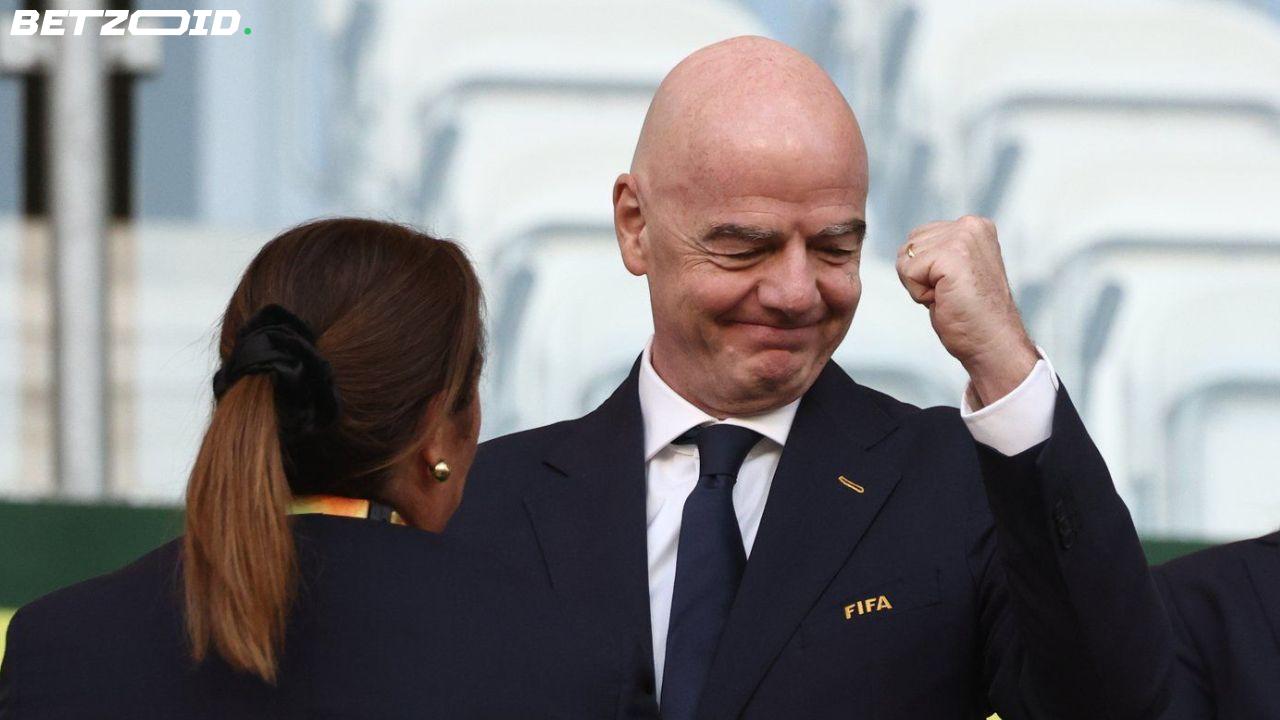
Gianni Infantino watched the World Cup final on July 19 with the support of nearly every federation on the planet. Nine days later, he didn't. One leaked investment plan — and the political ground under FIFA's president shifted faster than anyone expected.
The plan itself was straightforward enough, and that's partly what made it so damaging. Infantino had been in talks with Josh Kushner — younger brother of Jared Kushner, Trump's son-in-law — to sell private investors a stake in the commercial rights to the World Cup and other FIFA tournaments. European football erupted. Senior FIFA executives pushed back. Within four days, Infantino pulled the plug. But the damage was already done.
Where the votes actually stand
An AP tally puts 87 of 211 FIFA member federations in Infantino's corner — enough to be within striking distance of a simple majority if no serious challenger emerges. Against him: 49 federations, the bulk of them European. More than a third of members haven't declared at all, and with the November 18 candidate entry deadline approaching, that silence is loaded.
Africa and South America remain Infantino's strongholds. CAF's executive committee backed him unanimously in August. All 10 CONMEBOL members are on board — Argentina included — partly because Infantino has dangled the possibility of expanding the 2030 World Cup to 64 teams, which would hand South America more games and more hosting slots. UEFA hates that idea, which tells you most of what you need to know about why the continental split looks the way it does.
Asia is messier. The AFC leadership has criticised Infantino, but Qatar — who hosted the last World Cup and flies Infantino around on their jet — is firmly supportive, while Jordan has declared opposition. CONCACAF is similarly fractured: the US and Canada against, Mexico in favour. Even Oceania can't agree, with New Zealand withdrawing support in August while the Solomon Islands, Tahiti and New Caledonia remain on side.
UEFA's criminal complaint and the road to March
UEFA has gone further than withdrawing support — it's preparing a criminal complaint against Infantino over the investment plan. FIFA called it a "smear campaign." Whether it leads anywhere legally is almost beside the point; the political optics are corrosive for a president asking 211 federations to hand him power until 2031.
No sitting FIFA president has lost an election in the last 50 years. The incumbency advantage is structural: whoever controls World Cup revenue distribution controls a lot of loyalty. Infantino is leaning on that hard, with his Qatari jet logging stops in Saudi Arabia, New York, the Caribbean, northern Europe, and central and South-East Asia in the past two weeks alone — at least 20 federations visited.
UEFA has promised to field at least one challenger; who that is will likely become clearer when its 55 members meet in Berlin this week. The voting rules matter here: with two candidates, a simple majority wins. Add a third candidate and the threshold jumps to two-thirds in each round until someone clears it or the field narrows. That structure rewards the candidate who can consolidate opposition fast.
- 87 federations declared for Infantino
- 49 federations declared against (mostly European)
- 75+ federations yet to publicly declare
- November 18 deadline for candidates to enter
- Vote takes place March 18 in Morocco
Some federations are staying quiet for calculated reasons. Spain, for instance, is competing with Infantino ally Morocco to host the 2030 World Cup final. Announcing against him now would be a political own goal. The undeclared column isn't indifference — it's strategy.
UEFA's criminal complaint is still being prepared. The March vote is still five months away. And Infantino still has no declared opponent.