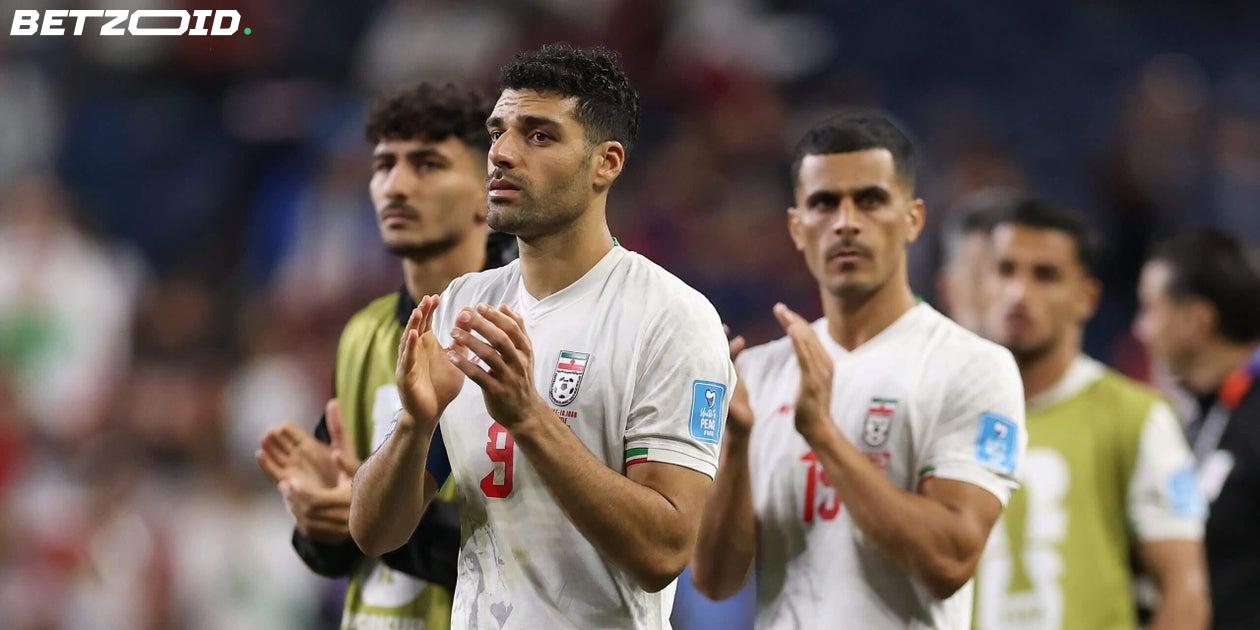
"It's a disaster World Cup," Mehdi Taremi told reporters after the 1-1 draw with Egypt that left Iran's last-16 hopes dangling. He was right. And the worst part? He said it while quoting Gianni Infantino back at him.
Infantino had visited Iran's dressing room after their opening 2-2 draw with New Zealand, offered a joke about playing as a striker for them, told them they were "writing history", and left. What followed was three weeks of visa denials, border detentions, forced same-night flights, and a political environment so toxic that the U.S. Secretary of Homeland Security publicly "happy danced" when Iran went out.
Detained, delayed, denied
Four of Iran's 15 staff members were initially denied U.S. visas. Captain Taremi was stopped at Los Angeles border control before the team's first flight back to their Tijuana training base — then stopped again at Tijuana airport alongside assistant coach Saeed Alhoei ahead of the Seattle leg. Iranian Football Federation secretary-general Hedayat Mombeini and vice-president Mehdi Mohammad Nabi were among those blocked entirely. One staff member who had attended five consecutive World Cups without incident couldn't even watch matches in the U.S.
The team was confined to crossing the border no earlier than 24 hours before kick-off. Iran were the only side at this tournament making same-night flights back to a base in a different country after every match. Head coach Amir Ghalenoei said it directly affected his ability to schedule optimal training. Some in the squad disagreed on the severity — but none of them were sleeping in a Tijuana Marriott while 47 other coaching staffs set up weeks in advance.
Andrew Giuliani from the White House FIFA Task Force called the 24-hour window a "goodwill gesture." Iran called it what it was.
The football itself was failing too
Here's the uncomfortable truth sitting underneath all the politics: Iran didn't play well enough. Their group — New Zealand, Belgium, Egypt — was, by their own players' admission, the most manageable draw they'd had in four tournaments. They still went home with two points.
Sardar Azmoun, 31 goals in 91 caps before this tournament, wasn't even in the squad. He'd posted something on social media perceived as critical of the Iranian government and was told a public apology to the regime was the price of his place. He refused. There were also claims that certain squad members were selected for their proximity to the regime rather than their form — particularly among the senior players.
On the pitch, selection choices raised eyebrows even within the camp. Playing inexperienced right-back Arya Yousefi at left wing against New Zealand, with senior wingers available, was seen internally as a significant misjudgement. Tactically, execution let them down repeatedly when they had the chances to take control.
VAR didn't help. Taremi had a goal overturned by an offside call against Belgium so fine it was invisible to the naked eye. Against Egypt, a stoppage-time goal from Shoja Khalilzadeh that would have put them through was ruled out. Taremi also missed a penalty in that game. On another night — or with a more generous margin — Iran finish the group on seven points as winners. Instead, they watched Algeria-Austria from the Marriott in Tijuana, briefly celebrating a 93rd-minute Riyad Mahrez goal that would have sent them through, then going silent when Sasa Kalajdzic equalised three minutes later.
With Taremi 33, Jahanbakhsh 32, Azmoun 31, and the national team's pipeline of Europe-based talent notably thin, this was probably Iran's strongest window for a while. It closed in a Tijuana hotel lobby at midnight.
Markwayne Mullin said he "sung a song or two" celebrating Iran's exit. Iran's response was measured but pointed: his reaction, they said, "reflects a level of pettiness that cannot even tolerate the presence of a football team competing on the world's biggest stage."
Tijuana, for its part, was up at 6:30am to wave them off.