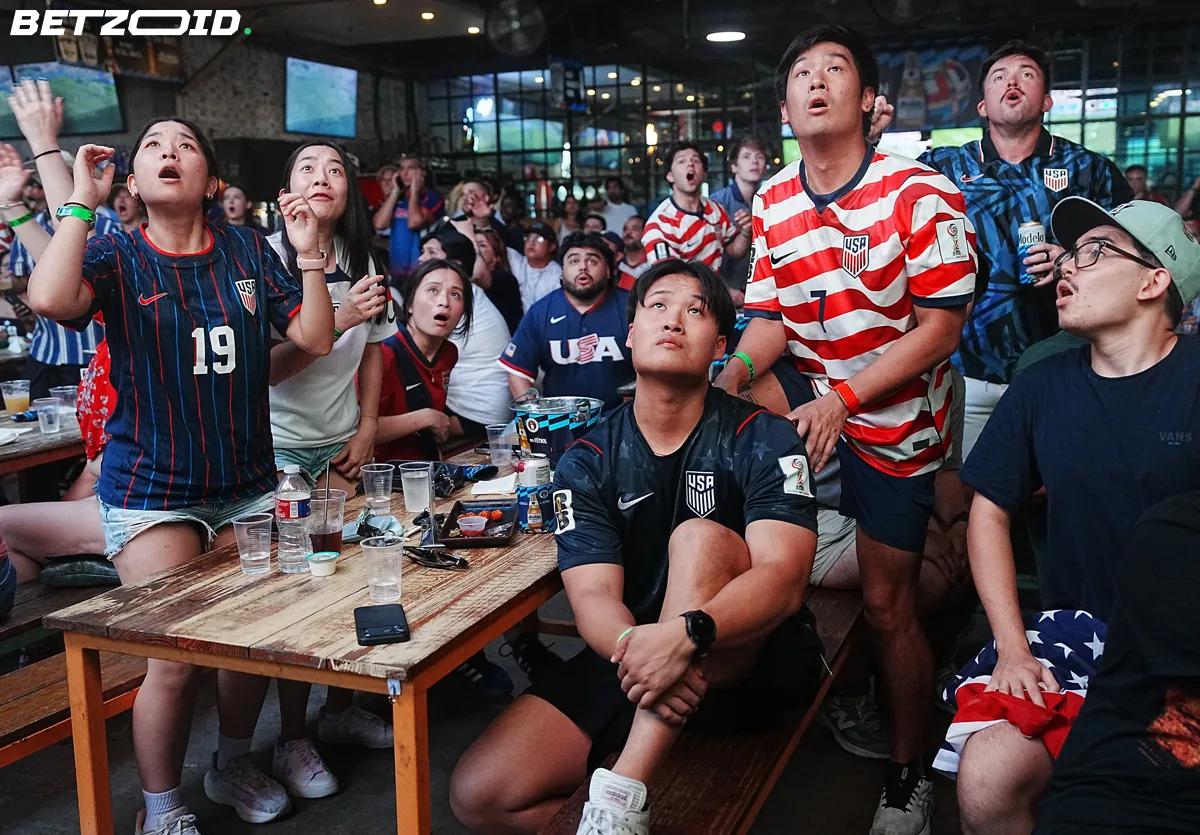
18 million viewers watched the U.S. open against Paraguay. Another 7 million tuned in on Telemundo. The games are in prime time, on American soil, and the country has a team worth caring about. Something has shifted.
For decades, the World Cup arrived in the United States like a visiting relative — welcomed warmly, watched politely, then largely forgotten once the bags were packed. The cycle was predictable: casual fans tuned in, pundits declared soccer had finally arrived, the tournament ended, and nothing much changed. This time, the conditions are different enough that the usual skepticism feels harder to sustain.
Why this tournament is cutting through
The time zone factor alone is underrated. Asking American sports fans to restructure their mornings around a match happening in Qatar or Russia is a losing proposition. A prime-time knockout game against Belgium requires no such sacrifice. You watch it the same way you watch everything else — at a bar, at home, in a group chat, after work. The friction is gone.
The team helps. Folarin Balogun has given the U.S. the kind of clinical striking presence it has rarely had on this stage. Pulisic, McKennie, Richards, Weah, Dest, Tillman — this roster reflects how the modern American program actually works: players developed in Europe, players who could have represented other countries and chose the U.S., players shaped by MLS academies and the global game simultaneously. That blend makes the team easier to follow for fans who didn't grow up glued to the sport.
And then FIFA handed the tournament a controversy tailor-made for American audiences.
Balogun was sent off in the 2-0 win over Bosnia and Herzegovina following a VAR review for a challenge on Tarik Muharemović. A one-match ban meant he'd miss Belgium — the U.S.'s biggest game of the tournament. Then Trump reportedly called FIFA president Gianni Infantino, said he didn't think it was a foul, and FIFA suspended the ban. The red card stood. Balogun plays. The internet, predictably, lost its mind. Whatever you think of the decision, it put the USMNT on the front page in a way no friendly or qualifier ever manages.
The betting market doesn't lie about interest levels
Sportsbooks have reported unusually strong volume around U.S. matches — significantly more action than other World Cup games played on the same days. Betting activity isn't a proxy for long-term fandom, but it is a reliable indicator of active, invested attention. The USMNT has moved from background scheduling to something people are tracking, wagering on, and arguing about. That's not nothing.
The broader picture backs it up. A Nielsen study found North America's soccer fan base grew 10.9 percent over five years to more than 136 million. The U.S. now ranks fourth globally with 62.5 million followers. Nearly seven in ten North American fans said their interest in the sport had grown in the three years leading up to this World Cup. Youth clubs in Houston reported hundreds of new sign-ups during the tournament. Tampa Bay Rowdies are running watch parties and outreach programs to convert the moment into membership.
FIFA has confirmed attendance surpassed 3.6 million in the first two weeks — breaking the record set when the U.S. last hosted in 1994. MLS has grown to 30 teams. Messi at Inter Miami pushed the league into mainstream conversation. Premier League and La Liga broadcasts have made the U.S. the biggest foreign market for multiple European leagues. Ted Lasso and Welcome to Wrexham did their part too.
Soccer hasn't overtaken the NFL. It hasn't knocked out the NBA. But the question used to be whether Americans could be persuaded to care. That question is getting harder to ask with a straight face when 25 million people are watching a round-of-16 match on a Monday night in July.