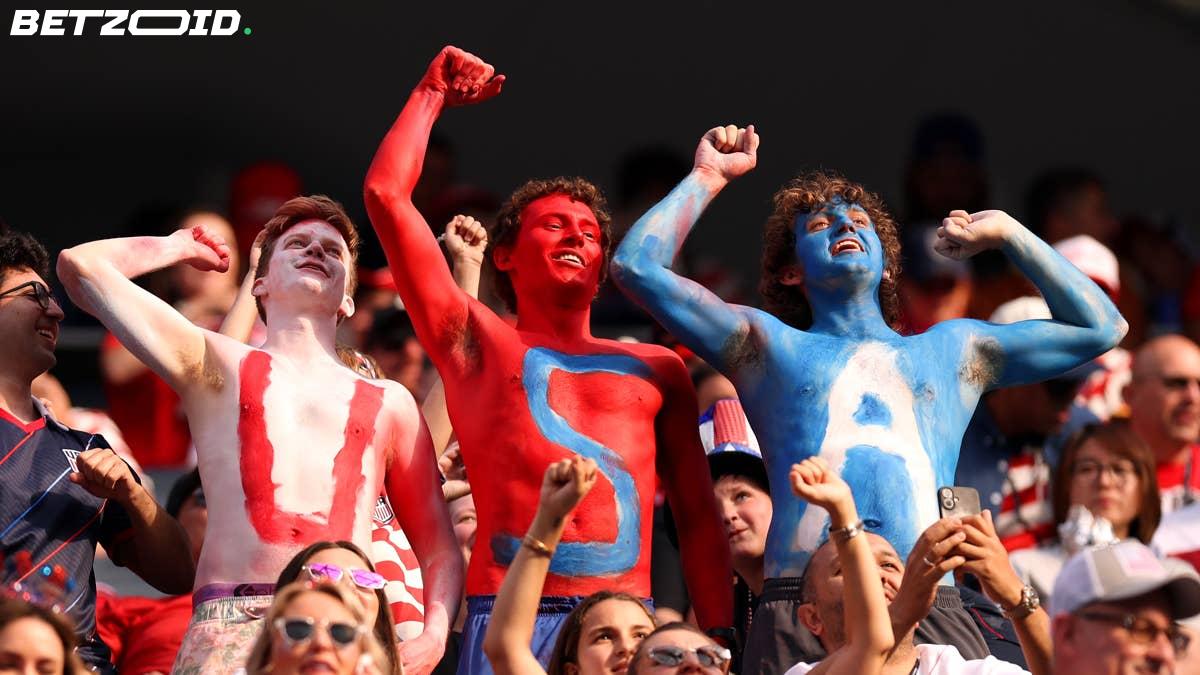
"I believe that we will win" — Jason Kelce thinks that chant tells you everything wrong with American soccer culture, and he's not entirely wrong.
The former Philadelphia Eagles center went on the Unfiltered Soccer podcast alongside U.S. legends Landon Donovan and Tim Howard and said what plenty of football purists have quietly thought for years: that chant sounds like a team trying to talk themselves off a ledge, not a fanbase expecting to dominate.
"It sounds like fans trying to convince themselves their team has a chance," Kelce argued. At a World Cup, that's not the energy you want echoing around a stadium.
Brazil don't chant about belief
To make his case, Kelce pointed to Brazilian supporters. He recalled their chants translating roughly to: "We came here to f**k you up." That's not hope. That's certainty. And there's a psychological difference — one sends a message to the opposition, the other mostly reassures yourself.
He's not wrong that global football fans have noticed. European and South American supporters have spent years mocking American chants as polished, rehearsed, and oddly cheerful — more Friday night pep rally than Maracanã. The "I Believe" chant, whatever its emotional value to American fans, lacks the wit, rhythm, and menace that makes football chanting actually work as a weapon.
The chant itself exploded during the 2014 World Cup and became a staple of supporters' groups like the American Outlaws. For a generation of USMNT fans, it carries real meaning. That's fair. But meaning and effectiveness aren't the same thing.
The timing matters
With the 2026 World Cup coming to North American soil, USMNT will be playing home games in front of some of the loudest crowds they've ever seen. The atmosphere those supporters create could genuinely shift matches — or at least the mood heading into them. A chant built around hope doesn't quite cut it when you're the host nation and the stakes are that high.
Kelce's broader argument is that American soccer has grown up enough to stop hedging. The players believe they can compete. The question is whether the fanbase chants like they do.
"I believe that we will win" was created outside professional soccer and borrowed by a nation still finding its football identity. A decade on, that identity needs a sharper edge.