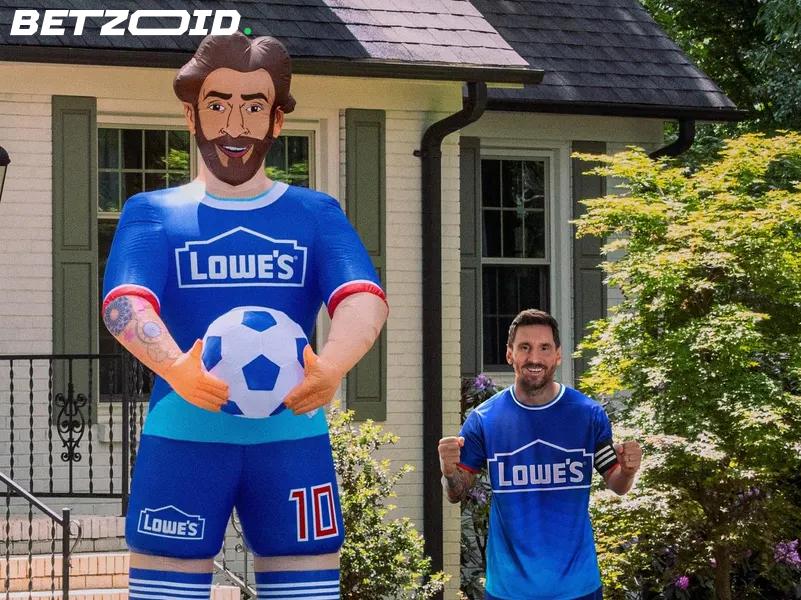
A 10-foot Lionel Messi standing in your front yard. That's the campaign. And honestly? It might be the most American thing to come out of the 2026 World Cup so far.
Lowe's has partnered with Messi for a limited-run lawn statue tied to the tournament, and the logic behind it is sharper than it sounds. With the World Cup spread across the vast geography of North America — and with fan fests being cancelled or scaled back in several host cities — most people are going to watch this tournament from their couch. Lowe's, a home improvement chain, is simply meeting the audience where they'll be.
"That's really where most of the celebrations are going to be happening," said Lowe's CMO Marisa Thalberg. The chain is framing Messi as the ultimate deliverer — someone who shows up when it counts — which maps neatly onto their brand identity. It's corporate synergy, sure, but it's not a stretch.
What Messi has actually done to American football culture
The Cantor family — Argentine-born broadcaster Andres and his American-born son Nico, who covers football for CBS Sports — have watched Messi's US impact up close. The numbers back them up. MLS averages attendances in the low 20,000s across a season. This year alone, Messi pulled over 70,000 fans to stadiums in Baltimore, Los Angeles, and Denver. That's not a league bump. That's a category shift.
Nico Cantor put it in more personal terms: a decade ago, people on the street would ask him what he was drinking when he had mate. Now they ask him what brand. One player shifting the cultural conversation around an entire country's diaspora is a rare thing.
Andres was more direct: "I believe that everyone knows now who he is and what he has meant to the world of football."
A limited run — and a read on the tournament's TV audience
Lowe's says the statues will be a limited run and expects them to sell out. Whether that's marketing confidence or genuine demand, it signals something real about how the 2026 World Cup is being positioned commercially — less as a stadium event, more as a living-room one.
Political tensions around Trump's involvement in the tournament, rising costs, and scaled-back public viewing infrastructure all point toward higher TV numbers than a typical home World Cup might generate. Betting markets around broadcast viewership records could be worth watching — if Messi reaches the knockout stages, US audiences will be enormous.
The statue sells out or it doesn't. But the instinct behind it — that Messi is now legible to mainstream America in a way no soccer player has been before — is probably right.