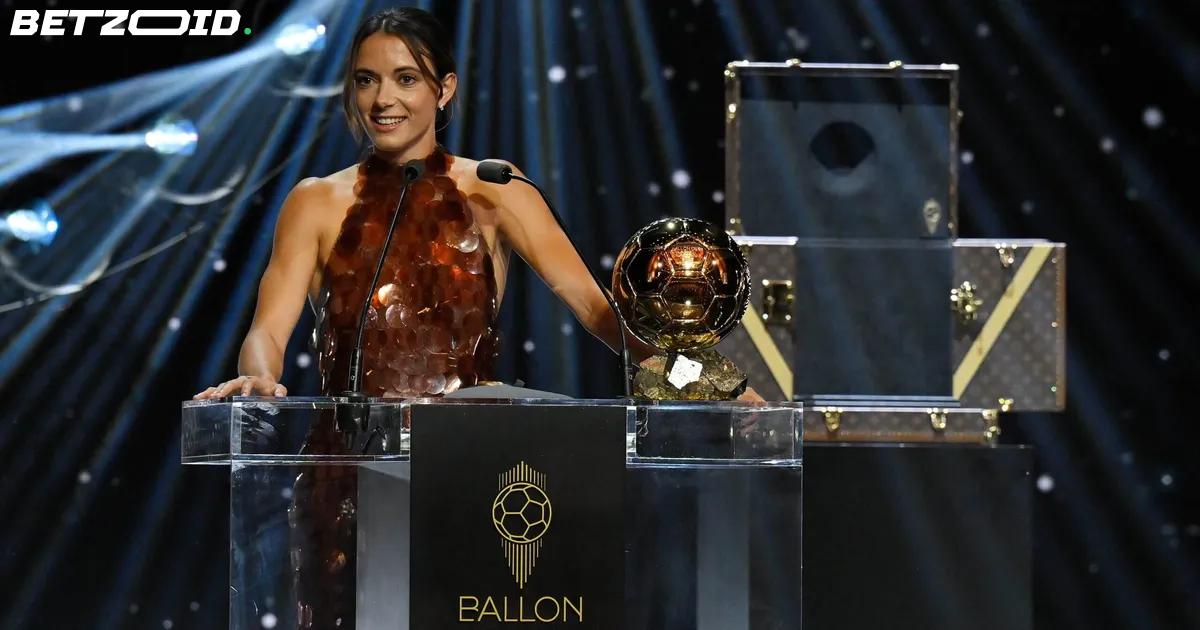
"People think there's going to be a perfect model, but we all have our own biases anyway about what we think is a good footballer." That one sentence, from a former Ballon d'Or Féminin voter speaking anonymously to The Athletic, probably tells you more about this award than the official criteria ever will.
The formal rules are clean enough: an international jury of journalists from the top 50 FIFA-ranked nations votes on individual performance, team success and trophies, and class and fair play — in that order. But the voters themselves admit that what actually tips the scales is murkier, more instinctive, and often shaped by which matches they were able to watch in the first place.
The Champions League problem — and the WSL's case
No WSL player has ever won the award since its introduction in 2018. That's not coincidental. Five of those six wins have gone to Barcelona players — Alexia Putellas twice, Aitana Bonmatí three times — and three of those came in seasons where Barcelona won the Champions League. Voters are essentially telling you what they value most: European continental success above everything else.
"That's the only stage where teams from different nations get to measure up against each other," said one European voter. "That's what tips it for a lot of voters."
Which creates an uncomfortable paradox for WSL clubs. Arsenal won the Champions League last season. Russo and Caldentey finished second and third behind Bonmatí. Manchester City won the WSL title this year — their first in a decade — with Khadija 'Bunny' Shaw claiming a record third successive Golden Boot. Five City players made the shortlist. Yet the conversation around the actual winner still circles back to Putellas, back in favour after three years watching Bonmatí collect the trophy.
Putellas scored 20 goals in 43 Barcelona appearances last season, contributed seven goals and seven assists to their fourth Champions League win, and collected a domestic treble. She's since moved to London City Lionesses as captain, but those trophies were won in Spain. The award, as one voter put it, will reflect that.
Shaw's situation illustrates the ceiling for WSL players clearly. "We all know she is probably one of, if not the best striker in the world," one voter said. "Where she falls down is that in major tournament years, she's not playing for a national team at the same level. Last year, she wasn't in the Champions League. You have to be competing at those levels to really be considered at the very top." Shaw odds for this year's award reflect exactly that — she's on the shortlist, but not in serious contention.
Stats flatter forwards, and voters know it
One of the more revealing admissions from former voters is how consciously they have to resist the pull of raw numbers. Goals. Assists. Clean sheets. They're easy to point to, hard to contextualise.
"Attacking players maybe get valued a bit too high because it's easy to vote for them when you see stats like goals and assists," said one voter. They used Patri Guijarro — Barcelona's defensive midfielder — as the example. Unremarkable on a stat sheet, essential to everything Barcelona do with the ball. "They would not have been able to win all of those trophies without her, even though she's not the one who scores the goals."
The same logic applies to goalkeepers. How do you fairly assess Barcelona's Cata Coll when her team runs away with the Primera División every season? Clean sheets against weaker opposition don't translate cleanly to continental comparisons. It's a problem the voters acknowledge without having solved.
Megan Rapinoe winning in 2019 remains the sharpest illustration of tournament halo effect. She took the Golden Boot and Golden Ball at that summer's World Cup, then played six club matches in the voting period. Lucy Bronze, who finished behind her, had won the Champions League and three other trophies with Lyon. Whether that result was right or wrong depends entirely on how you weight a World Cup summer against nine months of club football — and voters still disagree on that.
- Ballon d'Or Féminin has been awarded since 2018
- Two Spanish players — Putellas and Bonmatí — have won all five editions
- Three of those wins coincided with Barcelona Champions League victories
- No WSL player has finished higher than second (Kerr, 2023)
- Shaw has won three consecutive WSL Golden Boots — yet remains outside the top tier of Ballon d'Or contention
Manchester City manager Andrée Jeglertz, himself nominated for Women's Coach of the Year, pushed back on the idea that Champions League success should automatically outrank WSL dominance. "We are in the best league. The best players are here. We compete on a very high level every week," he said. He has a point — but until that argument shifts enough voter minds, his players will keep making shortlists rather than collecting trophies.
"Until a team in England really marks themselves in the Champions League," one voter said, "and with a World Cup next summer where WSL players could shine internationally — it's definitely possible. But we've been living in Aitana Bonmatí's world for quite a few years."
That's the ceiling, stated plainly. And for now, Putellas is the favourite to reclaim the award she first won in 2021.