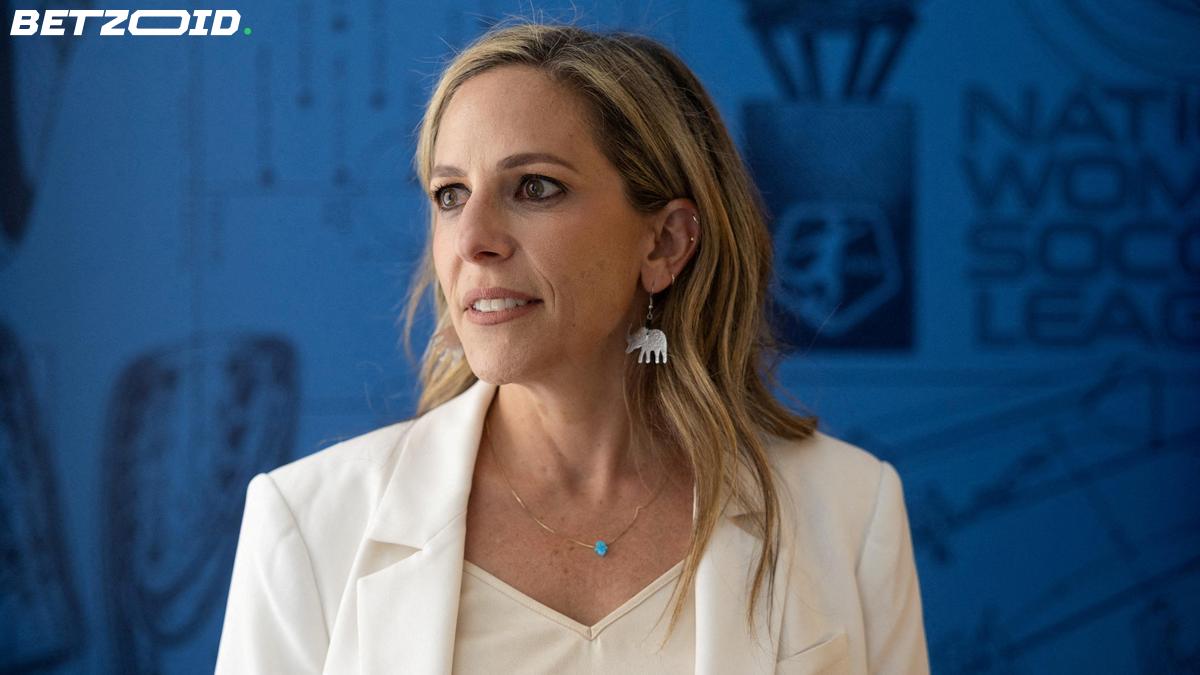
"We're all leveraging the same players for these different tournaments." That line from NWSL Commissioner Jessica Berman, speaking at Leaders Week in Stamford Bridge, cuts right to the heart of women's football's most uncomfortable growing pain.
The sport is booming. Viewership is up, investment is flowing, and FIFA is launching a Women's Club World Cup in January 2028. All good things — until you zoom out and realise that January sits squarely in the middle of Europe's domestic season, just six months after the Women's World Cup in Brazil. The same players. The same knees. A rising ACL injury rate already flashing warning signs.
A calendar that doesn't add up
Berman isn't opposed to growth. She's been commissioner since 2022 and has overseen the NWSL's own expansion — with 20 teams flagged as the "next touch point." But she's clear-eyed about what unchecked competition stacking does to the athletes at the centre of it all.
"We must communicate to make sure that we're optimising for their performance in a way that allows for us all to have the longevity and sustainability that we're looking to achieve," she said. That's diplomatic language for: someone needs to be the adult in the room before players start breaking down.
The Women's Club World Cup format sends 19 teams through a play-in stage and group phase, with slots divided across confederations — UEFA gets five berths, while AFC, CAF, CONCACAF and CONMEBOL each take two direct spots. The NWSL, for all its growth, is waiting on basic details from FIFA: location, format, structure. Berman said her league is still in the dark on most of it.
The US hosting angle
British reports suggest the US is in advanced talks to host the tournament, which would change the calculus for the NWSL considerably. Berman acknowledged that American hosting could bring "exposure" and commercial benefits to the league — a meaningful boost for a competition still building its global profile.
"I think there's a lot of opportunity if it were to be hosted in America," she said, carefully. "I'd want to hear more about what the plans would be." Careful optimism. Not a blank cheque.
The tension here is real and it's structural. Women's football has spent years fighting for more — more games, more tournaments, more visibility. Now it's getting them all at once, layered on top of each other, and the players carrying that load are the same ones already dealing with injury rates that have drawn serious medical scrutiny. Any league whose players feed into this ecosystem — and whose odds markets depend on those players being fit and available — has reason to pay attention to what Berman is saying.
More details from FIFA, she says, are "to come." That's the part worth watching.