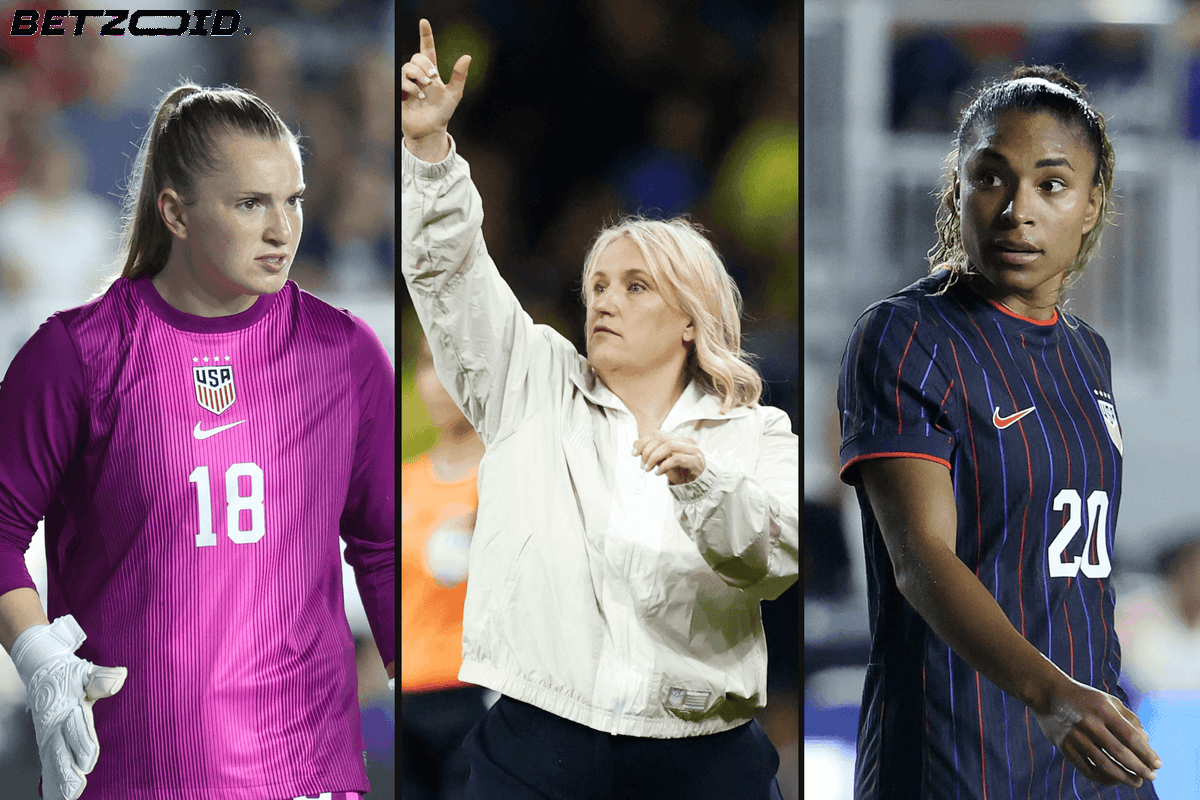
Brazil 2027 is less than a year away, and the USWNT still doesn't have answers to the questions that matter most. That's not panic — it's reality. Emma Hayes has built something with genuine depth, but depth means little if the players who were supposed to carry this team through a World Cup are either watching from the treatment table or working their way back from maternity leave.
Spain arrive in October for a pair of friendlies in Washington D.C. and Chester, Pennsylvania. The reigning world champions, ranked No. 1 by FIFA after winning in 2023 and reaching the 2025 Euros final, are the sternest test Hayes could ask for before World Cup qualifying in November. The last time these two met — a 2022 friendly in Pamplona — Spain won 2-0. The USWNT, currently ranked No. 2, will want a different outcome. A lot depends on who's available.
The injury problem is real
Naomi Girma hasn't played for club or country since April with a calf injury. Catarina Macario, last year's top USWNT scorer, hasn't featured since December 2025 with a heel problem — and the San Diego Wave have been almost deliberately vague about her timeline. The qualifying window is four months away. The clock is moving faster than either player's recovery.
The U.S. beat Japan and Brazil without Macario, so they can manage. But Girma is a different matter — she played considerably in both wins over Japan in April, and her absence at center back opens a real vulnerability. Kennedy Wesley of San Diego, a fellow Stanford graduate, is the most credible cover option. There is no like-for-like replacement for Macario.
Then there's the matter of Trinity Rodman, Sophia Wilson, and Mallory Swanson — "Triple Espresso" — all returning from extended absences. Rodman battled a chronic back injury. Wilson and Swanson were both on parental leave. Hayes called all three up for the June Brazil friendlies for the first time in nearly two years, which was a positive step. But Swanson is still working back to meaningful minutes, and her World Cup spot isn't guaranteed. Hayes has been explicit: no one earns a place by reputation alone.
The goalkeeper debate Hayes is tired of having
"It seems to me that we have an obsession in football around, 'Who's the No. 1?'" Hayes said in April. Fair point — but someone has to start the opening group match in Brazil. Right now it's genuinely unclear who that will be.
Claudia Dickey has more caps under Hayes, but Phallon Tullis-Joyce brings Champions League experience against elite European opposition that Hayes clearly values. As of June 2026, the data suggests Hayes is deliberately running two keepers in parallel rather than naming a clear starter. That's an unusual approach for a World Cup cycle, and it could affect how you weigh the USWNT's odds of keeping clean sheets against top opposition — Tullis-Joyce's European pedigree arguably gives her the edge when the draw gets difficult.
Beyond the top two, Jane Campbell and Jordan Silkowitz are on the immediate bubble, with Silkowitz having traveled with the U-23s to Brazil in June.
Who's in, who's out, and who's fading
The midfielder pool looks settled. Rose Lavelle — when fit — remains one of the best in the world at her position, and her ability to change a game from the bench makes leaving her home almost unthinkable. The concern is always her injury history. A healthy Lavelle is a different conversation entirely.
At the back, Emily Fox is the one genuine lock. She's been the most consistent presence on the USWNT backline across the entire cycle, crucial to how Hayes' defense is organized. Everyone else — including Girma, depending on her recovery — carries some uncertainty.
The forward pool is where things get complicated. With Triple Espresso back in the mix, players who stepped up in their absence now face a harder road. Emma Sears' finishing hasn't been consistent enough to justify her place ahead of Michelle Cooper or Swanson, and her club Racing Louisville has struggled, limiting her chances to make a case. Alyssa Thompson has arguably been the most reliable attacking presence since the Paris Olympics — she's played with both Triple Espresso and the players who filled in during their absences, which makes her uniquely valuable to Hayes' system.
Further out on the bubble: Ally Sentnor, Jameese Joseph, Yazmeen Ryan, and NWSL rookie Jordynn Dudley. Any of them could be on the plane to Brazil. None of them are certain.
The Brazil friendlies in June gave Hayes a preview of what next summer will feel like — hostile crowds, ferocious atmosphere, opponents specifically trying to disrupt the U.S. tempo. Emily Sonnett handled it well enough on the pitch, then apparently got under Brazil's skin so effectively post-match that Marta came for her on Instagram. That kind of composure under pressure matters when you're picking a 23-player squad for a tournament. Hayes knows that. The qualifying campaign, starting in November, is where the selections start to crystallize.