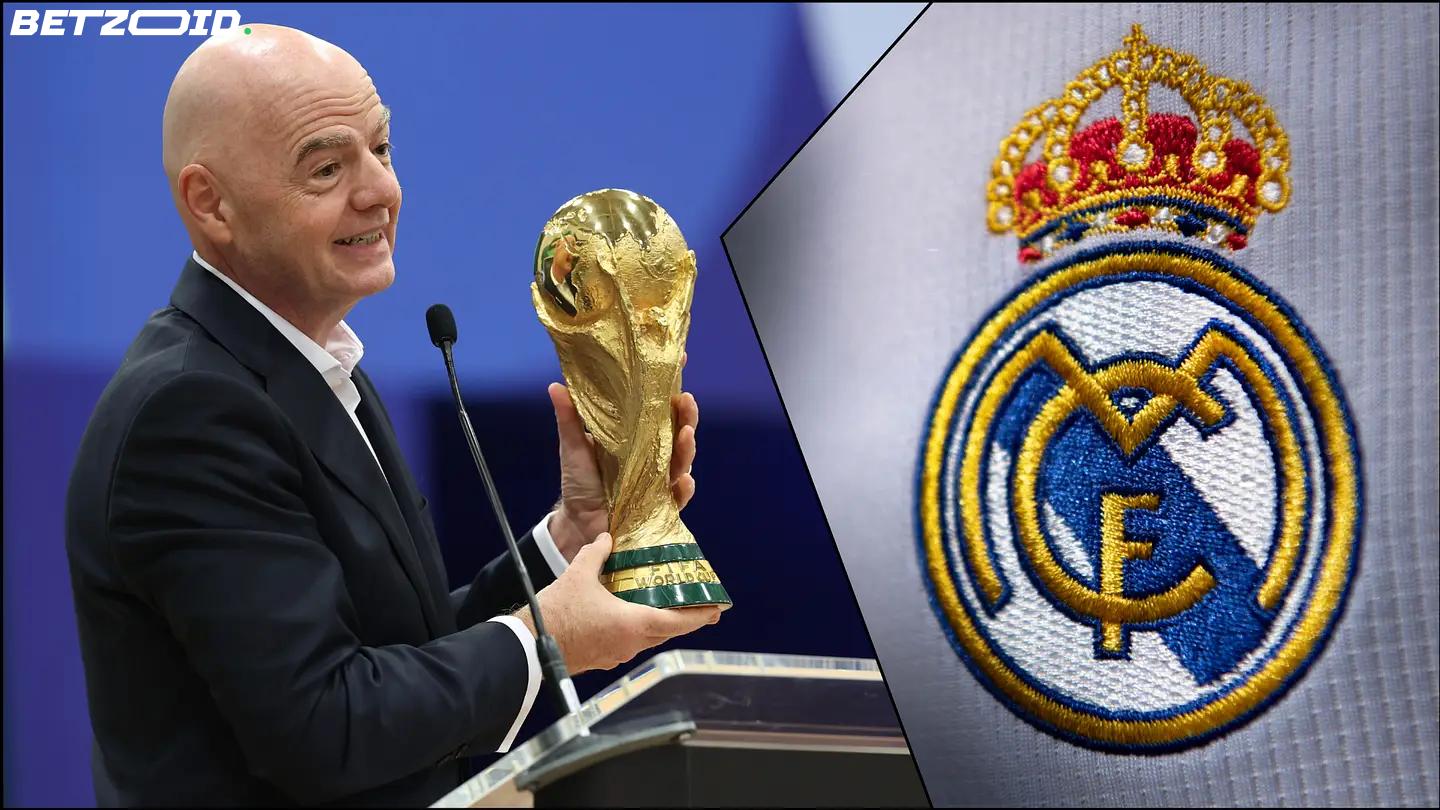
"International football and the World Cup form a heritage that belongs to nations, to fans and to society as a whole" — Real Madrid don't often speak for the common fan, but on this one, they're not wrong.
The Spanish giants became the first major club to go on record over Gianni Infantino's collapsed plan to sell commercial stakes in FIFA's flagship competitions, including the men's and women's World Cups. Reports from The Times and Financial Times broke the story earlier this week. UEFA's response was swift and collective: every European national association agreed to boycott future FIFA tournaments if the proposal went ahead. Infantino dropped it. Real Madrid then waded in to make sure everyone knew where they stood.
Their statement "warmly welcomed" the decision to scrap the plan, praising UEFA and the confederations for "protecting football at a decisive moment." Warm words. But the club didn't stop there.
Old wounds, new statement
Real Madrid saved their sharpest paragraph for La Liga. Almost as an aside, they drew a direct line between Infantino's failed scheme and the 2021 deal in which La Liga sold 8.2% of clubs' broadcasting and sponsorship income through to 2071 to private fund CVC, in exchange for around $2.2 billion up front.
Madrid refused to participate at the time. Florentino Pérez called it an attack on the club's financial interests. They took La Liga to court, lost the appeal on legality, but were successfully carved out of the deal's terms. That's the context behind this line in their statement: "Mortgaging for half a century revenue that belongs to the clubs, who bear the full costs and risks, sets a precedent that football must not repeat."
Whether you agree with Madrid's position or not, the parallel they're drawing is coherent. Both deals — the FIFA proposal and La Liga's CVC arrangement — involve selling future revenue streams to outside investors without those investors taking on any of the operational risk. The clubs generate the product. Someone else clips the commercial ticket for decades.
What this actually means
For FIFA's credibility, this is another damaging chapter. Infantino has now alienated every UEFA member nation and drawn public opposition from the most decorated club in European football history. The proposal is dead for now, but the underlying pressure to monetise football's governing structures hasn't gone away — it rarely does.
Real Madrid's intervention carries weight beyond the statement itself. They're not a neutral party here, and they know it. This is a club that also helped launch the failed European Super League project in 2021, so their credentials as guardians of football's public interest have limits. But their argument on the revenue-without-risk principle is substantively sound, whatever the motivation behind making it.
The last line of their statement doubles as a warning: "Any initiative that seeks to appropriate football's future revenues without assuming the responsibilities that generate them is unacceptable and must never be considered again." Infantino may have shelved the plan. Real Madrid just made sure it stays shelved.