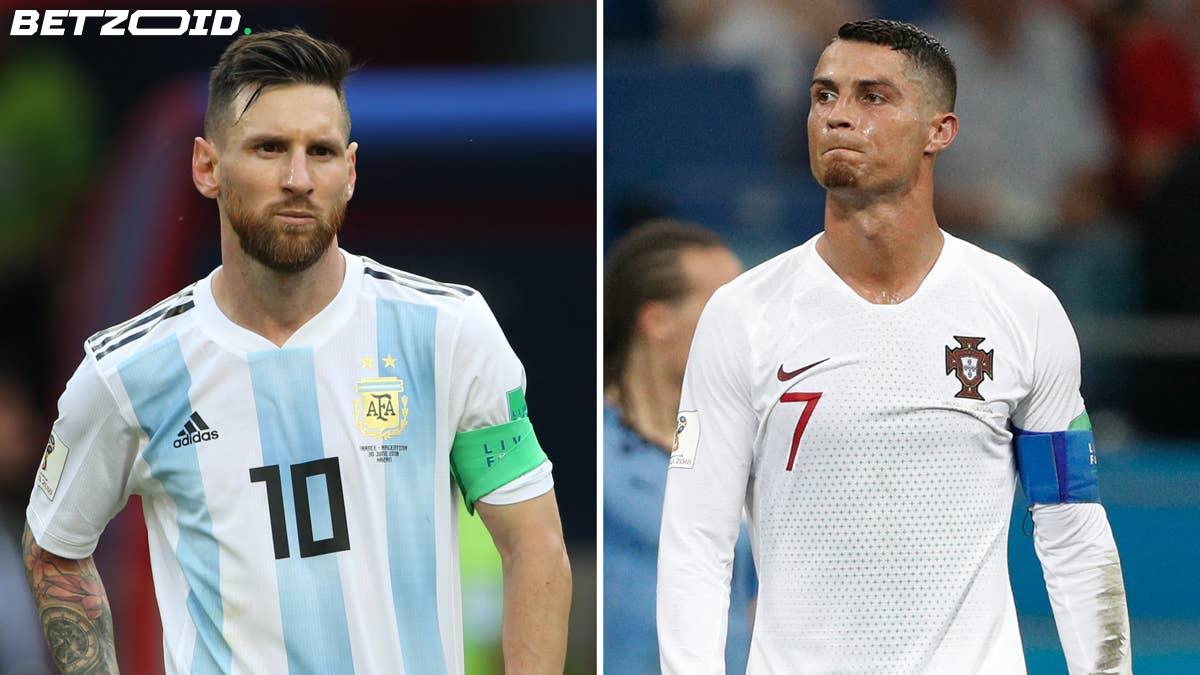
Cristiano Ronaldo didn't say a word. He didn't need to. A single Instagram like has dropped him into the middle of the World Cup's most corrosive conspiracy theory.
Spanish journalist Pilar Rodriguez Losantos posted a video compiling what she argued was a pattern of refereeing decisions that benefited Argentina throughout the tournament. Ronaldo liked it. That was enough to send the internet sideways.
The clip pulled together multiple incidents from the competition, making the case that Argentina — and by extension Lionel Messi — were protected by match officials and VAR across several matches. Losantos didn't mince words: "Argentina should have been eliminated at least five matches ago! They're still in the tournament thanks to FIFA's help. I'm not afraid of Argentina at all. I'm more afraid of Infantino."
What's Actually Fueling the Conspiracy
The most cited example involves Argentina's Round of 16 clash with Egypt. Egypt had what they believed was a second goal, only for VAR to disallow it over a foul that had happened roughly 20 seconds before the ball hit the net. Later in the same game, a penalty shout from Egypt was waved away. Argentina scored the winner.
Beyond that match, fans pushing the narrative have circulated statistics claiming Argentina committed a high volume of fouls while collecting comparatively few yellow cards, and that VAR intervened in their favor more consistently than for other sides. Those numbers have spread widely online without independent verification — but they've stuck, partly because the pattern of calls felt consistent enough to fuel suspicion.
FIFA's refereeing chief Pierluigi Collina has pushed back firmly. "Nobody can question the integrity of the FIFA World Cup match officials," he said. "Nobody can claim that FIFA refereeing can be influenced by anyone, not even by the FIFA president." Collina dismissed the allegations as "unfounded," calling for constructive discussion rather than conspiracy.
What Ronaldo's Like Actually Means
Probably less than people want it to. Ronaldo's relationship with Messi is the longest-running subplot in football — the rivalry, the comparisons, the fanbase wars. A like on a post that undermines Messi's World Cup legacy fits neatly into that narrative, which is exactly why it spread so fast.
Still, it matters that this controversy is refusing to die. The World Cup is over. Argentina are champions. And a section of global football is still debating whether they deserved to be. That kind of lingering doubt doesn't usually attach itself to clean tournaments — and it complicates how Argentina's odds and reputation will be framed heading into the next cycle of competition.
Collina said unfounded allegations have no place in football. What he didn't explain is why so many people found them so easy to believe.