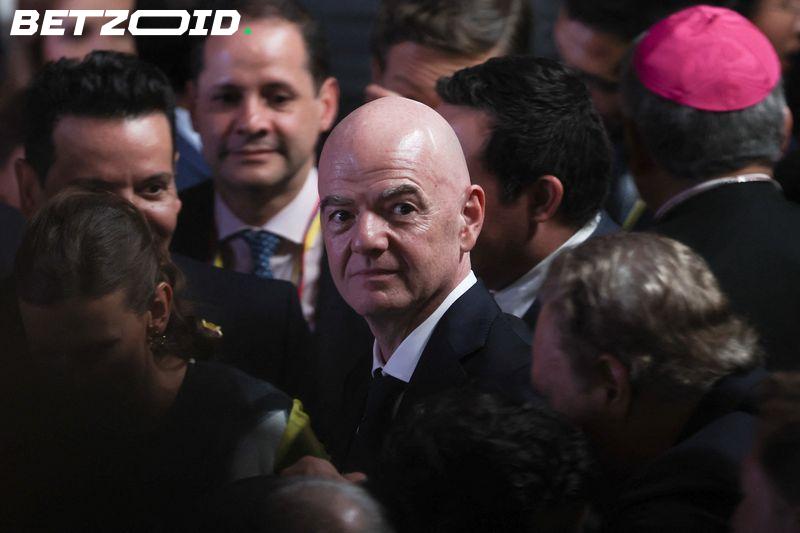
"Either he goes the peaceful way and decides not to stand in March, or he goes the hard way." That's where FIFA finds itself right now — and the people saying it aren't outsiders. They're senior figures inside the confederations that run world football.
UEFA, the AFC and CONCACAF are actively discussing whether to trigger a vote of no confidence in FIFA President Gianni Infantino, according to sources familiar with the talks. If it happens, it would be the first time in FIFA's 122-year history that its Congress has moved against a sitting president. That's not a minor procedural footnote. That's the institution eating itself.
How it unravelled
The immediate trigger was Infantino's proposal to sell a minority stake in a new FIFA commercial entity to private investors — one that would have controlled the commercial rights to the World Cup itself. Three of FIFA's six confederations opposed it. Then the proposal collapsed. Then FIFA apologised for how it was handled. Then FIFA's Chief Operating Officer Kevin Lamour left, having told staff they had been "deceived" and calling the project the work of "one person." Then FIFA Vice President Sandor Csanyi withdrew his support, saying Lamour's departure was the "final straw."
Each of those events, individually, would be a crisis. Together, they're a controlled demolition.
The financial stakes make it worse. FIFA's revenue for the 2023–2026 cycle is expected to exceed $15 billion, with the bulk generated in this World Cup year. Handing private investors any slice of that was always going to be a fight. Doing it without proper transparency and consultation turned a fight into a war.
Why the no-confidence route is risky
Here's the problem for Infantino's opponents: he still has support. CAF President Patrice Motsepe has publicly backed him, saying Africa's position should be settled at the ballot box. Six Arab football associations, including Qatar and 2030 co-host Morocco, have done the same. Under FIFA's statutes, each of the 211 member associations holds one vote — meaning a coalition of smaller nations can outnumber the sport's continental powerhouses.
That arithmetic terrifies Infantino's critics. A failed no-confidence vote doesn't just leave him in place. It validates his support base, weakens his opponents, and gives him clean momentum heading into the March 2027 presidential election. A miss here could cement him rather than remove him.
No challenger has publicly stepped forward ahead of the November 18 nomination deadline. That silence is a problem. Football Association of Malawi President Fleetwood Haiya put it directly: "Those who are ready to fight Infantino at the ballot box should come out into the open. They should tell us what they are going to bring."
European clubs are adding commercial pressure from outside the voting structure. The European Football Clubs organisation — chaired by PSG president Nasser Al-Khelaifi and representing over 800 clubs — has warned it could pull members from future Club World Cups unless governance concerns are addressed. Clubs have no FIFA vote, but they have the players, the audiences, and the broadcast deals. That's leverage of a different kind.
As former IOC marketing chief Michael Payne put it: "It's all very well to sneak through with a 51% majority with many of the tiny nations but all of the football superpowers against you. How do you run the organisation?"
For those tracking FIFA's longer-term commercial trajectory — and the World Cup rights packages that underpin it — that question doesn't have a clean answer right now. The governing body of global football is heading into its biggest tournament cycle with a leadership crisis that has no obvious resolution and no shortage of people willing to say so on the record.
"You can't put the ketchup back in the bottle."