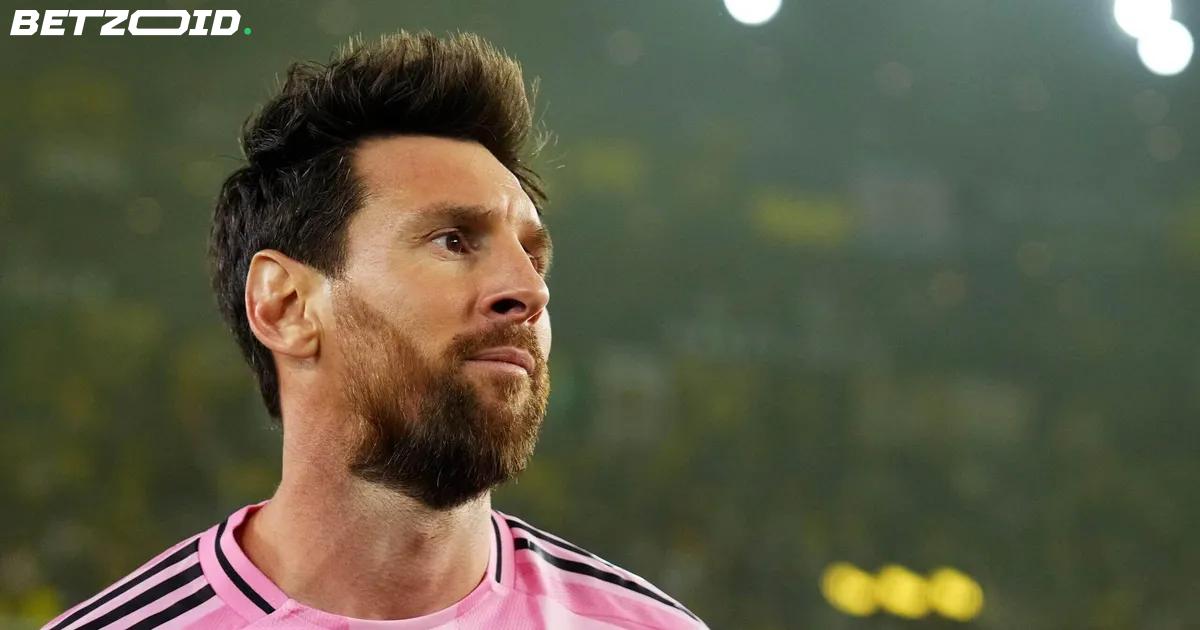
Lionel Messi's international career ends Tuesday when Argentina host Benin in a farewell friendly. He's 39, he's done with the national team, and he'll return to Inter Miami after. But the reshaping of American soccer he triggered? That's just getting started.
Three years. That's all it took for one signing to force a major professional league to rethink its calendar, its competitive structure, its salary rules, and its entire identity. MLS didn't just benefit from Messi — it rebuilt itself around the pressure his arrival created.
What actually changed — and what it cost
Start with the money, because the numbers are genuinely hard to process. Inter Miami was valued at $585 million in 2022. It's now worth $1.3 billion — the most valuable franchise in the league. Apple TV MLS Season Pass subscriptions more than doubled. Away fixtures regularly moved to NFL stadiums to handle the demand, with secondary market prices running over 1,000 percent above face value. Inter Miami jerseys sell alongside PSG and Real Madrid globally.
That kind of commercial gravity doesn't come from a player who's coasting. And MLS knew it.
The league quietly rewrote its own rulebook to accommodate him — and then kept rewriting it. Several roster construction rules were loosened: clubs got more flexibility balancing spend between stars and youth, annual contract buyouts were doubled, transfer revenue reinvestment caps were raised, and unlimited cash trades between clubs were permitted. Messi's own deal — worth between $70 million and $80 million per year according to owner Jorge Mas — included an ownership stake option post-retirement, a direct cut of Apple TV's MLS Season Pass revenue, and a profit-share arrangement with Adidas tied to incremental sales increases from his move. It's the most structurally complex sports contract in recent memory.
None of that was possible under the old MLS framework. His arrival forced the door open.
The changes already locked in — and the one that matters most
Starting in 2027, MLS flips its calendar from a February–December format to a July–May European-style season. Conferences become divisions. The playoff format is being overhauled. These aren't cosmetic tweaks — they're structural alignment with the global game, and the conversations that produced them trace directly back to owners scrambling to capitalize on the Messi moment.
But the change that could define the next decade hasn't been announced yet. As Paul Tenorio — author of The Messi Effect — put it: "The biggest potential lasting change has yet to be announced: Rewriting the spending rules in MLS. If the owners get that last change over the line — both increasing spend and freeing up how teams are allowed to spend — Messi's influence on MLS will have been much larger than anything he accomplished on the field."
Without that spending reform, the calendar shift and structural overhaul remain half-measures. With it, MLS genuinely becomes a different product — one that might actually compete for players who'd otherwise default to Europe.
- Inter Miami valuation: $585M (2022) → $1.3B (2025)
- Apple TV MLS Season Pass subscriptions: more than doubled post-Messi
- Messi's annual earnings: $70–80M per year
- On-field return: Leagues Cup in year one, MLS Cup two years later
The perception shift matters too, even if it's harder to quantify. MLS had spent years being dismissed as the place where Beckham, Henry, Lampard, and Ibrahimović went to wind down. Messi arrived at 36 as the reigning World Cup champion and — by most accounts — still the best player on the planet. He wasn't winding down. He was, by his own words, "trying to perform at the highest level." The 2026 World Cup performance from his Argentina teammates reinforced that Miami wasn't a retirement party.
MLS Commissioner Don Garber said it plainly in Tenorio's book: "The true impact of the Messi effect is that it proved the basic premise of MLS, which was that North America can support a top-level men's division one soccer league and be a player in the global marketplace."
Messi won't be in MLS forever. But Inter Miami's Nu Stadium may be the most accessible place left on earth to watch him play. That window is closing. The league he leaves behind, though, will look nothing like the one he entered.