"We're better, but we're still far away." That's Janusz Michallik — a man who played indoor soccer in Louisville in the 1980s, helped build the original MLS Columbus Crew, and watched the whole thing grow from almost nothing. He's not being harsh. He's being accurate.
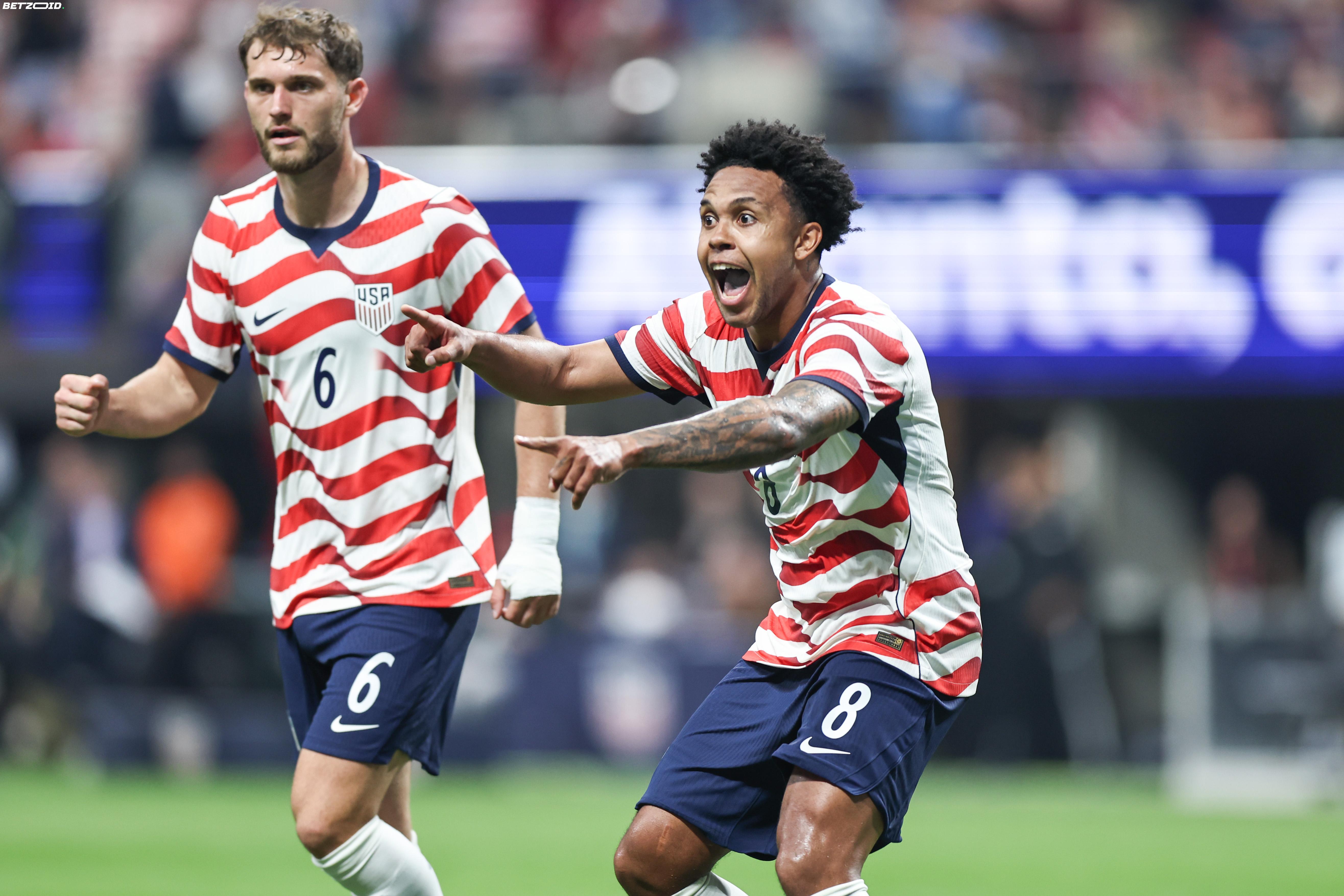
The United States opens the 2026 World Cup on Thursday in Los Angeles against Paraguay. They're playing in a $250 million training facility near Atlanta. Christian Pulisic, Weston McKennie, Tyler Adams and Folarin Balogun all earn north of $3 million a year at prominent European clubs. MLS has 30 teams, seven of which Forbes values at over $1 billion. And yet oddsmakers rank the USMNT 13th most likely to win the tournament — tied with Uruguay, a country with roughly one-hundredth the U.S. population.
So: why aren't they better?
The infrastructure exists. The depth of talent doesn't.
Landon Donovan, who played in three World Cups and will work this tournament as a Fox Sports analyst, put it plainly: "The top, top-end quality — I think we're still lacking a decent amount." That's after acknowledging the USMNT has more overall depth than at any point in history. The ceiling has risen. The peak hasn't followed.
Part of the answer is simply time. The U.S. returned to the World Cup in 1990 after a 40-year absence. Before Paul Caligiuri's qualifying goal sent them to Italia '90, there were periods where the national team couldn't field 11 players for a qualifier and recruited someone from the stands. They went 11 years without winning a game in the 1950s and 60s. FIFA awarded the U.S. the 1994 World Cup in 1988 — and at that point, the country had no functioning outdoor professional league.
Thirty years of serious development is genuinely impressive. It's just not enough to close a 100-year gap against nations where football is the only sport that matters.
"If the game means absolutely everything and nothing else matters, all of a sudden everybody wants to be that," Michallik told The Sporting News. "Every kid's focus is only on one game. And if you don't make it in soccer, then you go to volleyball or basketball or hockey."
That's the structural problem no amount of MLS investment fixes quickly. American kids can grow up wanting to be LeBron James or Patrick Mahomes. Brazilian kids, French kids, Spanish kids — they don't have that fork in the road.
The pay-to-play problem and the academy gap
Even among the kids who do choose soccer, the development pathway has systemic flaws. Donovan was blunt about it: "In this country, the focus around youth soccer is based on winning and making money. It's not around developing good players."
He contrasted it with his time as a 16-year-old at Bayer Leverkusen, where the under-16 coach was a 58-year-old who had run that age group for two decades and had zero interest in results. His entire job was to get players to the first team. The incentive structure was completely different — and it produced completely different footballers.
MLS academies have improved things. McKennie, Tyler Adams, Chris Richards — all came through that system. But there are 30 MLS academies serving 350 million people. England has 92 professional clubs with academies for 60 million residents. As journalist Leander Schaerlaeckens put it in his book "The Long Game," a talented 12-year-old in Madrid is 12 times more likely to end up in a professional academy than one in Dallas — and Dallas has one of the better setups by American standards.
That gap doesn't close in one World Cup cycle.
What this tournament can and can't do
Indiana University coach Todd Yeagley, whose father Jerry won six NCAA titles at IU, thinks the U.S. is "one generation away" from genuinely competing at the top of the world game. Stu Holden — former MLS champion and Premier League player — thinks it might take until his kids' kids.
The 2026 tournament being on home soil creates a real moment. More kids will watch, attendance will rise, investment will follow. If the USMNT goes deep, it accelerates everything. But this won't be 1994 — that event landed in a total soccer desert and sparked a revolution. The sport is already mainstream here now. What it still lacks is a deep domestic connection between global soccer fandom and the U.S. game specifically.
"The next step for American soccer is to create more of that connection between the global game and the domestic game," Schaerlaeckens said. "To make it more than this hipster thing where you're really into FC Koln or Rayo Vallecano."
As for Thursday's opener against Paraguay — the USMNT at 13th in tournament odds tells you everything about where expectations sit. Not embarrassing. Not threatening. Somewhere in between, still waiting for the generation that makes the gap close for good.