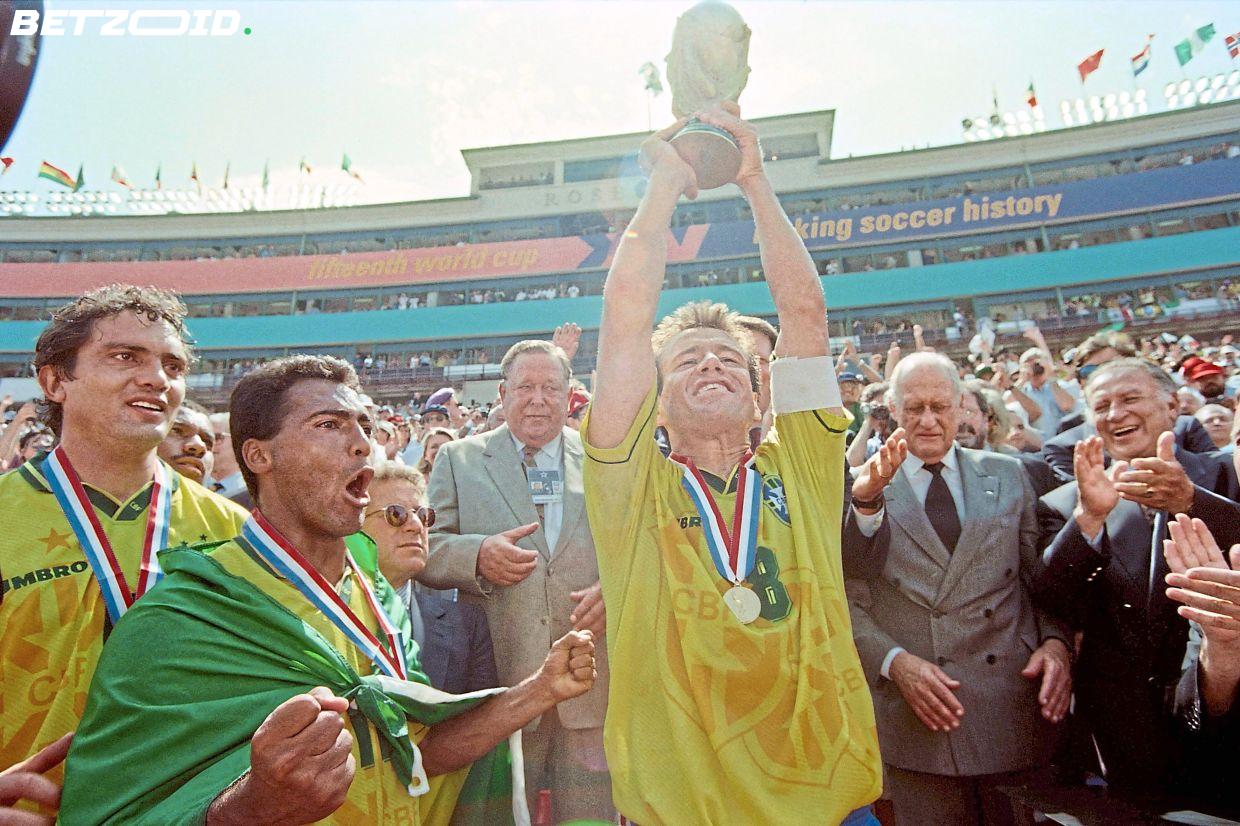
Roberto Baggio skied his penalty into the Pasadena sky, dropped his head, and handed Brazil the 1994 World Cup. No goals in 120 minutes. The greatest game in football decided by a shootout in searing midday heat. That's the tournament North America is about to try to top.
The 2026 World Cup — spread across the United States, Mexico, and Canada — kicks off soon, and the pressure to match 1994's cultural footprint is real. That tournament drew over 3.5 million paying spectators, averaging 69,000 per match. It remains the highest-attended World Cup in history. Thirty-two years on, 48 teams will now compete, which means more games, more heat, and a longer grind for everyone involved.
What 1994 Actually Was
The 1994 World Cup was chaos dressed as football. Maradona tested positive for drugs and was thrown out — his Argentina, the defending champions, bundled out in the last 16 by Romania. Andres Escobar scored an own goal against the US and was shot dead back in Medellin days later. England and France both failed to qualify. The US TV networks reportedly pressured officials to blow for more fouls just to create ad breaks.
And yet the tournament worked. It generated a US$50 million surplus, kickstarted Major League Soccer, and planted a seed that took decades to fully grow.
There was also a 17-year-old who never played a single minute — carried through the tournament in life-sized posters by Brazilian fans outside Disneyland and SeaWorld. Ronaldo Nazario. The man who would become El Fenomeno spent 1994 as a mascot. He spent 1998 and 2002 rewriting the record books.
Bebeto's baby-rocking celebration after his quarter-final goal against Holland — his son Mattheus born just two days earlier, Romario and Mazinho swaying beside him — remains one of the defining images in World Cup history. That goal, that moment, that tournament had a texture to it that's hard to manufacture.
The 2026 Question
So what does 2026 look like by comparison? Lionel Messi at Inter Miami has done more for football's visibility in the US than any marketing campaign could. He's the living bridge between 1994's promise and 2026's potential — the Pele of this era, but actually playing in the country rather than just visiting for a final ceremony.
The US-Mexico rivalry adds genuine edge to the host dynamic. These aren't friendly co-organisers. They're bitter rivals who happen to share a continent and a tournament, and that tension will surface the moment they're drawn near each other in the bracket.
- 48 teams means the group stage is longer and the knockout rounds start later — fatigue will be a real factor in deep runs
- Midday kick-offs to serve European TV audiences will test players in summer heat conditions similar to 1994
- Argentina, as reigning champions under Messi, enter as the side every betting market will be built around
The glitz will be there — half-time shows, Hollywood production, the full American entertainment package. Whether the football matches it is the only question that actually matters.
Baggio never recovered from that penalty miss. He came back in 1998, ponytail gone, a different man. The 1994 World Cup did that to people. It left marks. The 2026 edition will need to be that kind of tournament — not just a spectacle, but a story with stakes.
Thirty-two years of history say the bar is higher than anyone admits.