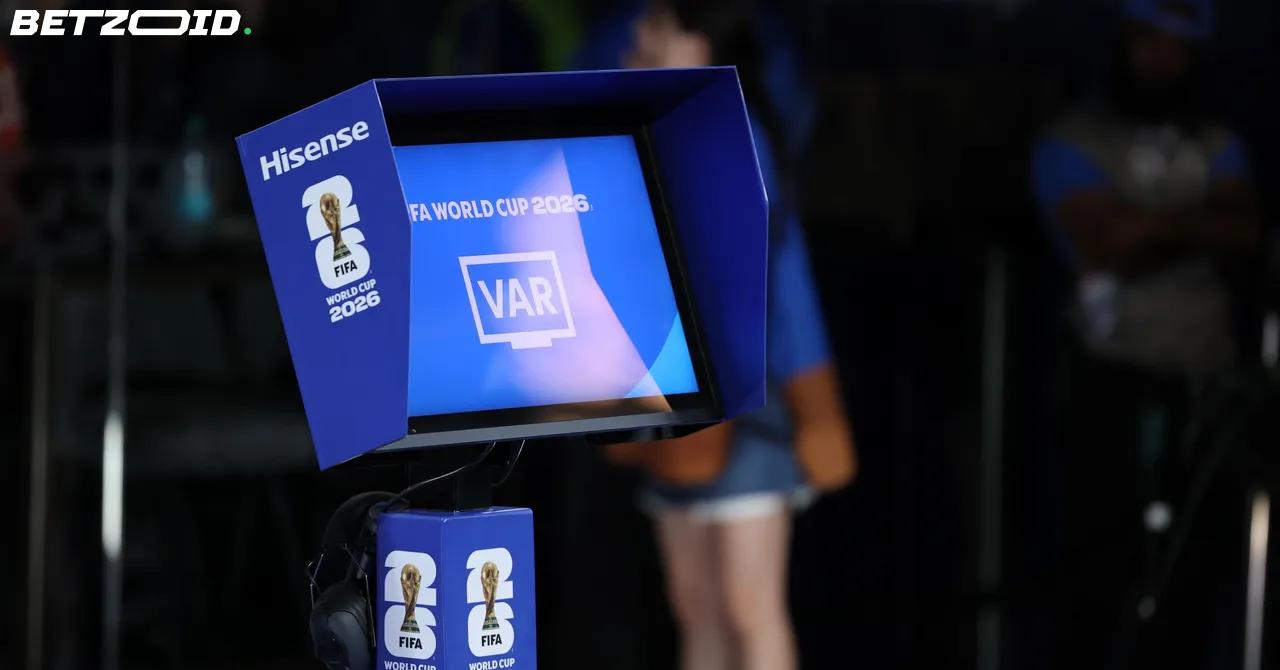
"The Egyptian Football Association cannot remain silent." That was the official line after Egypt's 3-2 loss to Argentina — a match they led by two goals — sent them home from the 2026 World Cup in circumstances that have since become the tournament's defining controversy.
The Egyptian FA filed a formal protest with FIFA, citing what it called "the failure to properly use VAR" across several refereeing decisions that shaped the final score. It's the kind of complaint that gets dismissed as sour grapes after a big loss. Except the same complaint keeps surfacing across this entire tournament, from different teams, in different matches, and it deserves a more serious answer than FIFA's standard non-response.
The technology isn't broken — the human using it might be
VAR at this World Cup operates with 42 broadcast cameras, eight in super-slow-motion and four in ultra-slow-motion, plus semi-automated offside detection feeds. The infrastructure is genuinely sophisticated. A four-person VAR team reviews every flagged incident from multiple angles before anything goes to the on-field referee.
That's not the weak link.
Armando Archundia, a former Mexican World Cup referee, puts it plainly: "It is the individual judgment of each referee that makes the decision, because not even VAR is going to support them in that regard." Sports analyst Fernando Galván agrees — VAR doesn't eliminate error, it gives referees better information to work with. What they do with that information is still entirely human, still entirely subjective, and still entirely inconsistent.
The deeper structural problem Archundia identifies is striking: only 20 percent of the countries represented at this World Cup have VAR in their domestic leagues. That means a significant portion of the 54 referees selected for this tournament arrived with limited real-match experience of the system they're now using to adjudicate the biggest matches in football. Four training meetings per year across a four-year cycle doesn't close that gap.
Why this matters beyond Egypt's elimination
FIFA expanded VAR's scope for this edition of the tournament, adding reviews for second yellow cards, blocking and shoving before set pieces, and infractions under the new Prestianni-Vinícius Rule — a direct red card for covering your mouth during a confrontation. More scenarios eligible for review means more decisions passing through a system that referees don't all understand equally well.
For anyone tracking match outcomes with money attached, that inconsistency is the actual variable. It's not that VAR favors certain teams by design — it's that interpretation gaps between referees create wildly different outcomes in identical situations depending on who's in the booth that night.
Galván frames the broader issue honestly: "The problem with refereeing is that it's a profession that isn't very unified. Achieving unanimous criteria on a global level is almost impossible."
Egypt are out. The protest will almost certainly go nowhere — FIFA has never reversed a tournament result on refereeing grounds. But the question this match leaves behind is legitimate: if the technology is reliable and the training is not, at what point does FIFA treat referee preparation as seriously as it treats the hardware?