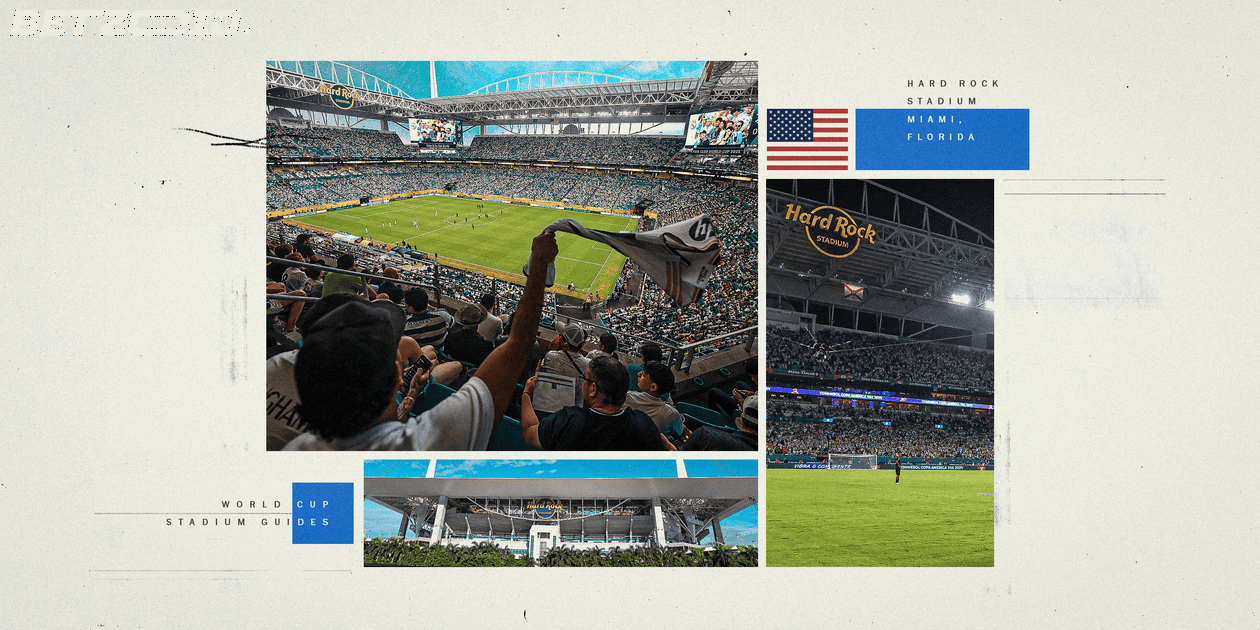
No stadium in the world does what Hard Rock Stadium does. Super Bowl. World Series. Copa America final. ATP 1000 tennis. Formula 1 Grand Prix. College football national championships. A Wrestlemania. That list is not a flex — it's a genuine argument that this is the most versatile sporting venue on the planet, and this summer it adds a World Cup to the collection.
Technically located in Miami Gardens — 16 miles north of downtown Miami — the stadium opened in 1987 as Joe Robbie Stadium and cost $115 million to build. It barely resembles that original structure. A $500 million-plus renovation between 2015 and 2017 replaced every seat, overhauled the hospitality boxes, and — critically for a city that gets battered by tropical storms — installed a canopy covering 92 per cent of the seating area. It can withstand a category four hurricane. Whether it can withstand a Miami summer is another matter.
The Weather Is Going to Be a Factor
June and July in Miami means heat, humidity, and relentless rain. Temperatures sit between 24°C and 32°C, and the city averages 178mm of rainfall in June alone. For context, that's what a rural English county recorded in its wettest January in 64 years — and Miami hits that every single month of summer.
The canopy helps, but there is no roof. At last summer's Club World Cup, thunderstorms suspended multiple matches across Florida for over an hour each. If you're betting on games finishing in 90 minutes without interruption in Miami, factor in the weather. It's genuinely a variable here.
An F1 race is also scheduled just over a month before the World Cup begins, so the track teardown and installation of media seating will be a tight turnaround. FIFA has listed the tournament capacity at 64,091 — lower than the 65,300 who attended the 2024 Copa America final, which itself was marred by a horrifying crush that led to multiple legal claims against the stadium and event organisers.
Getting There, and What to Do When You Arrive
Miami does not have a comprehensive public transport network, so driving is the default. Parking will cost upwards of $175, and the 15-mile trip from downtown typically takes 45 minutes to an hour on matchday due to Interstate 95 traffic. Apps like Parkd can find cheaper spots in nearby residential driveways — worth a look before you commit to the official lots.
For the Club World Cup, FIFA ran complimentary shuttles between Brightline Aventura Station and the stadium, with trains connecting from Miami, Fort Lauderdale, Boca Raton, West Palm Beach, and Orlando. Whether that service runs again for the World Cup hasn't been confirmed yet.
Inside the stadium, the West Endzone Club is worth the upgrade if you can get it — it runs more like a nightclub than a corporate box. If that's not your speed, Miami is tailgate country. Join the Miami Dolphins Tailgate Town group on Facebook ahead of time and there's a reasonable chance someone from its 5,000 members will have a setup going regardless of whether the Dolphins are playing. Once you're inside, locals point to the Cafe Versailles concession stand and its Midnight Sandwich as the essential matchday eat — a nod to Miami's deep Cuban food culture.
The Fixtures Worth Booking For
Hard Rock Stadium gets a strong group stage draw. Federico Valverde's Uruguay open against Saudi Arabia on June 15, and Marcelo Bielsa's side play their second group game here too — two chances to watch one of Real Madrid's best midfielders in the flesh.
Then Brazil face Scotland on June 24. Then, to close the group stage, Cristiano Ronaldo's Portugal take on Luis Díaz's Colombia — a match that could easily be the most entertaining of the entire first round.
- June 15: Group H — Saudi Arabia vs Uruguay (6pm local / 10pm GMT)
- June 24: Brazil vs Scotland
- Late June: Portugal vs Colombia (group stage finale)
Hard Rock Stadium has earned its reputation across decades of improbable hosting achievements. The Florida Marlins won a World Series here in 1997. Six Super Bowls have passed through. Messi opened the scoring in a 3-2 El Clásico win in front of 66,014 people in 2017 — still the stadium's record soccer attendance, and one FIFA's 64,091-seat configuration won't touch this summer. The World Cup is just the next line on a very long list.