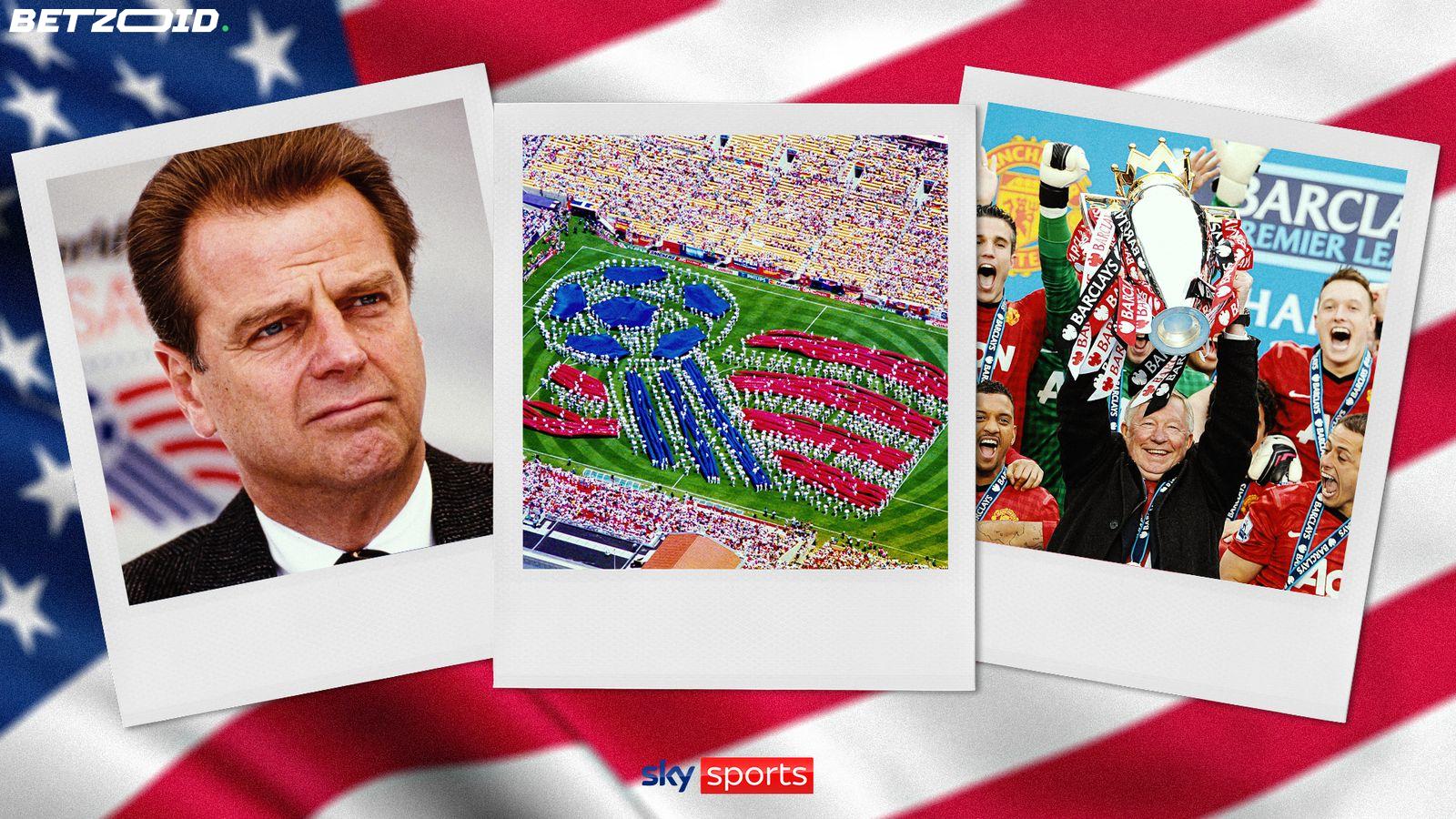
"Taking the World Cup to the United States is like taking the World Series to Brazil." That was the reaction from a jilted Brazilian FIFA delegate when the US won the right to host the 1994 tournament. Thirty-two years later, football has overtaken baseball as America's third-most popular sport. Turns out the delegate was wrong on both counts.
Alan Rothenberg was the man who made it happen — though when he took over as USSF chief in 1990, the odds were not exactly in his favor. Six full-time staff. A portable cabin in Colorado Springs. No top-flight domestic league. A national team that had missed nine of the previous ten World Cups. And a country that, culturally, couldn't care less about football.
Selling the spectacle first, the sport second
Rothenberg's genius wasn't tactical — it was promotional. He understood Americans before he understood football. "Americans love a big event," he says, drawing on his experience organizing the 1984 Los Angeles Olympics. So instead of selling the World Cup as football, he sold it as unmissable.
The draw was held in Las Vegas. Barry Manilow and Julio Iglesias performed. Robin Williams hosted and spent most of the night calling Sepp Blatter "Sepp Bladder." Oprah Winfrey introduced the opening ceremony. Diana Ross famously — or infamously — fluffed her penalty. None of this was football. All of it was calculated.
It worked. Over 90,000 people packed the Rose Bowl in Pasadena for Colombia vs. Romania, a group game between two sides with no obvious American fanbase. The tournament sold out entirely. Almost 3.6 million tickets were shifted in total — still the best-attended World Cup in history, despite featuring fewer matches than every edition since.
The US team did their part too. A first World Cup win in 44 years against Colombia, followed by a narrow 1-0 loss to eventual champions Brazil in the round of 16. Not glory, but enough narrative to feel like it.
The Premier League closed the gap the World Cup opened
Roger Bennett, co-host of the Men in Blazers podcast and a Liverpool-born American resident since the early 1990s, watched the whole slow burn from the inside. His read on the turning point is sharp: "When they started seriously broadcasting the Premier League in 2013, it changed everything."
Before that, the appetite was there but scattered. Bennett recalls ESPN hiring a baseball commentator for the 2006 World Cup who referred to "the world's most famous soccer player, Charlie Beckham." The infrastructure simply wasn't matching the interest.
What the Premier League did was give American fans a weekly habit. A consistent, high-quality product they could follow, argue about, and obsess over. "The internet connected a generation of Americans to Liverpool from Los Angeles as close as if they had lived on Anfield Road," Bennett says. Add live broadcast rights on top of that, and the fandom stopped being casual.
MLS has ridden the wave. Crowd attendances topped 11 million in both 2024 and 2025, up more than 50 percent over the last decade. The Premier League's Summer Series — now in its third pre-season edition on US soil — is a direct commercial acknowledgment of how deep that market now runs.
The MLS itself nearly didn't survive long enough to benefit. Early gimmicks — 45-minute countdown clocks, shootouts instead of draws — alienated the very fans the league needed. It took the US national team's shock run to the 2002 World Cup quarter-finals to rescue the league's credibility. The gimmicks disappeared within a year. Attendances climbed.
- 1994 World Cup: 3.6 million tickets sold — still a record
- USA's first World Cup win since 1950: a 2-1 group stage victory over Colombia
- MLS founded in 1996, two years after the World Cup it was promised to FIFA as a condition of hosting
- Premier League US broadcasting rights expanded significantly from 2013
- MLS attendance up over 50% in the last decade, exceeding 11 million in 2024 and 2025
For Rothenberg, the upcoming 2026 World Cup — back on US soil, co-hosted with Canada and Mexico — is a closing of the loop. "I don't think the American public need more convincing," he says. "From a percentage standpoint, I don't think that growth can be achieved ever again."
He's probably right. The work of converting a continent is largely done. What 2026 decides is how deep that love actually runs when the whole world comes knocking again.