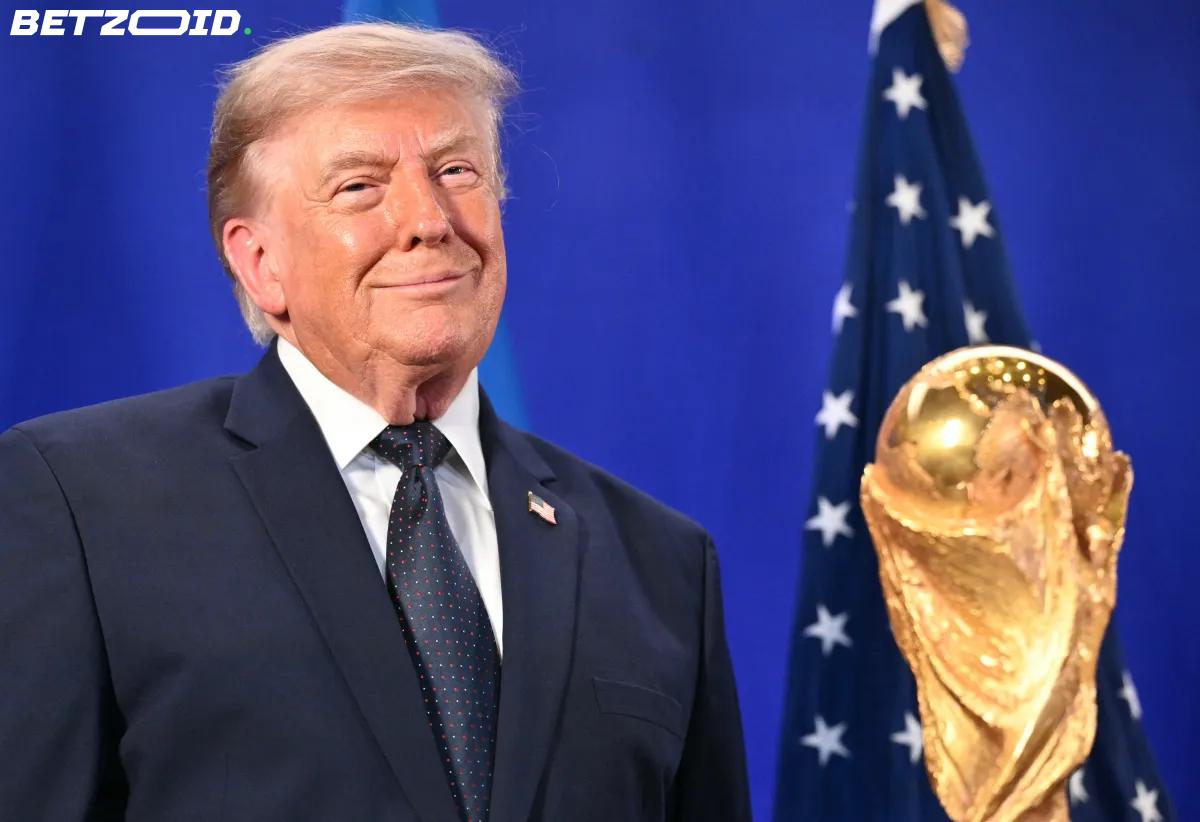
Six weeks ago, serious people were genuinely asking whether the 2026 World Cup would be a catastrophe. On Sunday evening, Donald Trump walks onto the MetLife Stadium pitch to hand the trophy to either Spain or Argentina. The catastrophe never came. What came instead was arguably the strongest World Cup in a generation.
The pre-tournament warnings were not trivial. Iran and Haiti — both qualified — were barred by travel restrictions. Visa delays kept family members of players and staff from entering the country. Fan groups protested ticket prices. Hotels reported softer-than-expected bookings. Sepp Blatter, of all people, told supporters to stay home. Newsweek ran a piece calling the whole thing "one giant money-grabbing exercise." Zeteo counted seven ways it was already a disaster before a ball was kicked.
Then the crowds arrived, and they kept coming.
The numbers that changed the conversation
Through the first 100 matches, 6,527,410 spectators passed through the turnstiles — more than the combined attendance of the 2018 and 2022 tournaments combined. Seats filled to 99.7 percent capacity. The 1994 attendance record, long considered untouchable, was broken before the group stage finished. One day in June alone drew 426,000 fans across venues.
Television told the same story. Fox's English-language broadcasts averaged over 5 million viewers across the group stage, the highest in U.S. history. Telemundo averaged 4.6 million — a 122 percent jump on 2022. The U.S. opener against Paraguay pulled 18 million on Fox platforms and another 9.5 million on Telemundo. Argentina's semifinal win over England drew 15 million on Fox alone, the largest World Cup semifinal audience in English-language American television history.
For FIFA's accountants, those ratings are everything. As Simon Chadwick, professor at Emlyon Business School and author of The Business of the FIFA World Cup, put it: "The FIFA Men's World Cup is absolutely FIFA's cash cow. It's the organization's main source of income over a four-year cycle." Every number from this tournament funds the next four years of everything else FIFA runs.
The football itself held up. The tournament averaged 2.94 goals per game through the quarterfinals — the highest scoring rate since Mexico 1970. Eleven comeback victories, a new World Cup record. Messi, Mbappé, and Haaland all scored at least seven goals each, the first time in history three players hit that mark in the same edition. The Golden Boot race became must-watch TV on its own terms.
The underdogs did their part too. Cape Verde's 40-year-old goalkeeper Josimar Évora Dias — known as "Vozinha" — held Spain scoreless in the group stage and nearly eliminated Argentina in the round of 32, becoming the tournament's unlikely folk hero. Norway knocked out Brazil and turned Haaland's Viking goal celebrations into a global social media moment. Scotland's supporters transformed Boston into something resembling a tartan-clad republic, reportedly driving local beer sales up by more than 50 percent.
Infantino's complicated summer
Trump spent years angling for this moment and largely got it. He hosted the tournament draw at the Kennedy Center. His administration created a White House task force for preparations. And then, once the games started, he mostly vanished — which may have been the smartest move of all. No immigration raids near stadiums. No diplomatic flashpoints with Democratic-run host cities. The images from the tournament were not of protests. They were of packed stands and international fans in American city centers.
Gianni Infantino had a rougher ride. Presenting Trump with FIFA's newly created Peace Prize during the draw drew sharp criticism from European politicians and human rights groups. FIFA opening offices in Trump Tower deepened the unease. Then came the Folarin Balogun red card — shown during the U.S.'s match against Bosnia and Herzegovina, potentially ruling him out of a knockout game. Trump contacted Infantino directly to request a review. Four days later, FIFA overturned the decision, the first World Cup red card reversal since 1962.
The reaction from Europe was scathing. Belgium's coach called it an April Fool's joke. The European Commissioner for Sport said sporting decisions "belong to sporting bodies, not politicians." Germany's football federation declined to sign a letter backing Infantino's reelection at next March's FIFA Congress — a pointed snub from one of the sport's most powerful federations.
The added irony: Balogun, born in Brooklyn, owed his eligibility for the U.S. squad to the same birthright citizenship protections Trump's administration had been trying to dismantle.
Infantino's reelection still looks secure — Europe and South America together hold only 65 of 211 FIFA votes, and federations beyond those regions are largely content with the revenue flowing under his leadership. But the German snub is a crack that wasn't there before.
Sunday's final caps a tournament that rewrote the expectations set for it. The excluded nations, the families still waiting on visas, the barred players — those are real costs that don't disappear because the stadiums filled. But the spectacle delivered. Trump gets to hand a trophy to Rodri or Messi in front of a packed house and billions watching. That's the only line on the scorecard he'll be reading.