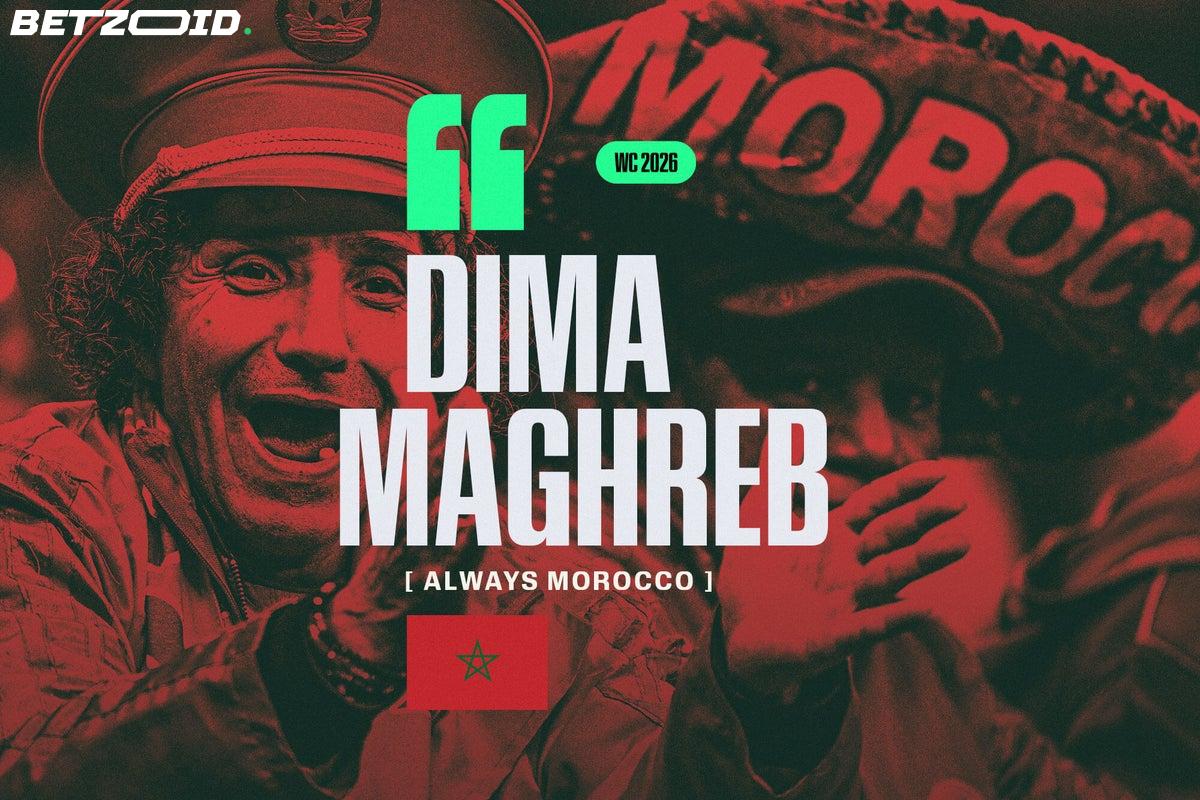
"If you only want to watch the game, then maybe you are better off in a cafe or at home." That's the philosophy of RossoVerde, the Moroccan supporter group whose capo, Oussama Marhoum, doesn't even face the pitch during matches. He stands behind the goal, back to the action, conducting chants and drums like an orchestra pit that never stops playing.
This is what Morocco brings to the 2026 World Cup in the United States — not just a team ranked eighth in the world, but a fan culture that opposing players consistently describe as unlike anything else they've encountered.
A slogan built on a semi-final
"Dima Maghreb" — Always Morocco — has been the team's war cry for years, but it took on a different weight after Qatar 2022. The phrase literally decorated the open-top bus that carried the squad through Rabat after they became the first African side to reach a World Cup semi-final. That run didn't just change the team's ambitions. It rewired the entire support base.
"When we reached the semi-finals, the mindset was changed," says Reda Alaoui, RossoVerde's communications manager. "It was like something unlocked. We used to be just polite guests, but we are starting to believe in ourselves. We have many skilful players. Why not get the title? Why not?"
That shift matters beyond rhetoric. Morocco head into this tournament as a genuine dark-horse contender, and a fanbase that's moved from grateful participants to expectant believers changes the pressure dynamic inside every stadium they fill. They've also been drawn in a group alongside Brazil, Scotland and Haiti — a genuinely fascinating pool where Morocco will not be short of motivated opponents, or motivated supporters drowning them out.
The organisation behind the noise
What looks like spontaneous passion is anything but. Each fixture requires at least three weeks of preparation — visual displays, coordinated chants, a full musical section, transport and logistics. RossoVerde now counts over 600 members, a number that ballooned after 2022 as a new generation was drawn into a national team they suddenly believed could win things.
The AFCON title — awarded controversially, 57 days after Morocco lost the final 1-0 to Senegal when Senegalese players walked off in protest at a late penalty decision — only sharpened the sense that this squad exists in a moment. "The decision is very good because what the Senegal players have done is something that should not be repeatable," says Reda. But the late timing stung. "It's two months, it's very late" to properly celebrate.
Morocco were still the first African nation to qualify for this summer's tournament. The belief, the organisation, the history — it's all converging in the United States. Ticket access and visa logistics remain genuine concerns for travelling supporters, but those planning to make the trip to New Jersey, Foxborough and Atlanta aren't framing this as a holiday. They're framing it as a performance.
"We bring Morocco wherever we are going," Reda says. "It's a culture."
That culture, and the team it's backing, makes Morocco one of the more compelling outright bets in what promises to be an open, chaotic 48-team tournament. A nation that once considered reaching a World Cup an achievement now considers winning one a question worth asking out loud.