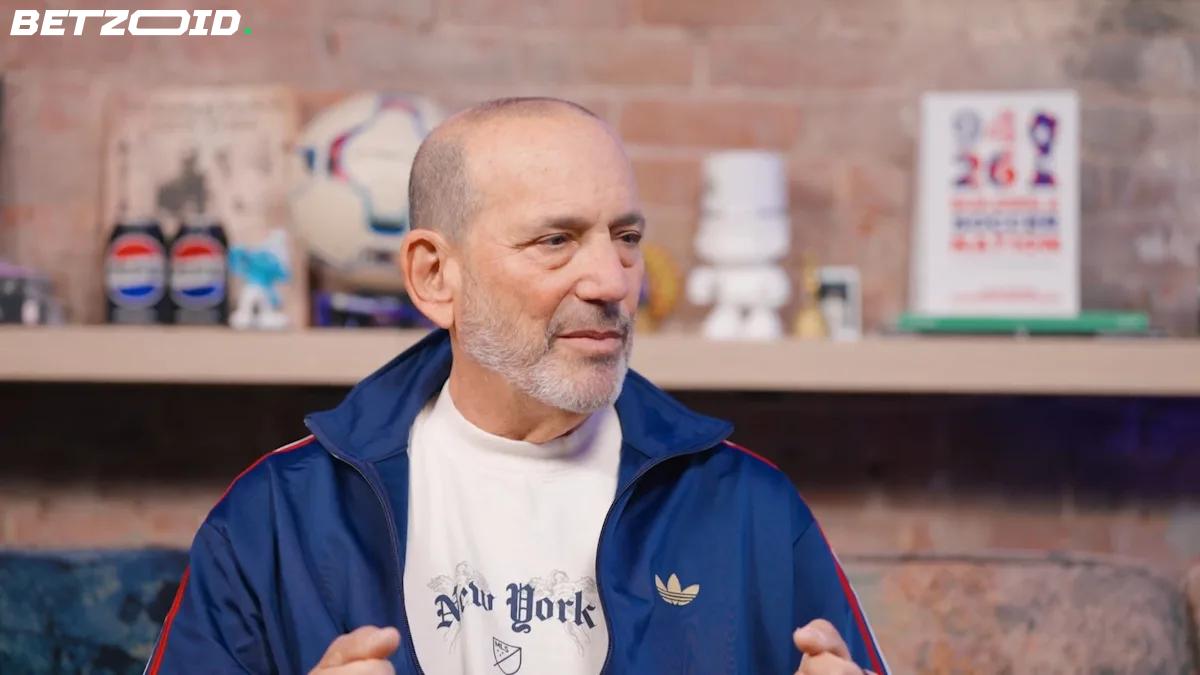
Don Garber has one line that cuts through everything: "The best player in the history of the game is going to come off the field in Qatar and put on an Inter Miami jersey." When that happened, it wasn't a marketing stunt. It was the culmination of 30 years of infrastructure-building finally paying off in one moment.
In a wide-ranging conversation with Kyle Martino on The Two Robbies & Friends, the outgoing MLS Commissioner reflected on a career that started when FIFA couldn't even sell the 2002 and 2006 TV rights in the United States — because the commercial market simply didn't exist. Now, 45 MLS players appeared at the 2026 World Cup, and the league ranked sixth globally in minutes played at the tournament. That number matters more than any single signing.
Messi vs. Beckham — and why the comparison only goes so far
Garber drew the obvious line from David Beckham's arrival at the Galaxy to Lionel Messi landing at Inter Miami. Both shifted the cultural needle overnight. But Garber was careful to separate the two. "Leo is not the marketing guy for the league. He's not the David Beckham of MLS." What Messi is, apparently, is someone who plays every minute of every game regardless of stakes — which Garber described as a kind of "maniacal focus" he's never seen matched.
The back-channel story behind the signing is worth knowing. Jorge Mas, Inter Miami's owner, spent years being told Barcelona would pull Messi back, that the Saudis were impossible to outbid, that it simply wasn't going to happen. He kept saying "I got it" anyway. He got it.
For anyone tracking Inter Miami's odds in any competition — Messi doesn't rest, which means the team genuinely is as dangerous in week 30 of the MLS season as week one.
The hardware is built. The software is the problem now.
Garber's most honest moment came when he stopped talking about what MLS has achieved and started talking about what it hasn't. Stadiums? Built — billions of dollars worth. Supporters culture? Established. Global legitimacy? Earned. But the player development pipeline, particularly for homegrown American talent, remains the league's unresolved question.
His argument is essentially this: France produces great players off concrete courts in the Paris suburbs before the formal academy system ever sees them. The US produces great basketball players the same way. Soccer doesn't have that street-level culture yet — and no five-year plan fixes it. "You gotta do the math," he said, borrowing a line from The Martian of all places. "You gotta do the work."
His advice to whoever takes his seat: get the owners aligned, lead the staff, and be the loudest voice in the room for the sport. The league's next move isn't another marquee signing — it's figuring out how to develop players good enough that sending them to Europe at 18 is a choice, not a necessity.
Garber is leaving a league worth far more than the one he inherited, with a stadium in Columbus that now has a sequel, a New York City FC ground that took three mayors and 12 years to get approved, and the greatest player alive wearing pink. His successor inherits all of that. They also inherit the one problem he never quite solved.