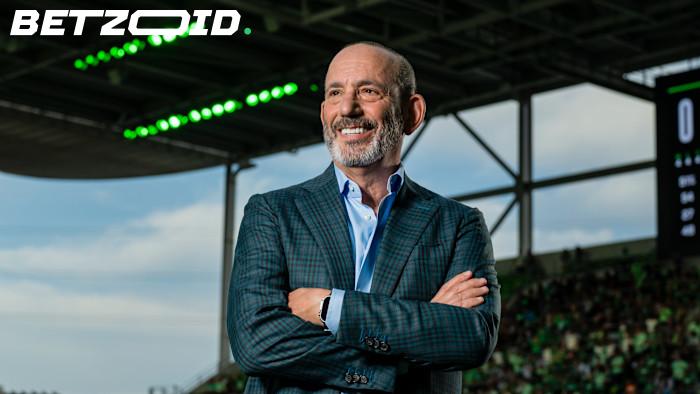
"This is the golden market for soccer globally." That's Don Garber, MLS commissioner since 1999, and after a World Cup that saw 50 million Americans watch the US get knocked out by Belgium — the most-watched soccer game in US TV history — it's hard to argue with him.
Several World Cup matches pulled viewership on par with NFL games. That's not a coincidence. That's a turning point, or at least the clearest signal yet that football has moved from niche to mainstream in America.
MLS wants to convert curiosity into loyalty
The league has launched its largest-ever marketing campaign — "Thanks World, We'll Take It From Here" — fronted by Messi and Beckham, timed to coincide with the MLS season resuming July 16. The logic is simple: the World Cup lit the fuse, now MLS wants to be the explosion.
Garber isn't just talking. The structural moves are real. MLS shifts to a summer-to-spring calendar in 2027 to align with the global football calendar and open the league up properly to the international transfer market. KKR has made a strategic investment in MLS Next Pro — the reserve league — with plans to push into over 100 US and Canadian cities that currently have no professional club. Club owners have put more than $11 billion into football infrastructure since the league launched in 1996.
Eighteen of the world's 50 most valuable clubs now play in MLS, per Sportico. More than any other league on the planet.
The pitch reality is harder to spin
Here's the thing Garber can't fully talk his way around: the US men's team went out early again, and the same structural problems remain. Youth football in America costs thousands of dollars a year in club fees, which means the sport gets filtered through wealth before it gets to talent. The best players from the wrong zip codes simply don't make it through.
Garber acknowledges it. "More access for more players" and solving "pay-to-play" are his words. MLS Next, launched in 2020, doesn't charge academy players — but as Garber himself admits, development model changes "take a generation to deliver." That's honest. It's also cold comfort if you're watching the national team underperform in every major tournament.
Meanwhile, MLS still carries the perception problem: Robert Lewandowski, 37, just signed for Chicago. Antoine Griezmann, 35, is heading to Orlando. Great names. Late chapters. The league needs more of its young stars breaking through rather than importing Europe's finishing line.
As for whether American fans just follow Haaland back to the Premier League now the tournament's over — Garber isn't worried. He points out that City and NYCFC share an owner, and a fan can watch the morning EPL game and attend an MLS match in the afternoon. That's a reasonable point, but it also quietly reveals which league is still being treated as the main event.
"I have no issue with Haaland leading the rowing across America," Garber said. He's playing the long game. The question is whether the on-field product can keep pace with the off-field ambition before that World Cup momentum fades.