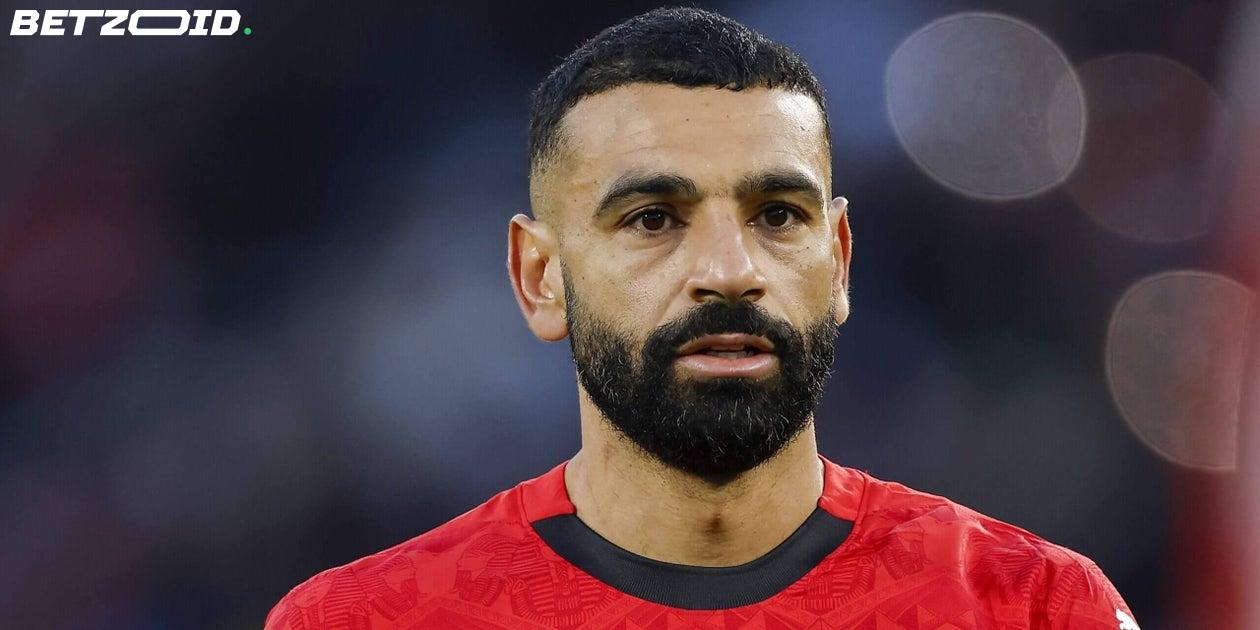
Mohamed Salah turns 34 today. His gift is a World Cup group opener against Belgium in Seattle. And he's doing it without a club, having left Liverpool a month ago, carrying a national team that has never won a single World Cup match in its entire history.
That's not hyperbole — it's the record. Egypt appeared at their first World Cup in 1934, becoming the first African or Arab nation to do so, and lost. They came back in 1990 and 2018 and lost again. Three appearances, zero wins, zero knockout-stage football. Ten African nations have a better record. Cameroon, Ghana, Morocco — all of them have gone further.
The 2018 disaster still matters
What happened in Russia eight years ago explains a lot about where Egypt are now. Salah arrived at that tournament nursing a shoulder injury from the Champions League final, played catch-up with fitness throughout, and watched the EFA make a series of decisions that would embarrass a Sunday league committee. Players sat at the back of the plane while federation officials took first class. The night before a crucial game against Russia, hotel security vanished and celebrities were knocking on Salah's door at 3am looking for selfies. "When you have a player, or players, who get to sleep at 6am, there is a problem," Salah said afterwards.
They lost all three games and went home.
The contrast this time is deliberate. Egypt are based in Spokane, Washington — remote, quiet, functional. Training at Gonzaga University, flights under an hour to Seattle and Vancouver where their group games are played. The chaos of 2018 has been studied and, apparently, learned from. Whether that translates to results is another question entirely.
Salah and Hassan: an uneasy alliance
The relationship between Salah and head coach Hossam Hassan is one of the more interesting subplots at this tournament. Hassan, Egypt's all-time top scorer with 69 goals (Salah is two behind), spent years as a TV pundit openly criticising his now-captain. During the 2023 AFCON, when Salah was injured and there was talk of him returning to Liverpool for treatment, Hassan told the press Egypt had "men to do the job" — a pointed dig at a player he clearly felt was prioritising his club over his country.
Now Hassan is the manager, and the tone has shifted entirely. At this year's AFCON, he called Salah "one of the best players in the world over the last 10 years." Salah, in turn, described the team's AFCON camp as the best he'd experienced in his international career.
It's a working relationship built on necessity as much as warmth. Egypt need Salah. Salah — club-less, trophy-less internationally, and entering the final stretch of his career — needs this tournament.
What he's produced for Egypt in flashes is genuinely significant. The 2017 penalty against DR Congo that sealed World Cup qualification for the first time in 27 years. Goals when the team needed them. But the collective trophies that defined Egyptian football — three consecutive AFCON titles between 2006 and 2010 — belong to a generation before him, and that absence follows him everywhere.
His 2024-25 season at Liverpool was his least productive since 2014-15, just 12 goals across all competitions. He's without a contract. Group G — Egypt, Belgium, New Zealand, Iran — is winnable on paper, but Belgium are not coming to Seattle to make it easy.
"We need to perform better at the World Cup. This is my main goal," Hassan said after a 2-1 friendly defeat to Brazil last week. A defeat to Brazil in a warm-up is one thing. Carrying that into a World Cup opener against a Belgium side with genuine quality is another.
Egypt's qualifying record was strong. The camp setup is better than anything they've had before. And Salah, whatever his club situation, remains the kind of player who lifts his level when the stakes demand it.
But the record is the record. Zero wins from three World Cup appearances. If you're pricing Egypt to advance from Group G, that history is the first thing to factor in — not the last.