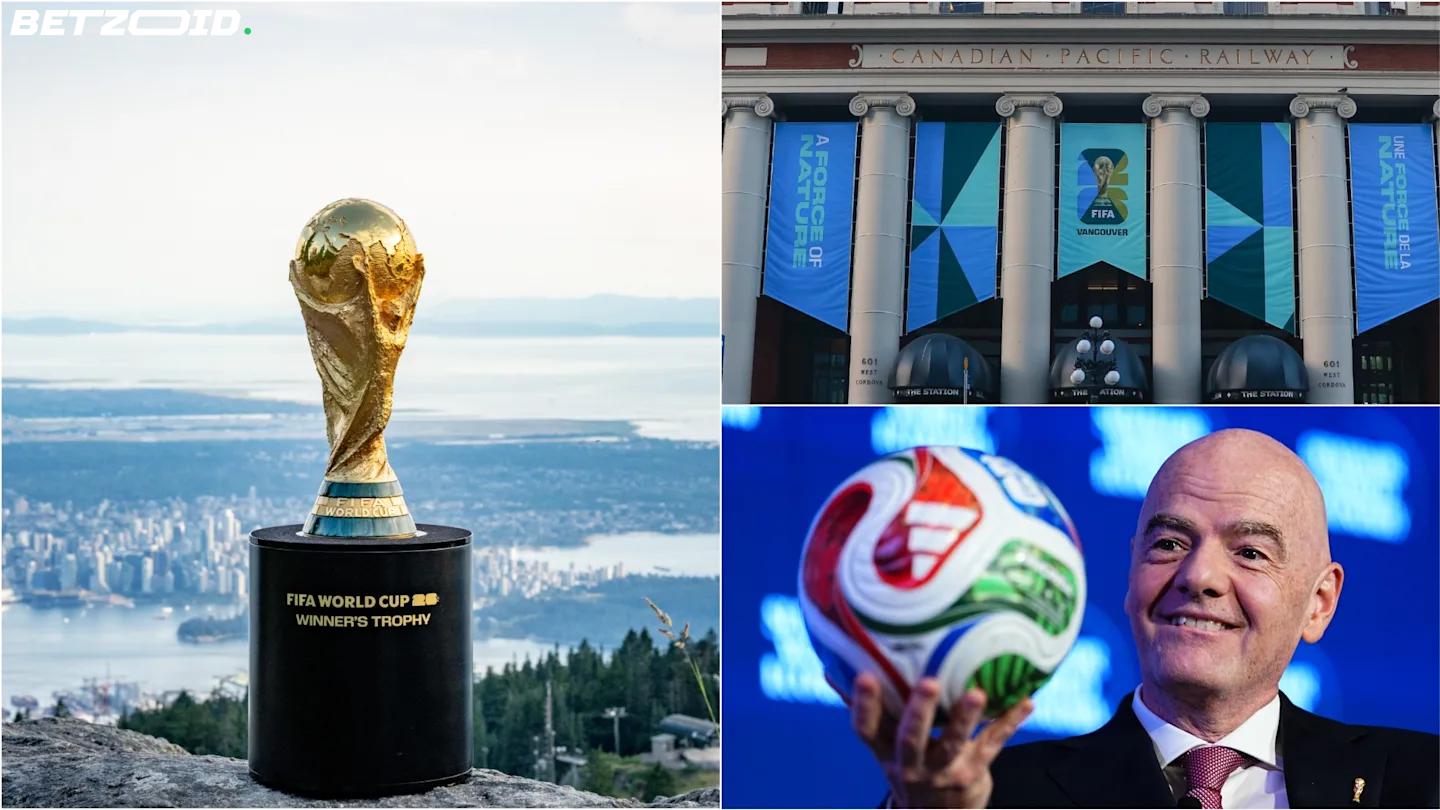
With fewer than 50 days until the 2026 World Cup kicks off, FIFA has gathered all 211 member associations in Vancouver for its 76th Congress — and the agenda is anything but ceremonial. Russia's ban, racism on the pitch, prize money, and a deeply awkward Peace Prize are all on the table.
The racism review everyone's been waiting for
Two years ago FIFA launched its "Global Stand Against Racism" campaign built around five pillars: match forfeits, a three-step process for live incidents, education, a players' voice panel, and pushing for racism to be recognised as a criminal offence globally. The framework exists. Racial incidents haven't stopped.
The three-step process — halt play, suspend, abandon — has become a regular occurrence in Concacaf alone, triggered multiple times by homophobic chanting during Mexico matches. That's not a sign the system is working. That's a sign the system is being used as a management tool rather than a deterrent.
Congress will review the entire initiative with an eye toward harsher punishments. The Vinicius Junior incidents at Real Madrid have become the defining case study, and Thibaut Courtois said what most players in that dressing room were thinking: "We have to end this now." That quote landed in February. FIFA is only now getting around to a formal review. The pace of change is worth keeping in mind when evaluating whatever comes out of Vancouver this week.
Russia: seven words buried in the agenda
Item on the official agenda: "Suspension or expulsion of a Member Association." Seven words. Three nations affected — Russia, Pakistan, Congo. One conversation that actually matters.
Russia's situation is structurally different from the others. The Russian federation remains a full member of both FIFA and UEFA. It's the national teams — men's, women's, clubs — that are banned, not the governing body. That distinction matters because it makes reinstatement procedurally easier than most assume.
FIFA President Gianni Infantino already signalled the direction in February, telling Sky that the ban "has not achieved anything, it has just created more frustration and hatred." That's a significant statement from the head of the sport. Russia's men have continued playing unsanctioned friendlies — against Mali, Nicaragua, Peru, Bolivia, Iran and others — so the idea that they've been sitting idle is a fiction.
The International Paralympic Committee has already allowed Russia back under their own flag at Milan Cortina 2026. World Aquatics has reopened competition to Russian athletes. FIFA announced a new Under-15 tournament open to all member associations in December, which reads like a quiet signal. The full reinstatement conversation is coming — Vancouver might just be where it starts out loud.
More prize money, and a Peace Prize nobody asked for
On the financial side, FIFA already committed to a $727 million prize pool — 50% up on Qatar 2022. With projected revenues of $11 billion, Infantino has indicated that surplus funds, under the organisation's not-for-profit structure, must be redistributed. Some of that could flow directly to the 48 qualified nations for logistical support across North America, with the rest going into development funding for all 211 associations. Expect that figure to move upward before the tournament begins.
Then there's the Peace Prize — and Norway's football association president Lise Klavness is calling for it to be scrapped entirely. The prize, announced months after the Nobel Peace Prize that Donald Trump had lobbied for and didn't win, was handed to Trump at the World Cup draw in Washington D.C. without a public nomination process or any other declared candidates. Klavness, also a UEFA executive committee member, has said FIFA should keep "an arm's length distance" from political leadership.
She's not planning to speak on the topic at Congress this week. She doesn't need to. The criticism has already landed, and other federations will have read it.