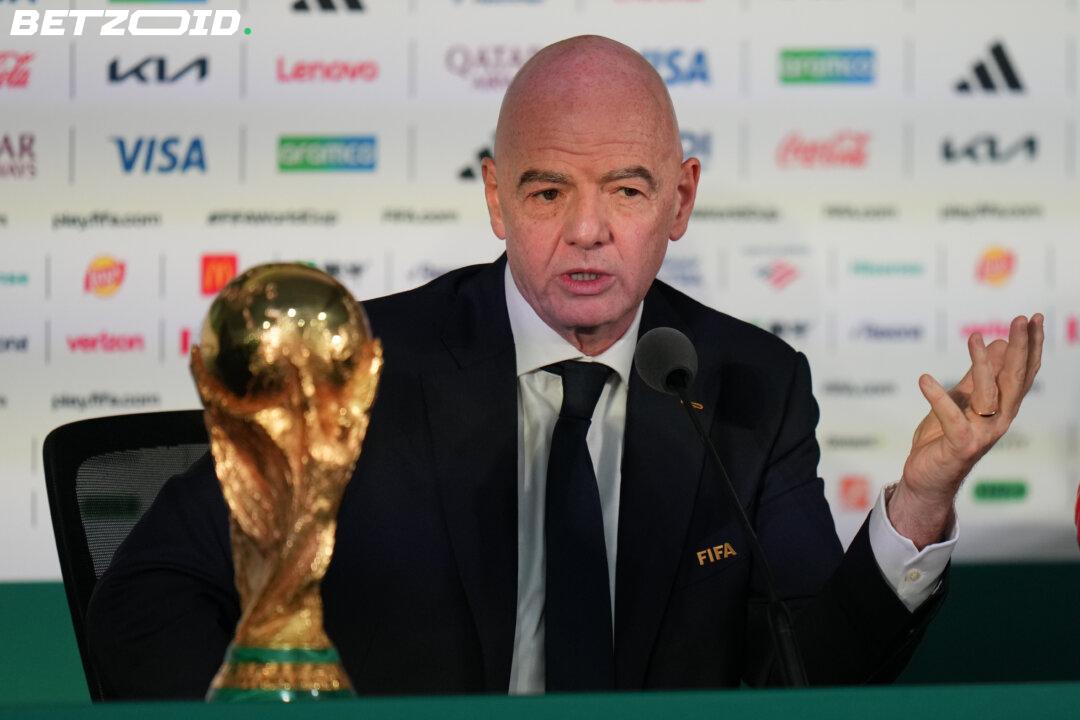
"It is the project of one person." That's FIFA's own chief operating officer, Kevin Lamour, publicly torching his boss Gianni Infantino's plan to sell a 20% stake in world football's most valuable commercial assets to private investors. When your COO goes to the Associated Press to call you out, the project is not going well.
The full picture is now this: UEFA threatened a World Cup boycott on Thursday. CONCACAF backed them on Friday without using the B-word. The Asian Football Confederation — representing 47 member nations — followed hours later, standing "in solidarity" with UEFA while stopping short of the same ultimatum. A senior Infantino adviser, Carlos Cordeiro, resigned with immediate effect calling it "a bad deal for football." And Lamour, a long-time Infantino colleague from their days together at UEFA, effectively called on football's political leaders to remove him.
What Infantino actually proposed
The plan, first reported by The Times of London on Tuesday, would spin FIFA's commercial operations — men's and women's World Cups, Club World Cups — into a $20 billion subsidiary. Private investors would own 20%. The anchor investor is Thrive Eternal, a New York firm founded by Joshua Kushner, younger brother of Jared Kushner. J.P. Morgan is advising. Member associations were given a September 19 deadline to sign off.
FIFA's 211 members operate on a one-member, one-vote basis, which is why Infantino's strategy appears to be flooding the vote with smaller federations that might welcome the promise of increased development funding. FIFA claims the plan would widen access to the sport and reinvest all net benefits back into the game.
Cordeiro — a former Goldman Sachs banker and ex-U.S. Soccer Federation vice president — isn't buying it. "FIFA already has access to extraordinary financial resources," he said. "The organization sits on billions of dollars in reserves and no debt." He called the sell-off "mortgaging football's future without any compelling justification," pointing to FIFA's $15 billion in revenue over the last four years tied to the 2026 World Cup alone.
What a boycott would actually mean
Six of the eight quarter-finalists at the last World Cup were European. The other two were Argentina and Morocco. Strip UEFA's member nations from the tournament and you're not hosting the World Cup anymore — you're hosting a regional tournament with a global name tag.
The first event that could be directly affected is weeks away. The Women's Under-20 World Cup kicks off in Poland on September 5. The four British federations are also FIFA's only bidder to host the 2035 Women's World Cup, with a decision due November 23. Both are now hanging in the balance.
The AFC's statement was pointed: "The fact that the situation has reached the point where the real possibility of a FIFA World Cup boycott has entered public discourse should concern everyone who cares about the future of our game." South America, Africa, and Oceania had not declared positions by Friday afternoon — their silence the only thing Infantino has left to work with.
FIFA responded by promising "an open and democratic consultation" and blamed "erroneous reporting" for disrupting its process. "Nobody is selling football," the statement read. Lamour's assessment of his employer's communications strategy was less diplomatic: staff "deserve better than contempt and intimidation."
FIFA says it will press on regardless. Whether it can do that without most of the world's best players and confederations is the question nobody at FIFA headquarters in Geneva seems to have a clean answer to.