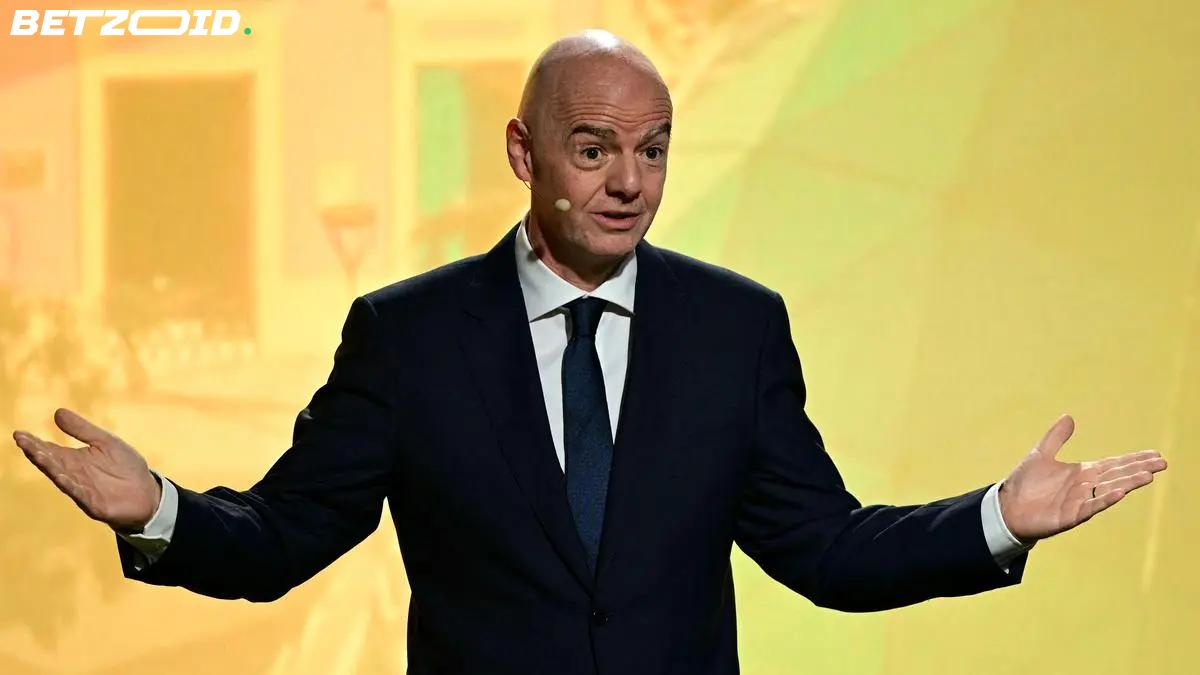
Gianni Infantino tried to sell a slice of world football to private investors. UEFA threatened to boycott the World Cup. Now the plan is dead. What happened in between tells you everything about who actually runs the game.
The scheme, called FIFA Forward Enterprise (FFE), would have spun off FIFA's most lucrative commercial operations — ticketing, broadcasting, licensing, sponsorship — into a separate corporate entity. Twenty percent of that entity was earmarked for private investors, generating an estimated $4.2 billion upfront by capitalising future revenue streams. It's standard financial engineering. The fact it was being applied to the global governing body of football is what made it extraordinary.
JPMorgan, the Kushners, and a very convenient deal
JPMorgan Chase — the same bank that helped architect the failed European Super League breakaway in 2021 — was the driving force behind Infantino's plan. That alone should have set off alarms. The proposed lead investor was Thrive Eternal, a company run by Joshua Kushner, brother of Jared Kushner, Donald Trump's son-in-law. The political connections radiating off this deal were hard to ignore.
Whistle-blower reports suggested Infantino had negotiated a personal exit package of $30 million plus bonuses for himself upon retirement, on top of his already generous 4.8 million Swiss franc annual salary. That context reframes the entire proposal. This wasn't restructuring. It was extraction.
To secure the votes of FIFA's 211 member associations, each was offered a one-off payment of $20 million, with annual transfers set to rise from $2 million to $5 million between 2027 and 2030. For smaller associations starved of development funding, it was genuinely tempting. But dangling cash in exchange for votes has a word for it, and it isn't governance reform.
UEFA's response was self-interested — and effective
UEFA's emergency vote to unanimously boycott all FIFA events, including the 2030 World Cup, killed the plan faster than any legal challenge could have. CONCACAF and the Asian Football Confederation followed with their own rejections. The speed and unanimity was striking, but it wasn't altruism — UEFA stands to lose the most if FIFA centralises commercial power and redirects revenue away from European football's established structures.
This is the part the "soul of the game" rhetoric obscures. The backlash wasn't about protecting football from finance. Football is already saturated with private capital — clubs are owned by sovereign wealth funds, hedge funds, and billionaires across every major league. The revolt was about who controls the money, not whether money should be involved at all.
- FIFA's commercial revenues — ticketing, broadcasting, licensing, sponsorship — were the assets being packaged for sale
- JPMorgan was central to both the 2021 Super League attempt and this proposal
- UEFA threatened a full World Cup boycott; CONCACAF and AFC also rejected the plan
- Infantino reportedly stood to earn $30 million personally through the FFE structure
- The Kushner family connection injected a layer of political toxicity the plan couldn't survive
For anyone tracking World Cup-related markets or FIFA governance futures, the collapse of FFE doesn't resolve the underlying tension — it postpones it. Infantino still has ambitions, JPMorgan still has capital, and football's revenue streams are still growing. The deal failed. The appetite that created it hasn't gone anywhere.