"Playing four halves instead of two adds nothing and takes away a lot." That's Marcelo Bielsa — and he's not alone in his frustration with one of the defining features of this year's World Cup.
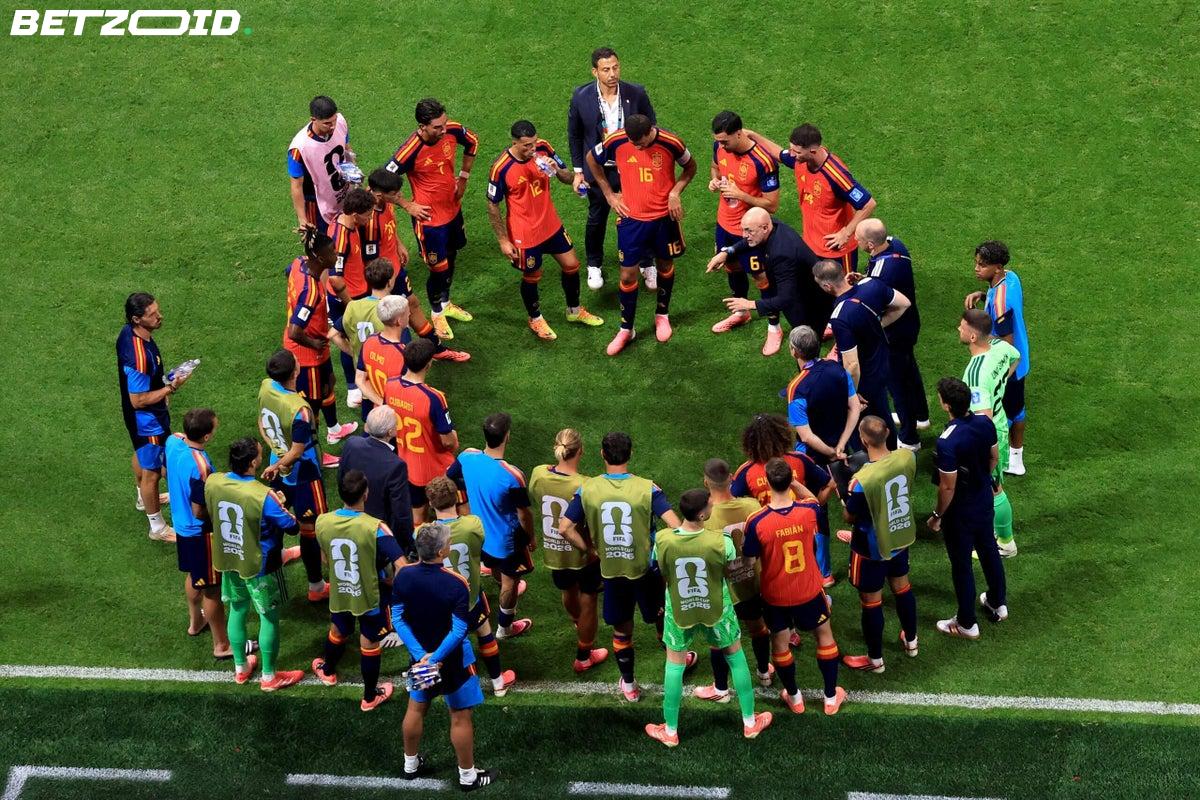
Hydration breaks, called at the 22nd minute of each half across every single match at this tournament, have become football's version of TV timeouts. Three minutes. Clock still running. And in the United States and Canada, an ad break for television viewers. The parallels to the NBA and NHL are uncomfortable for purists, and the boos from stadium crowds at every stoppage tell their own story.
The momentum problem
The competitive concerns are legitimate. Haiti conceded a John McGinn goal from Scotland within three or four minutes of a hydration break. Manager Sebastian Migne didn't want to make excuses, but he noted what several others have: "The players took some time to get back into the flow of the game."
Jordan's Amer Jamous felt the same after his side's 3-1 loss to Austria. "Sometimes, especially in the second half, I thought the break made our team go down a little bit, especially in that period we were controlling the game."
Curacao tried to flip the script. Expecting to be overrun by Germany, midfielder Leandro Bacuna said the plan was to use the break to disrupt German momentum. Curacao actually scored right before it. Germany then scored six unanswered in a 7-1 demolition. So much for that theory.
Then there's the absurdity factor. U.S. defender Antonee Robinson described being told to wait before resuming play — because the ad break hadn't finished. "The referees are saying: 'No, you've got more time, it's alright, because the ads are still running.'" That's a sentence that shouldn't exist in football.
Some managers are embracing it
Not everyone is unhappy. Roberto Martinez called the opportunity to give tactical instruction "very important, revolutionary even." Ralf Rangnick went further, openly wondering whether domestic leagues in Europe should adopt the same format. Thomas Tuchel framed it simply: "We will use them as an opportunity to cool the players down. Mentally and physically."
That's the split. Pragmatists versus traditionalists. Coaches who see a tactical window versus those who see a broken rhythm.
Ghana's Gideon Mensah sits somewhere in the middle. He acknowledges the recovery benefit but pointed out the obvious absurdity of a scheduled hydration break during a rainy game in Toronto. "Today, obviously, was not really hot. I mean, it was raining everywhere." South Africa's Hugo Broos made the same point about a break called inside Atlanta's fully domed Mercedes-Benz Stadium — an air-conditioned venue where the temperature argument simply doesn't hold.
FIFA insists the blanket policy is about fairness across all matches, with president Gianni Infantino stating there is "no additional revenue" for the governing body from the stoppages and that commercial deals were signed well in advance. Maybe. But when Robinson is standing on the touchline being told the ads are still running, that defence is hard to take at face value.
The breaks are locked in for the rest of this tournament regardless of what anyone thinks. Teams whose game management and in-match momentum are closely tied to stretches of sustained pressure — think possession-heavy sides with high pressing structures — are the ones most likely to feel disrupted. Anyone laying bets on match outcomes might want to factor in whether a key spell of dominance is about to hit a three-minute wall at the 22-minute mark.
"It's just part and parcel of this tournament," said England's Jordan Henderson. "It's the same for everyone."
It is. That doesn't mean everyone has to like it.