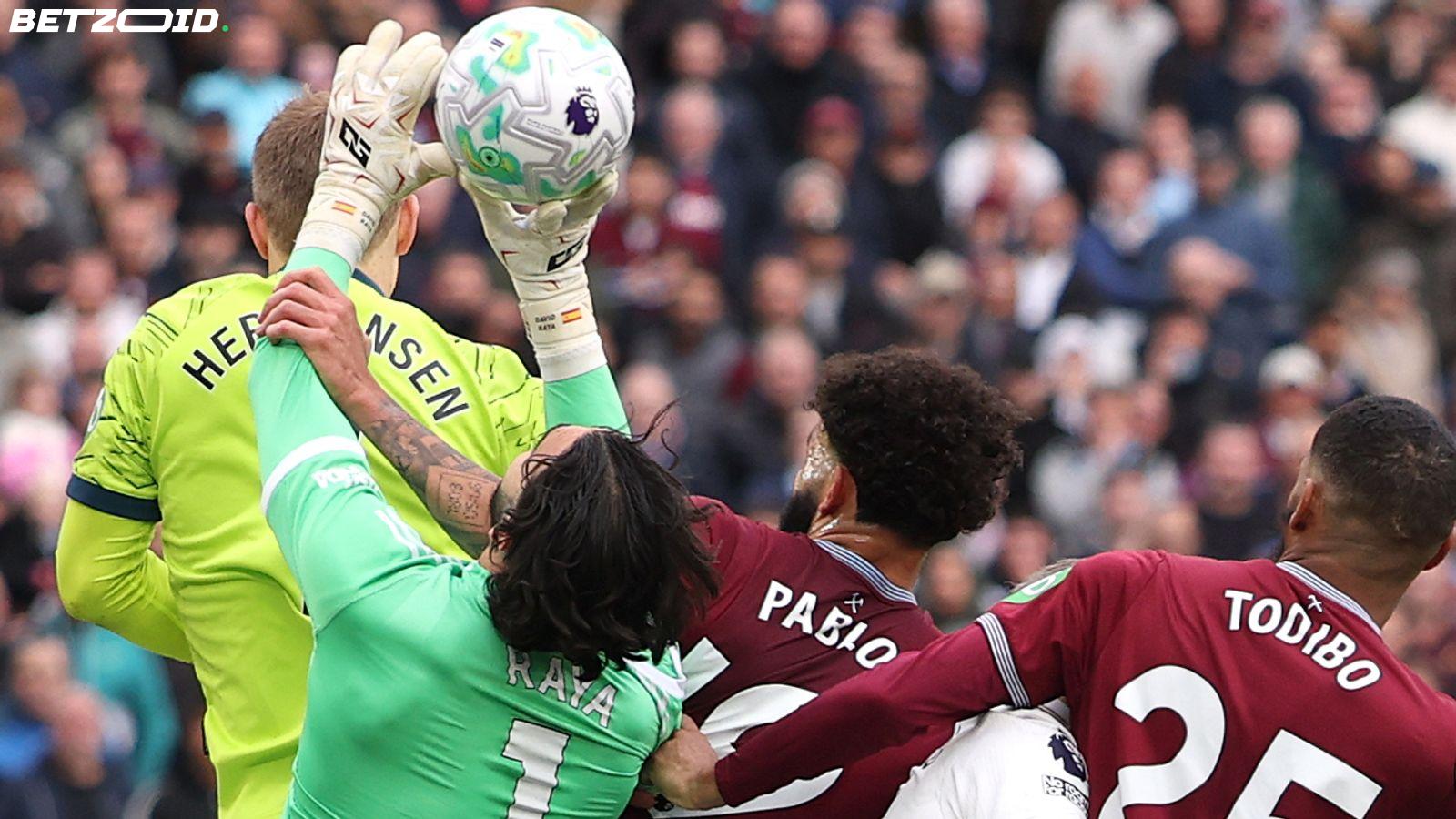
Roy Keane said it best: "Don't make it such an obvious foul." The problem is, West Ham did — and it still took VAR over four minutes to confirm what Gary Neville clocked in under sixty seconds from the studio.
Callum Wilson's 95th-minute equaliser against Arsenal was ruled out after VAR Darren England and referee Chris Kavanagh spent four minutes and seventeen seconds reviewing the incident. Two minutes and thirty-five seconds passed between the ball crossing the line and Kavanagh being sent to the monitor. He then watched seventeen separate replays before blowing for a foul by Pablo on Raya, with Jean-Clair Todibo simultaneously grabbing the Arsenal goalkeeper's shirt.
West Ham are planning to contact PGMO requesting further explanation, with the likely argument being that the sheer length of the review process undermines any claim the decision was "clear and obvious." It's not an unreasonable grievance procedurally — even if the foul itself was hard to dispute once you actually watched it.
The Decision Was Right. The Process Was the Problem.
Dermot Gallagher framed it as a sequencing issue: Pablo impeded Raya before any other contact in the box, meaning Rice's challenge on Mavropanos — which West Ham pointed to — came after the foul had already occurred. The logic holds. The decision holds.
But former referee Mike Dean's frustration cuts deeper than this single incident. "They are just not making on-field decisions," he said the day before the match. "They are going to have to address it over the summer because it is not good enough." Sunday proved his point in real time. Kavanagh should have blown his whistle in the moment — arm fully extended across the goalkeeper is not a borderline call. Instead it went to VAR, sat there for four minutes, and turned into the most consequential review in the system's seven-year Premier League history.
The delay was partly explained by England reviewing multiple instances of holding during the same corner — which tells you everything about how endemic the problem actually is. There was so much grappling to sift through that it slowed down catching the most obvious foul in the pile.
A Problem the League Helped Create
This is where the story gets uncomfortable for the Premier League. Back in August, PGMO chief Howard Webb promised a "measured crackdown" on box holding, explicitly flagging that clear, impactful pulling was going unpunished too often. By last month, just seven penalties had been awarded all season for holding or grappling. Seven.
The guidance currently in place requires a foul to be "clear, impactful and sustained" — all three — before a penalty is given. Miss one criterion and the officials wave it away. Combined with a survey of key figures in the game that placed high thresholds for physical contact and VAR intervention among the top priorities, the system has essentially institutionalised the kind of wrestling that's now routine on every set piece.
- Seven holding/grappling penalties awarded in the Premier League this season up to last month
- Current threshold: contact must be "clear, impactful and sustained" — all three required
- VAR can only intervene on grappling calls when the "clear and obvious" standard is met
- PGMO boss Webb said in August he expected "a few more" penalties this season — not a major swing
West Ham's odds of staying up just took a significant hit, and whatever you think of the decision itself, the spectacle of a relegation battle hinging on four minutes of VAR deliberation and seventeen replays is not a good look for the league's officiating structure. The grappling problem didn't start on Sunday. The league built it, brick by brick, all season long.