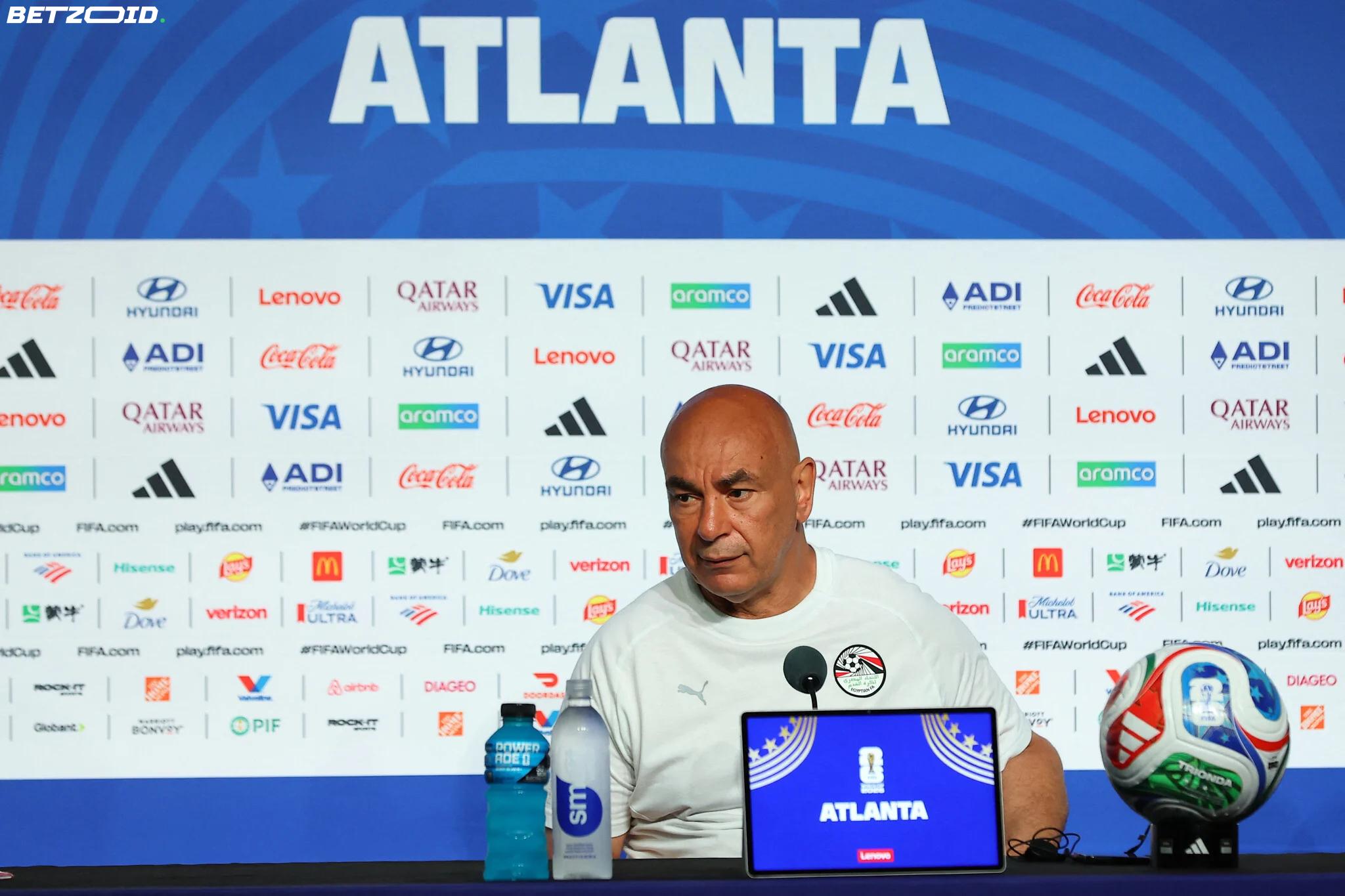
Hossam Hassan didn't come to Atlanta to talk about Argentina. He came to say something that needed saying.
Egypt's coach waved a Palestinian flag on the pitch after the Pharaohs beat Australia on penalties to reach the World Cup last 16. Then, at his pre-match press conference ahead of tomorrow's meeting with defending champions Argentina, he used his platform in the most direct way a man in his position can.
"If there is someone who has not felt the suffering of the Palestinian people then he or she has no humanity," Hassan told reporters. "This is a shame on us. A shame on the entire world, not just the Arab world — a shame on everyone and a shame on first of all decision makers who leave human beings behind."
The room applauded.
Football as soft power
Hassan's call wasn't vague sympathy. He was specific about what he wants: FIFA, athletes, and the media to act collectively. "Use football as soft power," he said, urging all athletes worldwide — "regardless of their identities" — to push a single message: let the Palestinian people live.
Egypt's all-time top scorer knows the weight his words carry at a tournament this size. A World Cup press conference in the United States, with a last-16 match against Argentina on the line, is about as loud a microphone as football offers. He used it.
Whether FIFA responds to that call is another matter entirely. The organization has a long, uncomfortable history of sidestepping political pressure while simultaneously policing player expression on the pitch. Hassan's appeal to "soft power" is pointed — it's a recognition that FIFA is unlikely to act through hard policy, so the ask is for symbolic, collective weight instead.
Tomorrow Egypt face the steepest possible task against a team gunning to retain the title. But Hassan has already made his mark on this tournament, and it had nothing to do with tactics.
"Let them exist. Let them live a life of their own. This is normal."