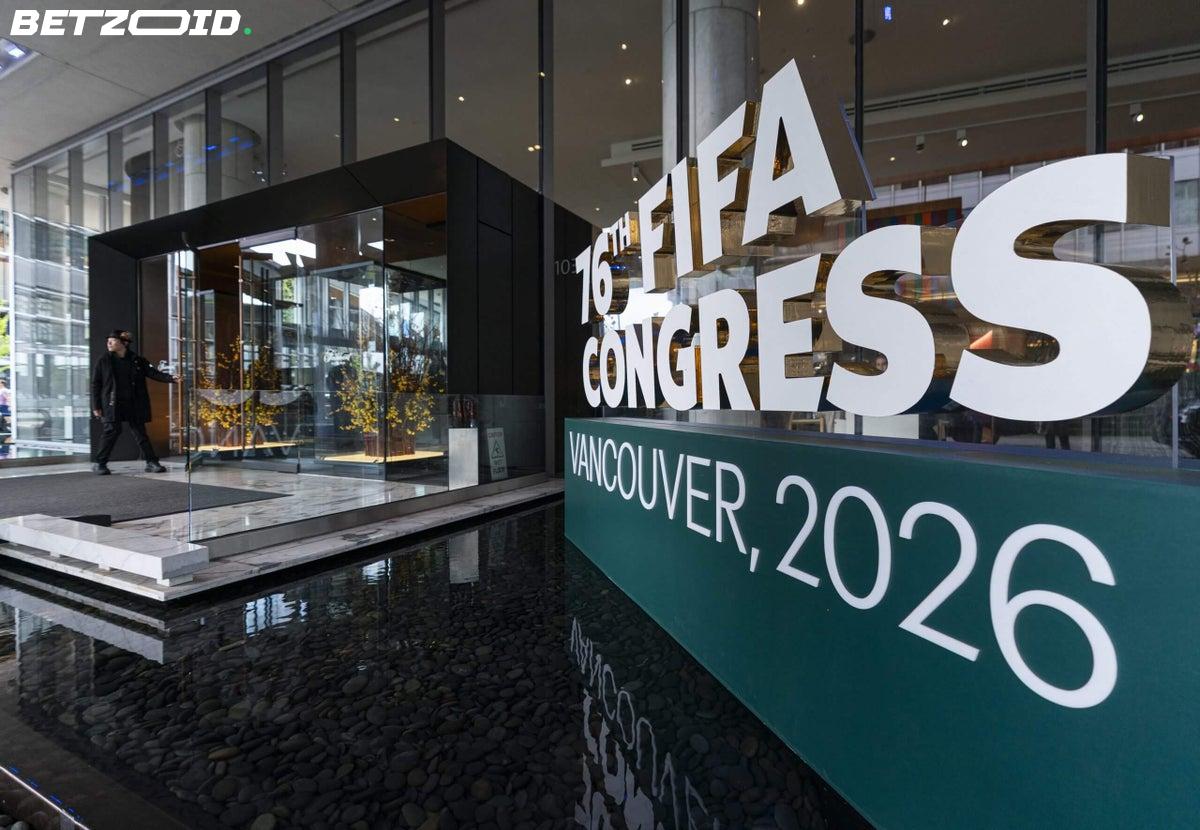
Two chairs. Empty. That was Iran's presence at the Asian Football Confederation Congress in Vancouver on Tuesday — a symbol of everything that's wrong with football's relationship with geopolitics right now.
AFC general secretary Windsor John confirmed the Football Federation of the Islamic Republic of Iran could not attend the 36th AFC Congress "due to some visa formalities issues." No further explanation was offered. Canada's immigration department hasn't responded to questions. FIFA hasn't commented. The chairs stayed empty.
Iran isn't alone — but their situation is the most severe
Palestinian Football Association vice president Susan Shalabi told reporters her delegation was among 10 to 12 federations that encountered visa problems. Initially, the PFA's president, general secretary, and legal counsel were all denied. It took pressure "on the political level, on the social level, on the media level" before Canada reversed course. PFA president Jibril Rajoub still didn't make Tuesday's AFC meeting — though he was expected to arrive in time for Thursday's FIFA Congress.
Iran got no such reprieve. Their officials simply weren't there.
This isn't a new pattern. Iranian soccer executives were denied U.S. visas ahead of the World Cup draw in Washington D.C. last December. The entire delegation threatened to boycott before a handful ultimately attended. When pressed on those denials at the time, White House World Cup task force head Andrew Giuliani was blunt: "Every visa decision is a national security decision."
Last week, Secretary of State Marco Rubio went further — drawing a line between Iran's athletes, who he said would be permitted entry, and other personnel with alleged IRGC ties. "What they can't bring is a bunch of IRGC terrorists into our country and pretend that they're journalists and athletic trainers," Rubio said. Iran have confirmed their team will participate in the World Cup. Which staff and officials will actually be allowed to travel with them is another question entirely.
The bigger picture for the World Cup
The 2026 tournament is co-hosted by Canada, the United States, and Mexico. Canada's visa complications are one layer. The U.S. travel ban — which already covers Iran and Haiti among the qualified nations, and has since expanded to include Senegal and Ivory Coast — adds another. The exemption carved out for athletes and essential support staff doesn't automatically extend to executives, and plenty of decisions still rest at the discretion of U.S. authorities.
At the AFC Congress itself, the mood was noticeably subdued. AFC president Sheikh Salman acknowledged "the realities beyond football that weigh heavily on many of our Asian football family," and noted that some members joined via Zoom due to conflicts in their regions. FIFA president Gianni Infantino, addressing the room, spoke about unity and bridge-building — the kind of language that sounds right but lands awkwardly when some delegations literally cannot get into the country hosting the sport's biggest event.
When Iran's World Cup shield was handed out to representatives of each qualified Asian nation, Windsor John noted it would be presented to Iranian officials "once they arrive." Whether that happens before Thursday's FIFA Congress — let alone before the tournament kicks off next month — is anyone's guess.