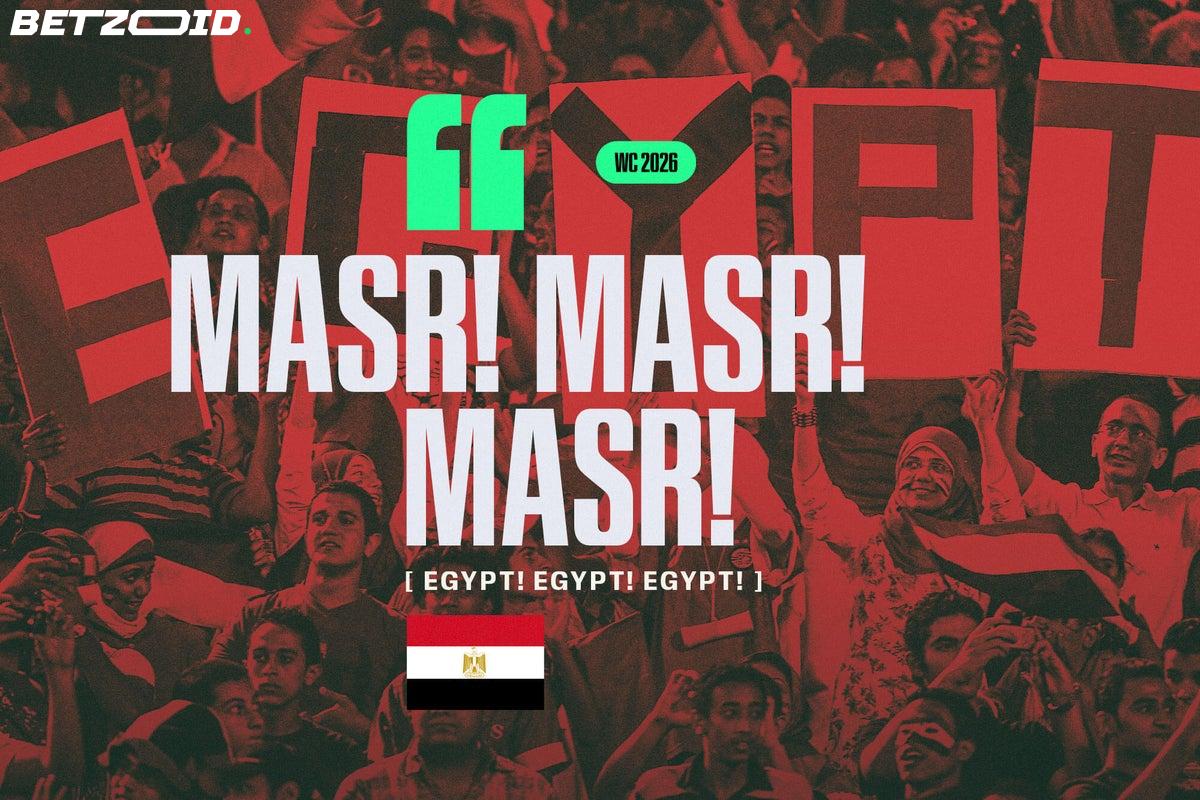
"The lows are too low, but the highs are very high." That one line from Egyptian fan Mostafa Omar captures three decades of following the Pharaohs better than any match report could.
Egypt are back at the World Cup in 2026 — their fourth appearance ever, only the second since Italia '90 — and for a nation of 100 million people with seven Africa Cup of Nations titles to their name, the gap between continental royalty and global also-rans has always been the defining tension of supporting this team.
Kings of Africa, ghosts at the World Cup
No country has lifted the AFCON trophy more times than Egypt. Seven titles. And yet, between 1990 and 2018, they missed every single World Cup. The frustration that built up across those qualifying campaigns — playoff losses to Algeria, agonising near-misses, a golden generation that never quite translated its club brilliance to the global stage — left a specific kind of scar on Egyptian football fans.
"It's frustrating because we are the kings of Africa, but when we play other matches it's not the same," says Teymour El Derini, whose company is literally named '1990' after Egypt's last World Cup appearance before Russia 2018. That's how much that tournament meant.
Qualification for 2026 was, by contrast, almost serene. Eight wins from ten games, finishing five points clear at the top of their group. But before the tournament expanded to 48 teams, getting here felt nearly impossible. The expansion didn't diminish the achievement for the fans — it just removed the excuse for future absences.
The emotional DNA of Egyptian support
The chant is simple: "Masr! Masr! Masr!" — Egypt, Egypt, Egypt — clapped between each word, echoing through the Cairo International Stadium since before most current fans were born. Ahmed Hamdy, now 46 and living in New York, first heard it as a child when his father took him to the 1989 World Cup play-off against Algeria. Over 100,000 people. People praying in their seats rather than miss kick-off. Egypt winning 1-0 to book their ticket to Italia '90.
That's the ceiling. The floor, though, is equally vivid — a one-off replay against the same Algeria in Sudan in 2010, lost 1-0, eliminating Egypt from the 2010 qualifiers. Same opponent, same stakes, opposite result. That's Egyptian football in miniature.
"We are very emotional in the way we support — one day we hate the team, the other day we love the team," Omar says. "We can criticise our team and players, but we don't like other people criticising them."
Ahmed Assem has a colder explanation for the volatility: "Egypt's only footballing identity is winning." When a team defines itself purely by results, every defeat feels existential. Every win restores order to the universe. There's no cultural tolerance for honourable defeats or transitional periods — just the binary of triumph or betrayal.
Football language has seeped so deeply into Egyptian daily life that strangers are called "Captain" or "Coach," and someone doing their job well gets called a ferwed — from the word "forward." That's not a quirky aside. That's how embedded this sport is in how Egyptians see each other.
World Cup 2026: Group stage and beyond
Egypt face Belgium, New Zealand and currently Iran in their group. The odds on Egypt advancing from that group are worth a look — Belgium are genuine contenders, but New Zealand and Iran represent winnable games, and Egypt's recent qualifying form suggests a team that can take points when it matters.
Most Egyptian fans back home won't be in the stands in Seattle or Vancouver. Visa logistics and ticket prices make it prohibitive for the majority. The diaspora in North America will carry the chant instead — louder, perhaps, for knowing what it cost to get here.
Hamdy is planning to take his 15-year-old daughter to an Egypt match in Seattle. The same trip his father made with him in Cairo back in 1989.
"A fraction of 100 million isn't a bad number," as one fan put it. Wherever Egypt play, "Masr! Masr! Masr!" will find the acoustics.