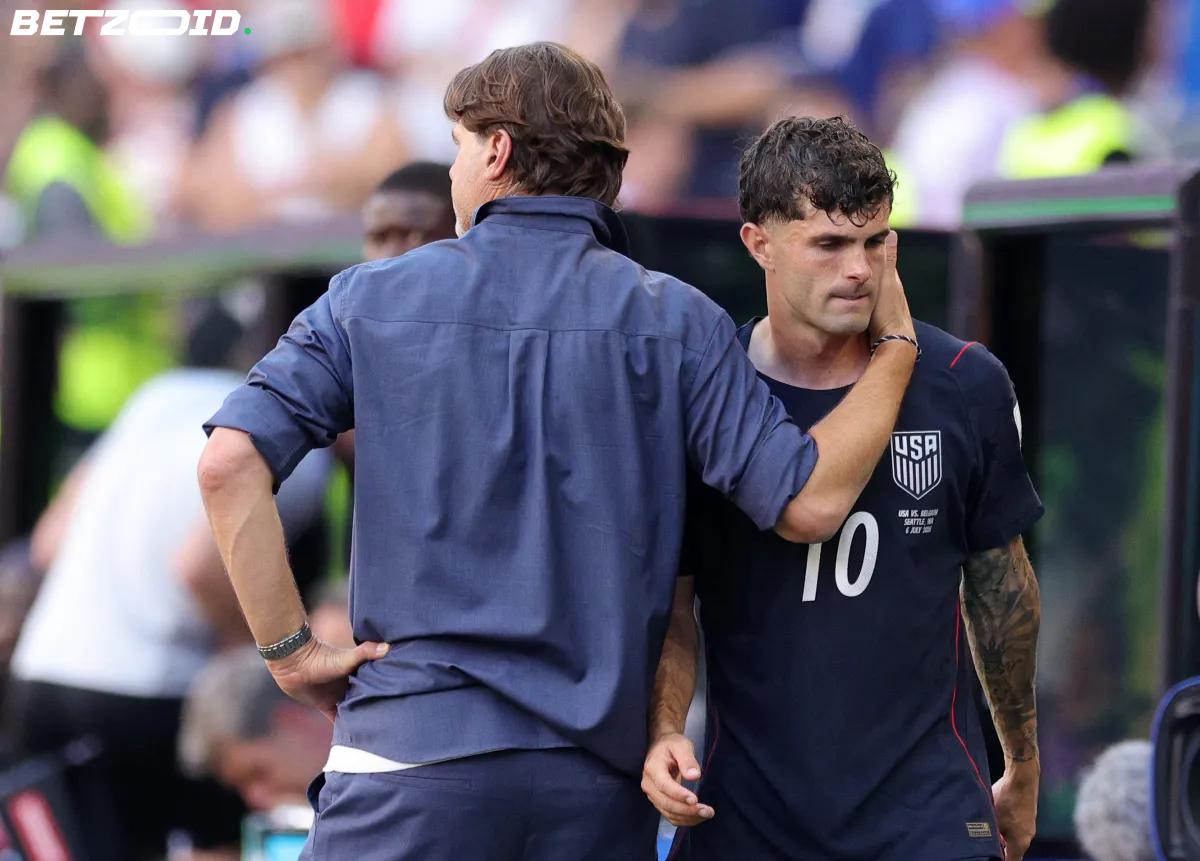
Belgium beat the United States 4-1 in Seattle on July 6 to end America's World Cup at the Round of 16 — the heaviest margin the USMNT has suffered at the tournament since 1934, and the same stage where they've gone home in each of the last three tournaments they've played. Same exit. Worse scoreline. Same question: why can't this country figure out men's soccer?
Landon Donovan has been trying to answer that for months. The national team's joint all-time leading scorer puts it bluntly: the talent pool is being gutted before anyone even gets a look at it. "Only 2 percent of kids who were playing organized soccer in America came from households that made less than $50,000," Donovan said. "Think about how many kids you are missing out on in this country because they can't afford to play the game."
The numbers behind that are jarring. American families pay between $3,000 and $10,000 per year for competitive youth soccer — and that figure has been climbing. According to the Aspen Institute's Project Play, American families spent an average of $1,016 on a child's primary sport in 2024, a 46 percent jump since 2019. The clubs charging those fees are private businesses. Their revenue depends on registration, so they're financially incentivized to field as many paying teams as possible — not to find the best players.
How the rest of the world does it differently
In France, England, Germany, Spain, Brazil and Argentina, elite youth development runs in reverse. Professional club academies cover the cost. If a kid is good enough to be selected, the family pays nothing. Travel, equipment, coaching — sometimes housing and education — all covered by the club, which treats it as an investment. They recoup that investment through first-team promotion or transfer fees.
Stan Collymore, who came through the English system before playing for Liverpool and Aston Villa, made the comparison concrete. His mother paid roughly £200 — around $268 — across six or seven years of junior soccer. "99.9 percent of greats to play the game wouldn't have made it in America," he wrote on X. "Because they couldn't afford $4,000 (plus) to play."
FIFA's rules reinforce the European and South American model through training compensation and solidarity payments — mechanisms that direct a share of future transfer fees back to the clubs that developed a player between ages 12 and 23. Even small grassroots clubs have a financial stake in finding talent, not charging for access. Those mechanisms barely function inside the U.S. The federation has argued they could violate American antitrust law, and MLS does not pay solidarity fees or training compensation to independent domestic youth clubs.
The structural result: American youth soccer selects for family income before it selects for ability. In a country of 340 million people, that's not a small inefficiency.
But pay-to-play didn't lose to Belgium
The counterargument deserves a hearing. Most of the players in Seattle were developed through free MLS academies or European clubs. The squad's key figures play at top European sides. The majority of serious post-mortems on the Belgium match point to a simpler conclusion: the players weren't good enough against elite opposition, and no coaching change — including bringing in Mauricio Pochettino — was going to close that gap on its own.
Tim Howard said it plainly before the elimination: "The U.S. cannot, unequivocally, win the World Cup. The U.S. would have to play the greatest game they've ever played... four games in a row." That's not a youth development problem. That's a quality ceiling that exists right now, regardless of how the next generation is being raised.
Other structural issues pile up alongside pay-to-play: coaching quality, no promotion and relegation, the college soccer detour, and a youth culture that optimizes for tournament results at age ten rather than technical development. Reform advocates argue all of those problems share the same root — filter by income first, talent second, and you've already shrunk the pool before any of the other factors even come into play.
The debate has reached Congress. In May, Senator Chris Murphy and Representative Chris Deluzio introduced the "Let Kids Play" Act, which would force certain private equity investors to divest from youth sports businesses, ban hidden fees, and create a scholarship fund for local facilities. It hasn't moved since introduction.
Meanwhile, Fox paid $485 million for the English-language rights to this tournament. The U.S.-Belgium match drew 30 million viewers — the most-watched soccer telecast in American history. The appetite is there. The question is whether any of that money filters down to the kids who can't afford a club fee.
- Experts are calling for expanded free professional academies beyond current MLS markets
- Domestic training compensation and solidarity payments to reward grassroots clubs for developing talent
- Subsidized coaching education and rebuilding low-cost local leagues
- School-based soccer restored as a genuine pathway into the game
"U.S. soccer culture still selects for income much more than we do for talent," said Doug Andreassen, former president of Washington state's youth soccer association and former head of U.S. Soccer's diversity task force. "Follow the money. The costs have escalated. Travel, food, hotels, coaches, gear, tournament fees, referee fees. It's an overall system that we've got to fix."
Four in ten Americans watched the USMNT this summer. Belgium sent them home by four goals. The system that produced this team is already being rebuilt — slowly, unevenly, and not nearly fast enough.