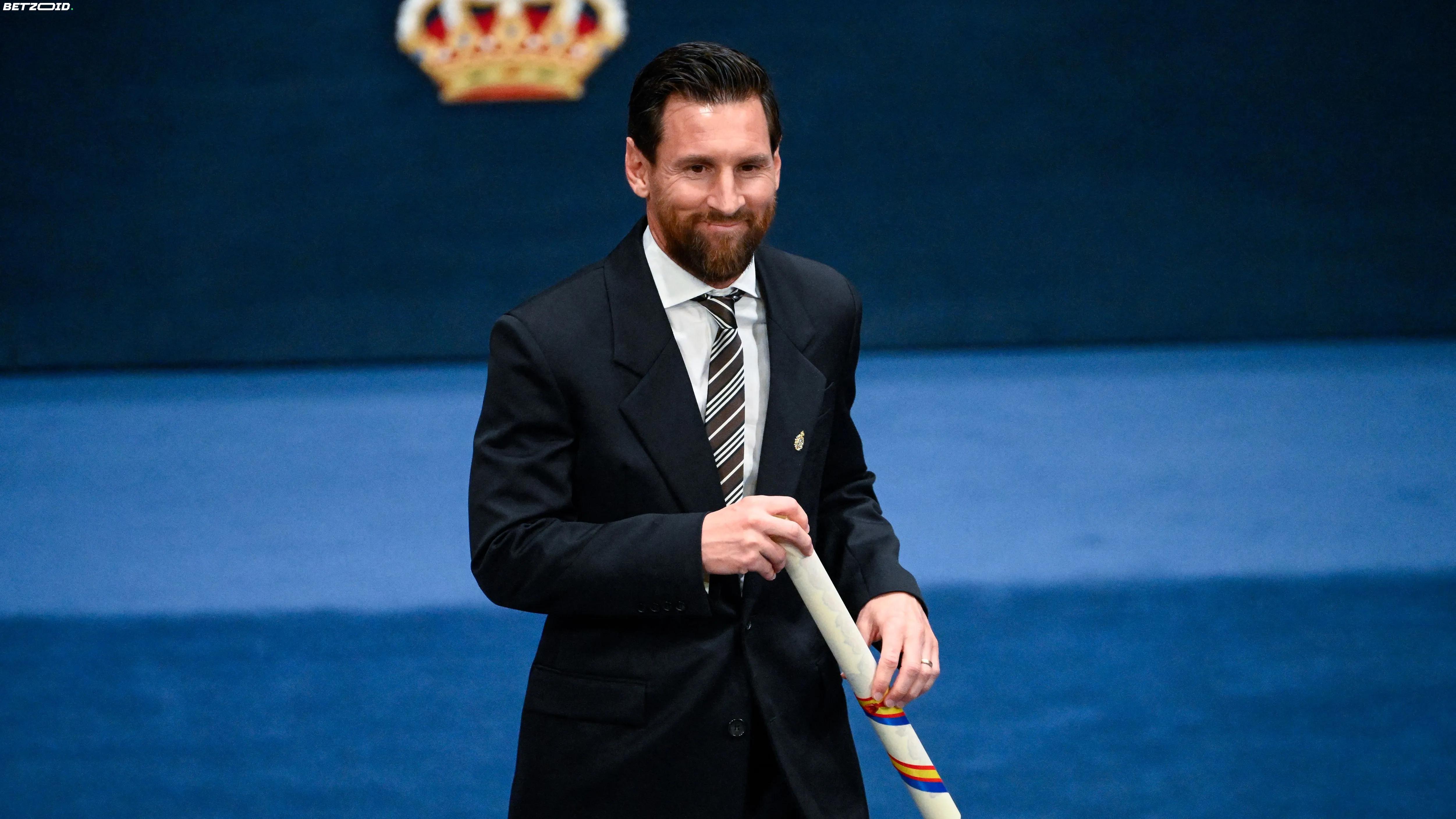
"I hope to be remembered as a great athlete who always fought for his goals and dreams." That's Lionel Messi, speaking in Oviedo ahead of receiving the 2026 Princess of Asturias Award for Sports — the first individual footballer ever to win it — and deliberately steering the conversation away from his own statistics.
Eight Ballon d'Ors. Four Champions Leagues. A World Cup. A Copa América. The numbers are absurd. And yet here's Messi, at the tail end of a career that redefined what's possible in football, saying the medals aren't the point.
The weight of the defeats
What's interesting is which losses he keeps coming back to. The 2014 World Cup final against Germany. The 2026 final against Spain, lost in extra time. These aren't footnotes he's glossed over — they're central to how he understands his own story.
"In football, winning is very difficult, and you have to appreciate the journey, because only one team can win." That's not a platitude when it comes from someone who spent the better part of a decade being criticized for failing Argentina at major tournaments, before the 2021 Copa América finally broke the drought, followed by the Finalissima and Qatar 2022. He earned the right to say it.
The persistence angle isn't just reflective posturing either. At 37, still competing in MLS for Inter Miami, the motivation clearly hasn't gone anywhere. That matters for Miami's ambitions — when your best player is still driven by something beyond habit, it shows on the pitch.
More than football
The Princess of Asturias Foundation didn't just honour his playing career. The Leo Messi Foundation's work in education and healthcare for vulnerable children was explicitly cited — context that often gets buried under the GOAT debate noise.
"Sometimes I succeeded in achieving what I wanted, sometimes I didn't... but I never stopped trying to win everything that was in front of me." It's the kind of quote that sounds simple until you remember who's saying it and what they gave up along the way to get there.