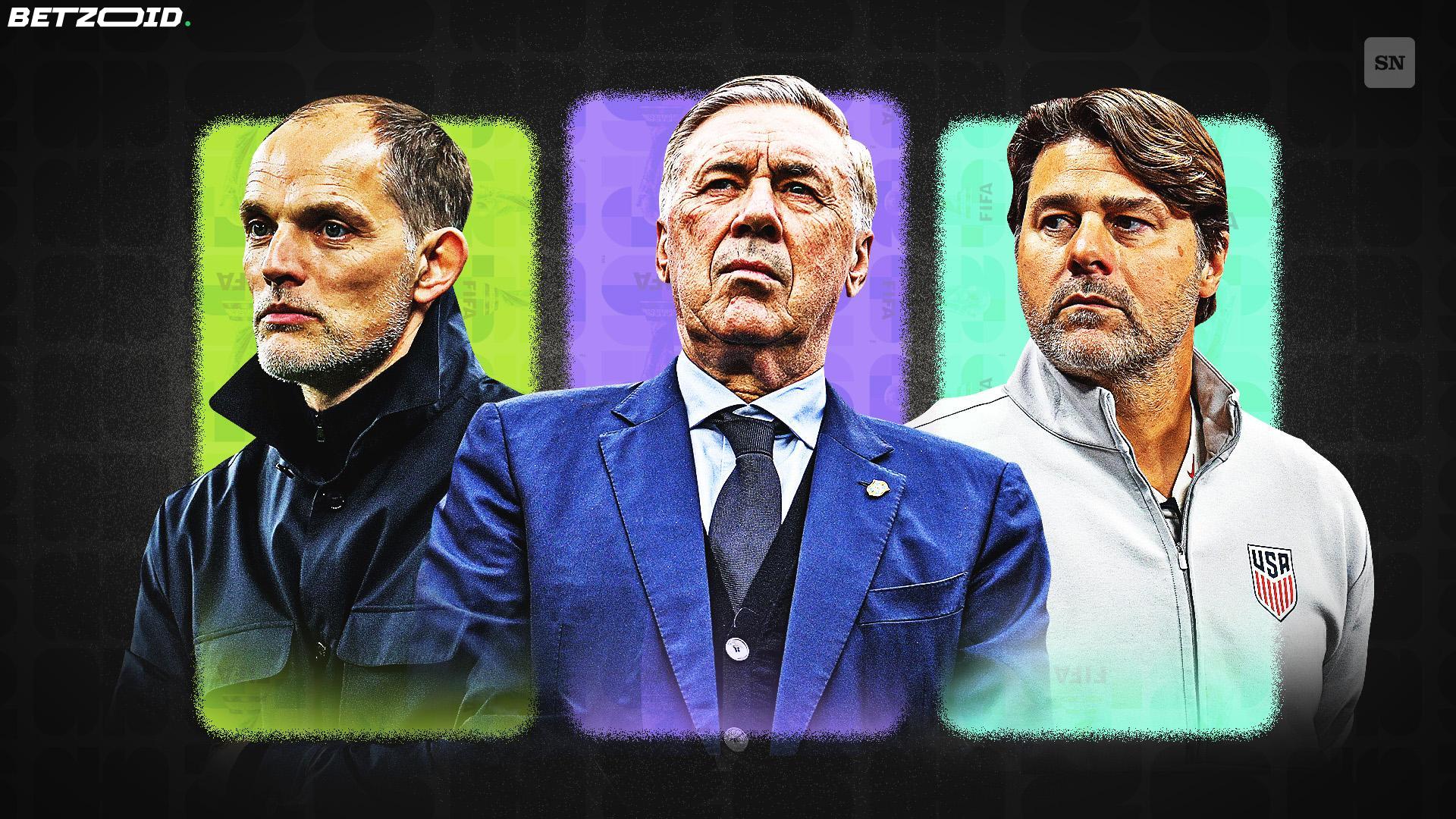
Not one. In nearly 100 years of World Cup football, not a single foreign head coach has lifted the trophy. Uruguay 1930 to Argentina 2022 — every champion was led by one of their own. Yet at the 2026 tournament, three of the most high-profile teams in the field — the United States, Brazil, and England — are all going in with a foreign manager. That's either bold or naive, depending on your view.
The numbers are stark. Of the past 20 World Cup semifinalists across five tournaments, only two were managed by foreign coaches: Belgium in 2018 under Roberto Martinez, and Portugal in 2006 with Luiz Felipe Scolari. That's a 10% rate for reaching the semis. For winning the whole thing? Zero.
Brazil hiring Ancelotti is a sign of failure, not ambition
Carlo Ancelotti's CV is unimpeachable — six league titles, five Champions Leagues, AC Milan, Real Madrid, Chelsea, PSG, Bayern Munich. Nobody's questioning his credentials. The problem is what it means that Brazil needed to call him at all.
"I do find it all incredibly damning that Brazil is incapable of producing top managers," said Fox Sports researcher and State of the Union podcast co-host David Mosse, who grew up in Brazil. "Even the people who are OK with Ancelotti — and I guess I would sort of fall into that camp — it's kind of sad that this is the best route to go if we're going to win a World Cup."
Five World Cup titles. All five won with Brazilian coaches. The shift toward foreign managers in the domestic Brazilian game has softened the culture shock somewhat — the majority of big clubs in Brazil are now run by foreigners — but the national team is a different animal entirely. At 66, this is Ancelotti's first senior international job. The scale of expectation attached to the Seleção is unlike anything at club level.
ESPN analyst Steve Nicol put it bluntly: "There's not a Brazilian coach that would have the respect — not just of the players, but everybody — and who is big enough to handle the Brazil job." That might be the most damning sentence in the whole debate.
Pochettino's USMNT gamble and the American inferiority complex
Thomas Tuchel's England appointment is easier to contextualise. The Premier League has been functionally European for years — Mikel Arteta's Arsenal just won the title with three Englishmen in the starting XI. Warren Barton, a former England defender now with Fox Sports, had no issue with it: "They could be from Timbuktu, if they can get it over the line." England haven't won a major trophy since 1966. If a German gets them there first, the argument ends.
Tuchel's record backs the appointment too. England won all eight qualifying games and sit at 10-2-1 since he took over in January 2025. They look like a team that knows what it's doing.
The Mauricio Pochettino situation at USMNT is thornier. His predecessor Gregg Berhalter was consistently undermined despite winning silverware and conceding the fewest goals in group play of any modern US team at Qatar 2022. When the US flopped at Copa America 2024, the knives came out, and the narrative that only a foreign name could fix American soccer took hold. Pochettino, with PSG and Spurs on his CV, was the result.
"There will always be a group of American soccer fans who don't think Americans can do soccer but still want our national team to be excellent," said Jason Davis of SiriusXM's Wynalda Talks Football. "That's a problem. There's a large group of people with an inferiority complex... I think that's, frankly, nonsense."
Pochettino has spent the build-up experimenting heavily — switching between a three-man and two-man backline, rotating lineups, testing formations well into the tournament's eve. That flexibility could be a strength or a symptom of indecision. A 5-1 win over Uruguay last autumn looked encouraging; the March results with two centre-backs were less so. His World Cup odds are built on potential that still hasn't been proven on the international stage.
- USMNT: Mauricio Pochettino (Argentina) — first World Cup as senior international manager
- Brazil: Carlo Ancelotti (Italy) — six league titles, five Champions Leagues, zero previous international experience
- England: Thomas Tuchel (Germany) — 2021 Champions League winner, 10-2-1 record with England
- Canada: Jesse Marsch (USA) — both American coaches for two of three host nations
- Uzbekistan: Fabio Cannavaro (Italy) — the development argument FIFA uses to justify the rule
FIFA allows foreign coaches partly because it helps developing nations absorb footballing knowledge from more established countries — Fabio Cannavaro with Uzbekistan being the obvious example here. But as Mosse noted, that logic was never really designed with Brazil and England in mind. "If you gave FIFA a truth serum, they don't expect the elite soccer nations to go that route."
History says the teams that win World Cups do so because football runs so deep in their culture that they produce coaches as well as players. The 2026 tournament will either confirm that pattern for a 24th consecutive time, or three of the biggest names in the game will finally break it. The betting market will be watching which side of that ledger Brazil, England and the US end up on.