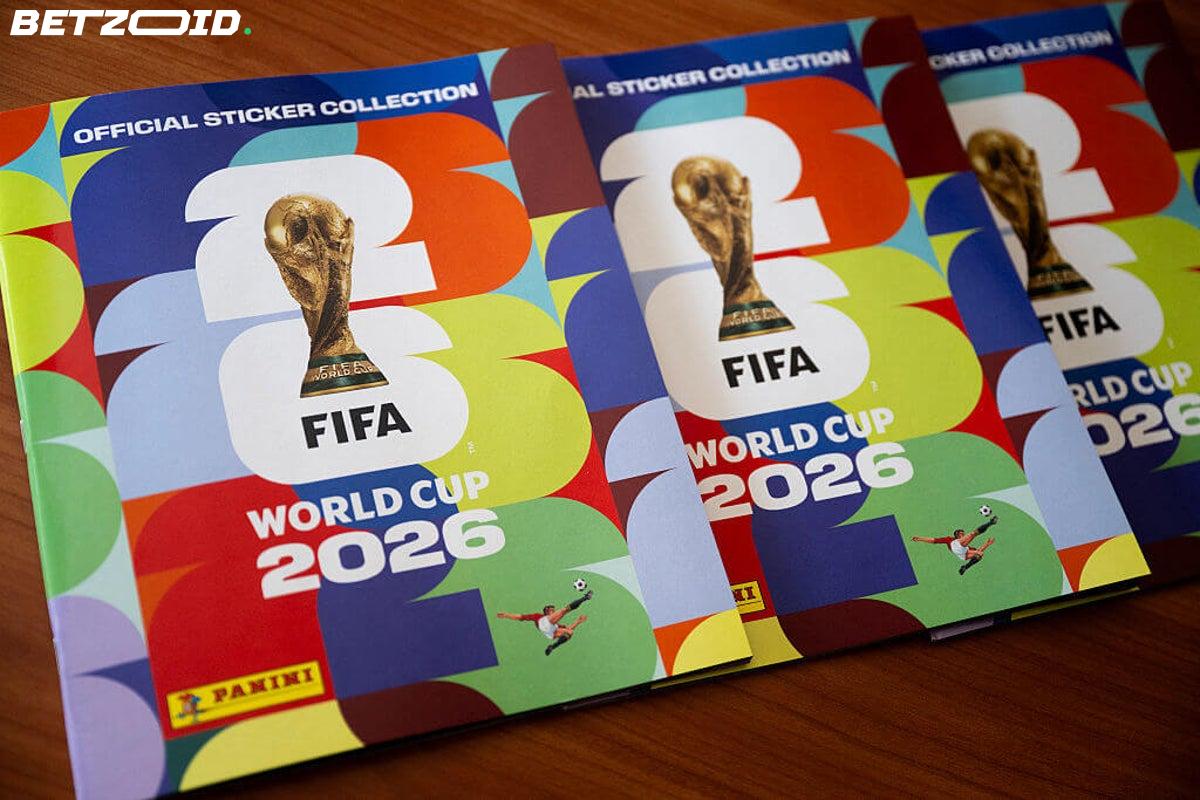
After nearly six decades and billions in sticker album sales, Panini is losing the FIFA license. Fanatics — through its Topps brand — has signed an exclusive long-term deal to produce World Cup trading cards, stickers, and trading card games starting in 2031. The partnership that built the iconic World Cup sticker album since 1970 is finished.
FIFA president Gianni Infantino didn't waste time framing it as a commercial evolution: "With Fanatics, we see that they are driving massive innovation in sports collectibles that does provide fans with a new, meaningful way to engage with their favorite teams and with their favorite players." Translation — Panini wasn't cutting it commercially on a global scale anymore.
What Fanatics Actually Brings to the Table
Fanatics CEO Michael Rubin was blunt about the motivation. His collectibles business is roughly 85 percent U.S.-based. FIFA is the vehicle to change that. "Our big growth initiative and partnering with FIFA to do the World Cup — there's no bigger event in the world than the World Cup every four years," he said. "We think long term, global football should be our biggest business."
The headline innovation is Topps' Debut Patch program — the same concept already running in the NFL, NBA, and MLB. A player wears a physical patch on their jersey during their first World Cup match, which is then removed, authenticated, and embedded into a signed trading card. Infantino confirmed match-used patch programs will begin as early as this year's 2026 World Cup, years before the licensing deal officially kicks in. The relic collection starts now; the branded product drops in 2031.
Fanatics has already been quietly locking up national team licenses ahead of the transition. England, Brazil, Germany, Italy, Argentina, and the United States are all either signed or secured. By the time 2031 arrives, Topps won't be starting from scratch — it'll have years of infrastructure in place.
The Pressure Now Falls on Panini
Losing this deal is an existential question mark for Panini, not just a business setback. The company reportedly generated close to $720 million in net sales from 2022 World Cup products alone, and is projecting $1.48 billion from the 2026 tournament. Those numbers explain why Panini pulled back on sale discussions late last year — the 2026 and 2030 World Cups represent its last major leverage before the FIFA income disappears entirely.
Fanatics, meanwhile, is projected to clear over $4 billion in collectibles revenue in 2026. That gap in scale tells you everything about why FIFA moved on.
The two companies are also locked in active litigation. Panini has accused Fanatics of anticompetitive monopolization of the sports card industry after Fanatics stripped it of NBA and NFL licenses. Fanatics has countersued, alleging Panini ran a "protracted, unlawful, and deceitful campaign" of unfair practices. Now they're fighting over market position in court while FIFA has already decided the next chapter in the boardroom.
- The FIFA/Fanatics deal begins in 2031, covering World Cup cards, stickers, and trading card games
- Panini has held the FIFA license since 1970, with the exception of the 1994 World Cup
- Fanatics will distribute over $150 million in free collectibles to children globally as part of the deal
- Match-used Debut Patch programs begin at the 2026 World Cup, pre-empting the license switch
- Fanatics is also the exclusive retail operator for all 2026 World Cup stadium and fan festival locations
Panini still has two World Cups to monetize. But after 2030, the sticker books that defined childhoods across Europe and South America belong to someone else.